Dental Nation
Condition guide

Gum Recession (Receding Gums)

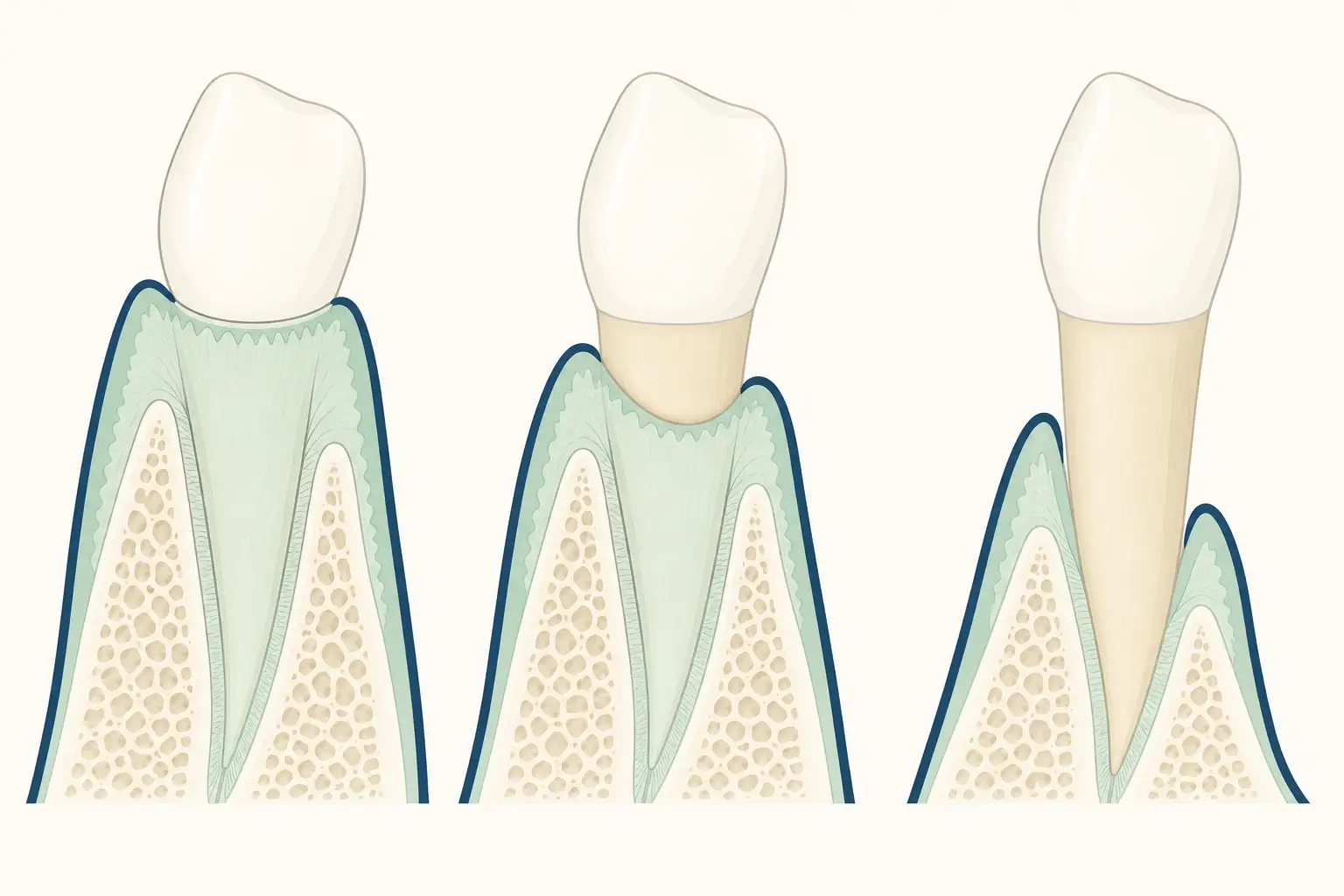
Exposed roots from gum recession can cause dentine pain, root decay, sensitivity, and concern about a tooth looking longer.

[1][2]

The short answer

Gum recession exposes tooth roots and can cause dentine pain, root caries, sensitivity, and aesthetic concern.

[1][2]
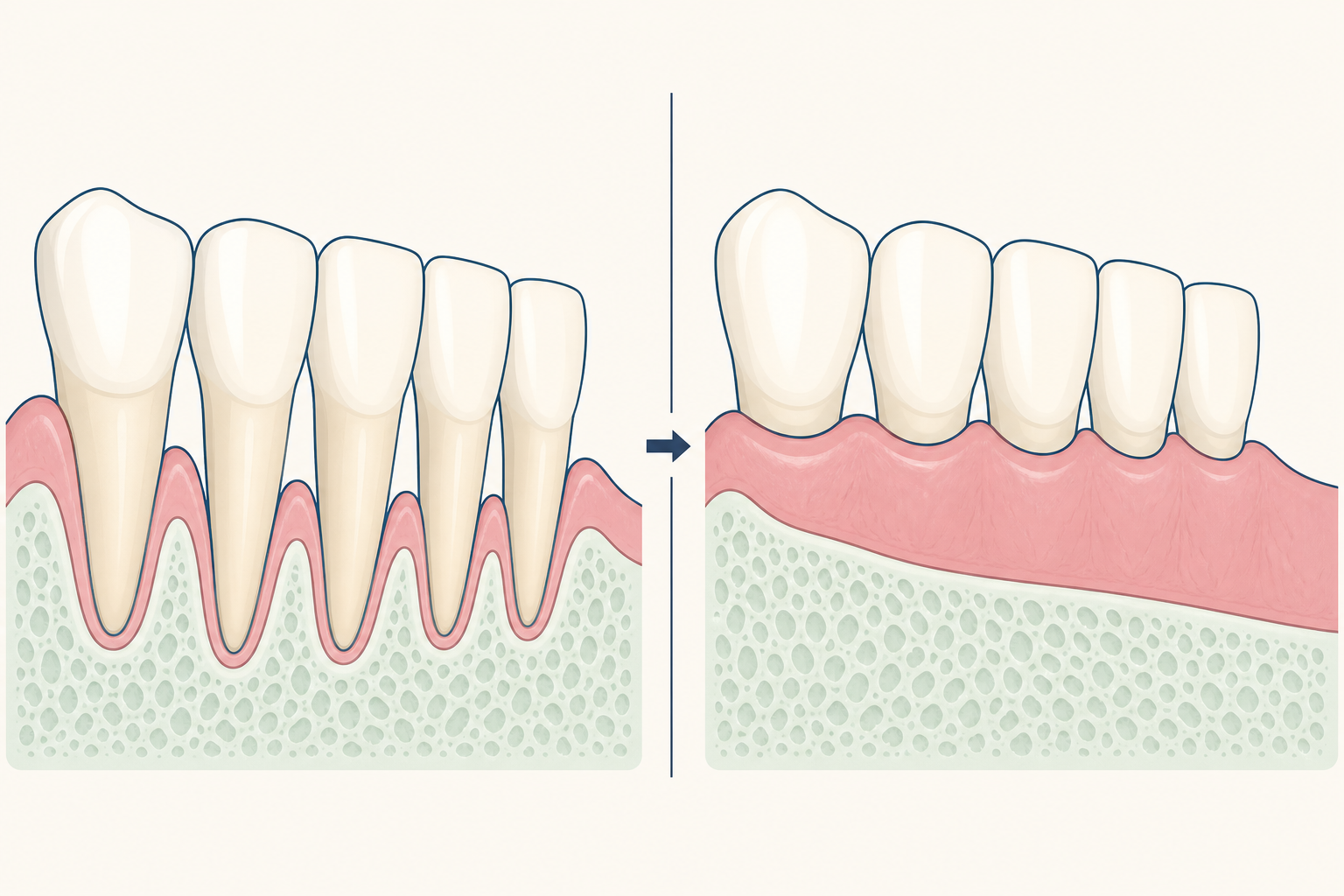
Gum Recession (Receding Gums) dental educational illustration

What the change looks like

Illustrative diagram: Gum Recession
Illustration — a representative diagram, not a patient photo.
The DN First Look799 AED
Book The DN First Look

What can receding gums feel or look like?

Gum changes, bleeding, swelling, tenderness, or changes in tooth appearance can bring someone to a visit. The examination is needed to assess the gums and supporting tissues.

[2]
Changes to discuss with a dentist
ChangeReason to discuss it
Visible gum-margin changeA dentist can assess the gums and supporting tissues.[2]
Bleeding, swelling, or tendernessThese can occur with periodontal disease.[2]

[2]

What can cause gum recession?

Trauma and periodontal disease are named causes. Recession is common and becomes more extensive and prevalent with age.

[2]

How does a dentist assess the extent?

The extent and severity are recorded and monitored rather than assigned a numbered stage. Assessment identifies causes and tracks whether recession is progressing.

[2]
Questions that clarify the examination
Finding to discussQuestion to ask
Gum-margin positionWhat did you measure around this tooth?[2]
Supporting-tissue conditionHow does this finding affect the plan?[2]

[2]

Why should receding gums be checked?

Age, trauma, and periodontal disease all have a role in recession. Exposed dentine can bring pain, while exposed roots can develop caries.

[1][2]

How is gum recession diagnosed?

Assessment identifies the causes, records the extent and severity, and monitors the affected area. This separates symptom control from preventing further progression.

[2]

How is treatment chosen?

Treatment aims to stop further progression and control symptoms and disease. Gum graft surgery can cover an exposed root and help prevent additional recession and bone loss.

[1][2]
Treatment-plan prompts
Plan topicUseful question
Proposed treatmentWhich examination finding does this address?[1][2]
Review planWhen will the gum findings be reassessed?[1][2]

[1][2]

What should you ask about treatment costs in Dubai?

Where root coverage is needed, a graft can use gum tissue from the palate or another donor source. It may cover one tooth or multiple teeth and can reduce sensitivity.

[1][2]

What can happen if gum disease progresses?

Recession can leave dentine exposed, causing pain and sensitivity, and may lead to root caries. Further recession and bone loss are concerns when roots remain exposed.

[1][2]

How can you care for your gums?

Management targets prevention of further progression and control of symptoms or disease. Monitoring the recorded extent helps show whether gum recession is stable.

[1][2]

Frequently asked questions

Can a dentist assess receding gums?

A dental examination assesses the gums and tissues supporting teeth and guides the treatment discussion.

[2]