
Dental Nation
Condition guide

Radicular Cyst

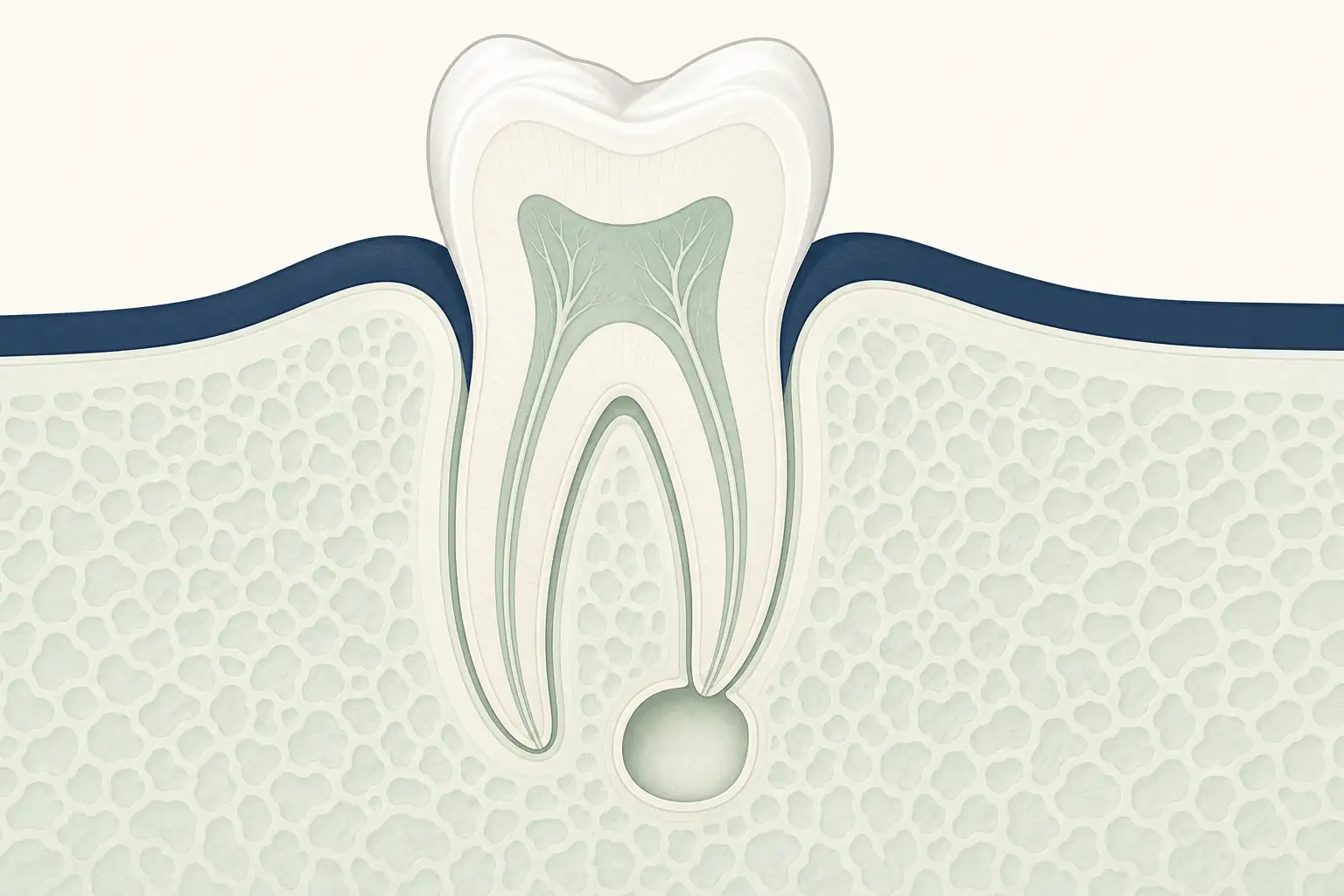
A radicular cyst develops around an infected tooth root and may cause swelling, pain, or a draining opening in the gum.

[1][2]

The short answer

A radicular cyst is a root-area lesion associated with longstanding infection from a damaged or dead tooth pulp.

[1][2]
Radicular Cyst dental educational illustration

What the change looks like
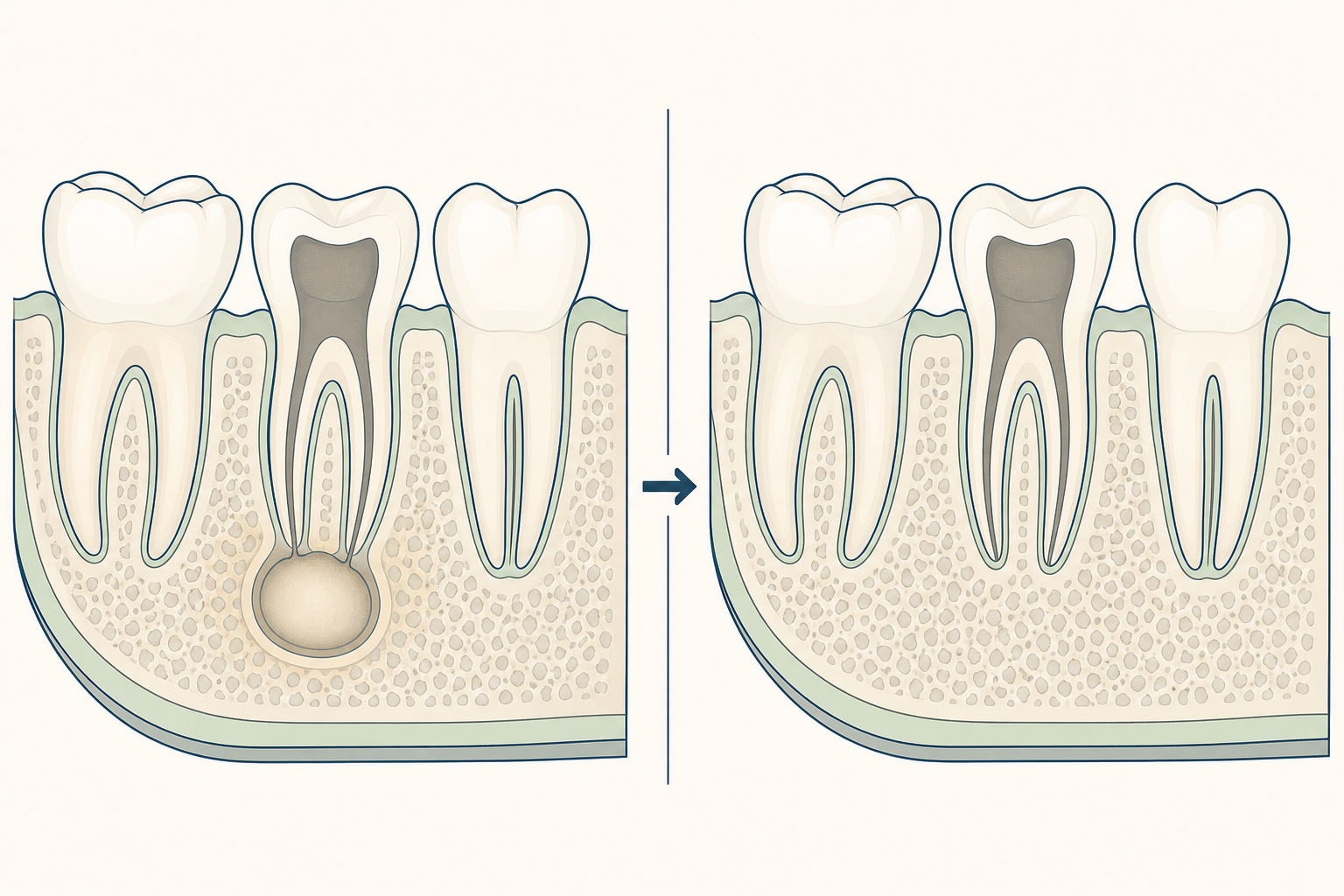
Illustrative diagram: Radicular Cyst
Illustration — a representative diagram, not a patient photo.
The DN First Look799 AED
Book The DN First Look

What symptoms can it cause?

Possible findings include swelling, tenderness, pus, a sinus tract, bad taste, tooth mobility, or pain. Fever, facial asymmetry, swollen lymph nodes, difficulty swallowing, altered speech, or reduced mouth opening suggest a more extensive infection.

[1][2]
Findings that may accompany root infection
FindingWhat may be noticed
Local changeSwelling, tenderness, pus, or a draining tract[1][2]
Wider illnessFever, malaise, chills, or facial swelling[1][2]

[1][2]

What starts a radicular cyst?

Dental caries can allow bacteria into the pulp. Pulp infection or necrosis can then sustain infection around the root, while fractures, trauma, previous procedures, recurrent infection, and untreated decay are relevant causes or history.

[1][2]

How can the problem progress?

Root-area infection may remain localised at first. If bacteria spread through surrounding spaces, infection can reach the neck, facial sinuses, mediastinum, or brain and may threaten the airway.

[1][2]
Possible progression
StagePattern
LocalisedThe process is centred around the affected root[1][2]
SpreadNearby deep spaces or the airway become involved[1][2]

[1][2]

What makes complications more likely?

Untreated decay, smoking, diabetes, immunosuppression, recurrent abscesses, and other conditions that weaken infection control increase concern. Heart-valve disease or a prosthetic valve matters because bloodstream spread can rarely lead to endocarditis.

[1][2]

How is it diagnosed?

The examination considers the painful area, swelling, pus, sinus tract, tooth condition, gum tissues, lymph nodes, mouth opening, swallowing, speech, and airway. The history includes caries, trauma, and recent dental procedures.

[1][2]

How is it treated?

Care removes the infected source. Drainage may be followed by root canal treatment and restoration when the tooth is usable; extraction is an alternative when preservation is not possible. Antibiotics alone do not provide definitive source control.

[1][2]
Treatment direction
Tooth statusPossible approach
PreservableDrainage, endodontic therapy, and restoration[1][2]
Not preservableExtraction to remove the source[1][2]

[1][2]

What changes the cost in Dubai?

The required procedure determines the cost pathway: drainage, endodontic treatment and restoration, or extraction. A root-area lesion therefore does not have one universal treatment price.

[1][2]

What are the complications?

Persistent infection can cause painful swelling and extend through deep tissues. Reported severe outcomes include airway compromise, deep neck or chest infection, facial-sinus infection, bloodstream spread, and rare intracranial infection.

[1][2]

How can root infections be reduced?

Daily brushing, flossing, regular dental care, early treatment of caries, smoking cessation, and diabetes control reduce the conditions that support dental infection and its recurrence.

[1][2]

Frequently asked questions

Can a radicular cyst be linked to a tooth that no longer hurts?

A root-area infection may still be present when pain is not prominent; swelling, pus, or a sinus tract can reveal ongoing disease.

[1][2]