
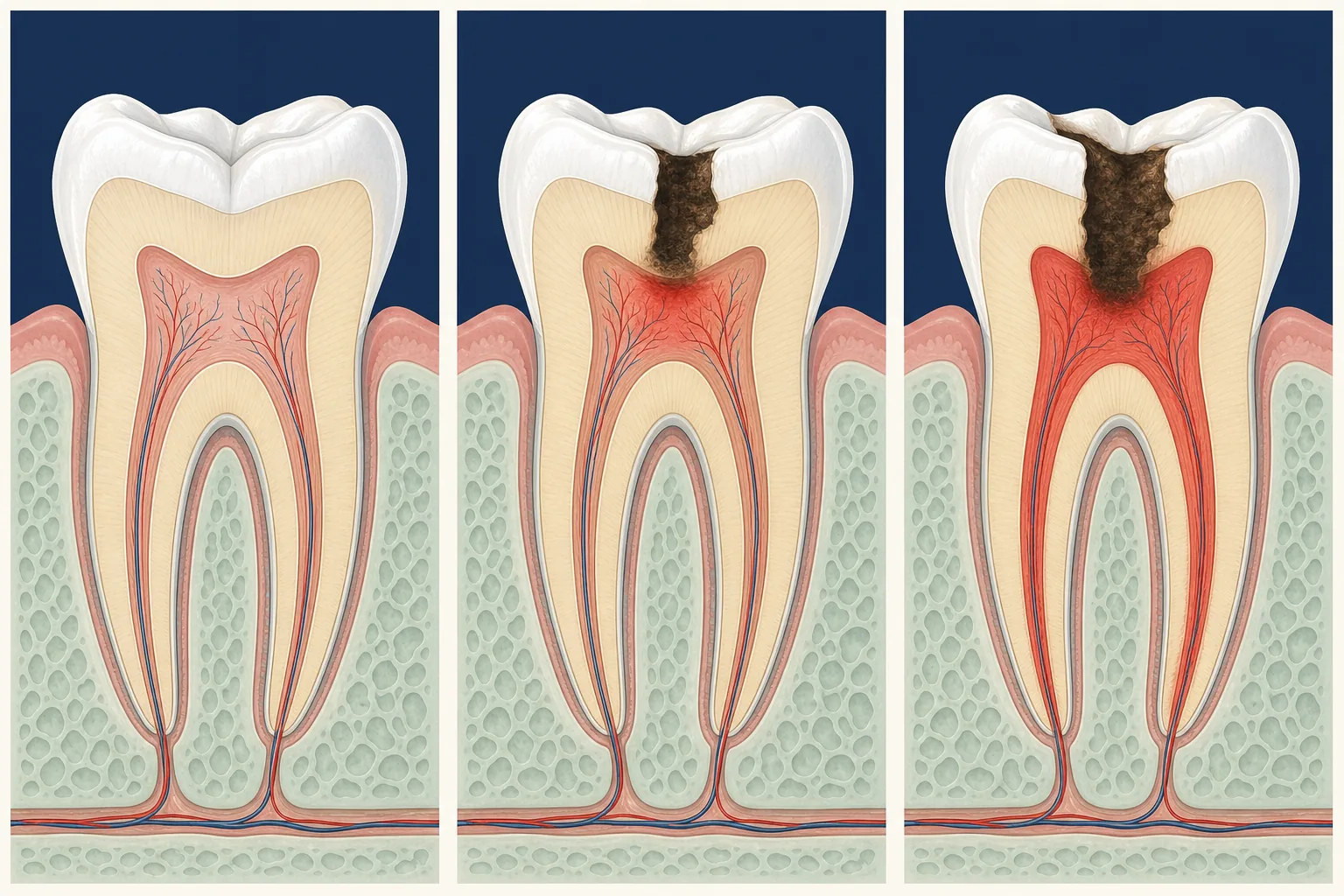
What the change looks like
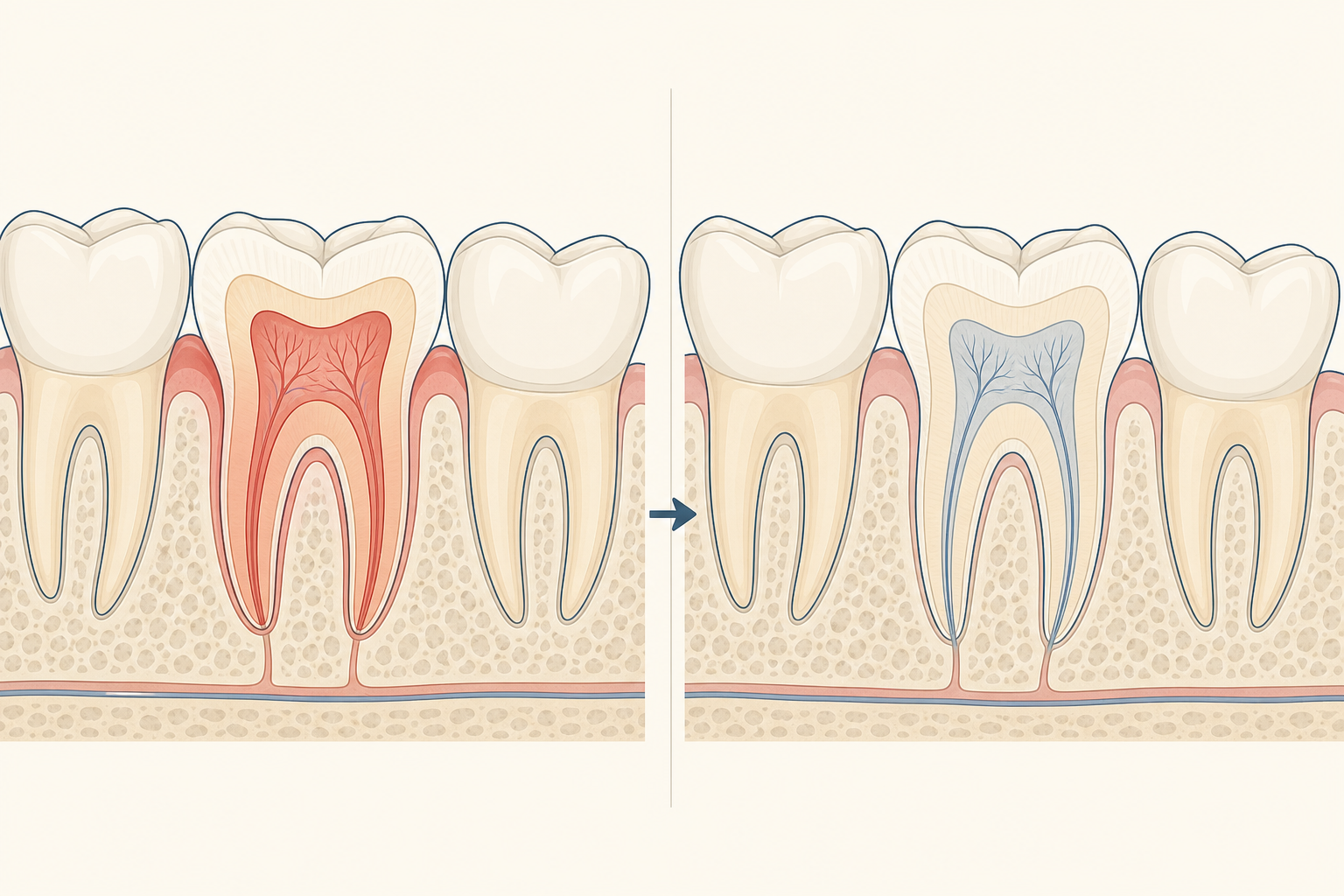
What does pulpitis feel like?
What causes pulpitis?
Pulpitis occurs in the setting of dental infection and commonly brings people to emergency care with acute dental pain. The source must be removed by dental treatment rather than left to progress.
[1]How can pulp inflammation change over time?
When is pulpitis an urgent problem?
Marked difficulty opening the mouth, trouble swallowing, drooling, limited tongue movement, a swollen or firm floor of the mouth, or a hot-potato voice are red flags for a spreading infection and possible airway compromise.
[1]How is pulpitis assessed?
Dental infections are often identified from the history and physical examination, including the character of pain and any local swelling. Moderate, severe or systemic presentations may also involve blood tests such as a complete blood count, CRP or ESR.
[2]How is pulpitis treated?
Definitive care removes the source through a dental procedure such as drainage, endodontic therapy or extraction. Antibiotics alone do not eliminate the source and can delay proper treatment.
[1]What affects the cost of pulpitis treatment?
The procedure needed differs when the source is managed with endodontic therapy, drainage or extraction. The dental source has to be removed for treatment to be definitive.
[1]What can untreated pulpitis lead to?
Untreated dental infection can extend beyond the mouth or involve the body systemically. Airway compromise, swallowing difficulty and a swollen floor of the mouth require urgent hospital-level management.
[1]How can pulpitis emergencies be reduced?
Prompt treatment of the dental source matters because antibiotics alone do not provide definitive care. Rapid assessment is especially important when pain is accompanied by swelling, restricted mouth opening, swallowing difficulty or breathing concerns.
[1]Frequently asked questions
Are antibiotics enough to cure pulpitis?
No. Definitive care removes the dental source through drainage, endodontic therapy or extraction.
[1]