
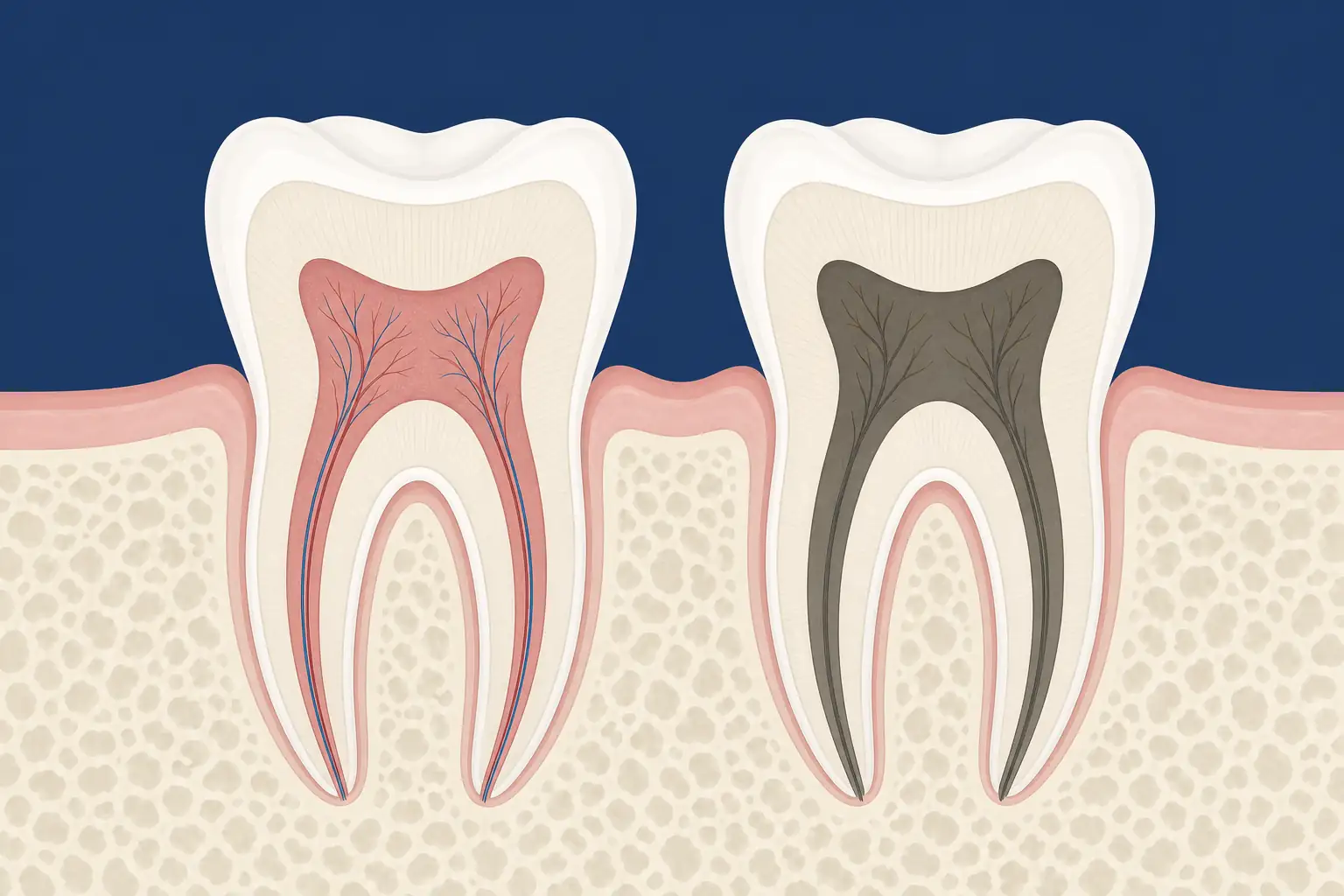
What the change looks like
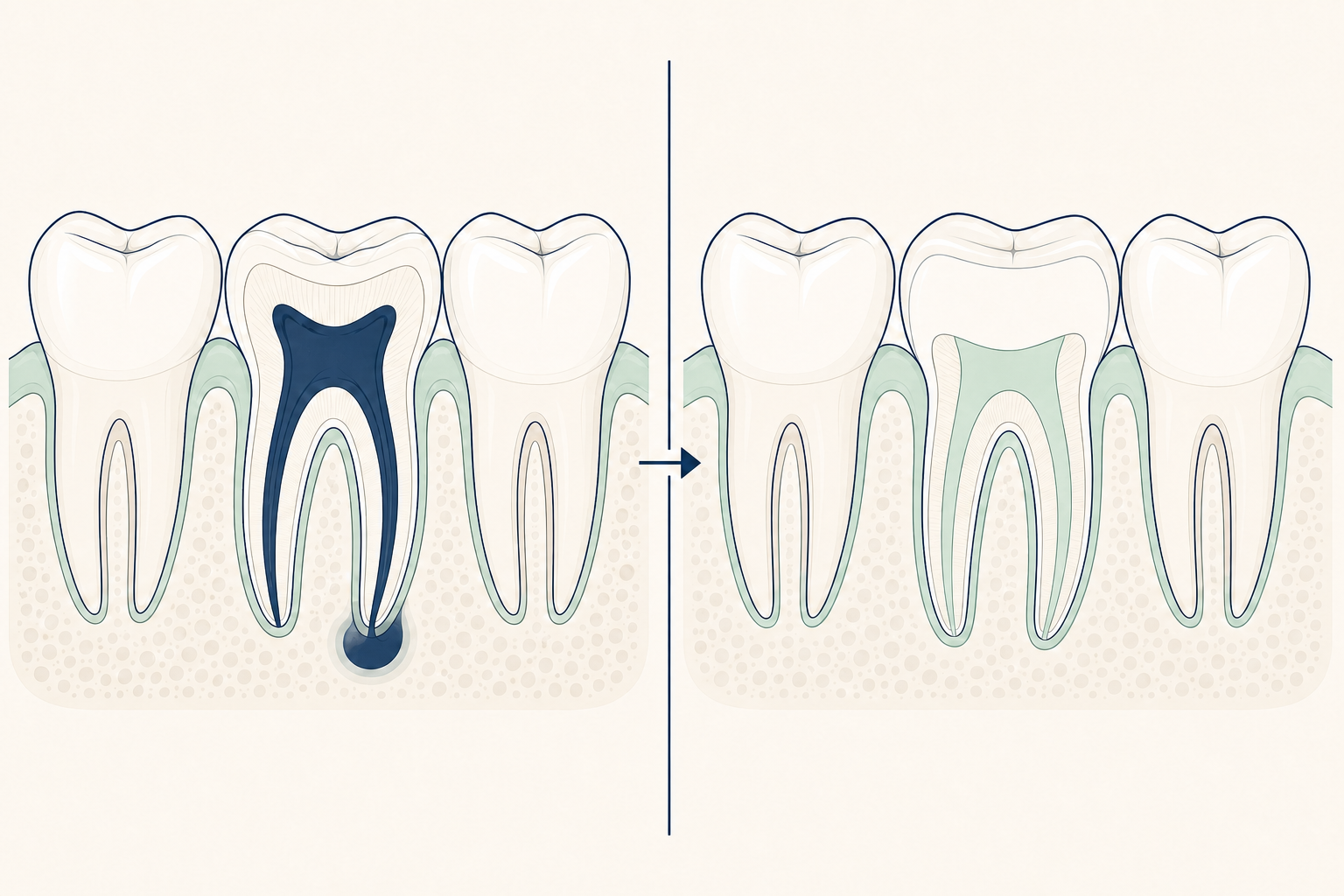
What does a dead tooth look and feel like?
Pain can change as the pulp deteriorates. An earlier severe toothache may become more constant during irreversible pulpitis, while later disease can present with discolouration and infection around the root.
[1]What causes pulp necrosis?
Pulp necrosis develops as dental infection progresses and the pulp loses vitality. A dead pulp does not remove the source of infection; the tooth still needs definitive dental treatment.
[1]How does pulp necrosis develop?
Pulp disease can move from temperature-triggered pain to more constant pain and then to loss of pulp vitality. Infection may subsequently involve the tissues at the root tip, producing apical periodontitis or an abscess.
[1]When is pulp necrosis dangerous?
A dead tooth becomes urgent when infection spreads beyond the local area or creates signs of airway involvement. Marked trismus, difficulty swallowing, drooling, limited tongue movement and a swollen or firm floor of the mouth are red flags.
[1]How is pulp necrosis diagnosed?
Assessment combines the history and physical examination with the appearance of the tooth and signs of local infection. When disease is moderate, severe or systemic, blood tests can help assess inflammation and infection.
[2]How is a dead tooth treated?
What affects the cost of treating a dead tooth?
What complications can pulp necrosis cause?
Infection can produce apical periodontitis, an abscess and spread beyond the mouth. Airway compromise, swallowing difficulty, drooling or a swollen floor of the mouth require urgent hospital admission and airway management.
[1]How can complications from a dead tooth be prevented?
Definitive treatment of the dental source is the key preventive step once pulp vitality has been lost. Do not rely on antibiotics as a substitute for endodontic therapy, drainage or extraction.
[1]