Dental Nation
Condition guide

Pulp Degeneration

As pulp vitality deteriorates into necrosis, tooth pain can become constant and the tooth can darken.

[1][2]

The short answer

As pulp vitality deteriorates into necrosis, dental pain can become more constant and the tooth can become discoloured.

[1][2]
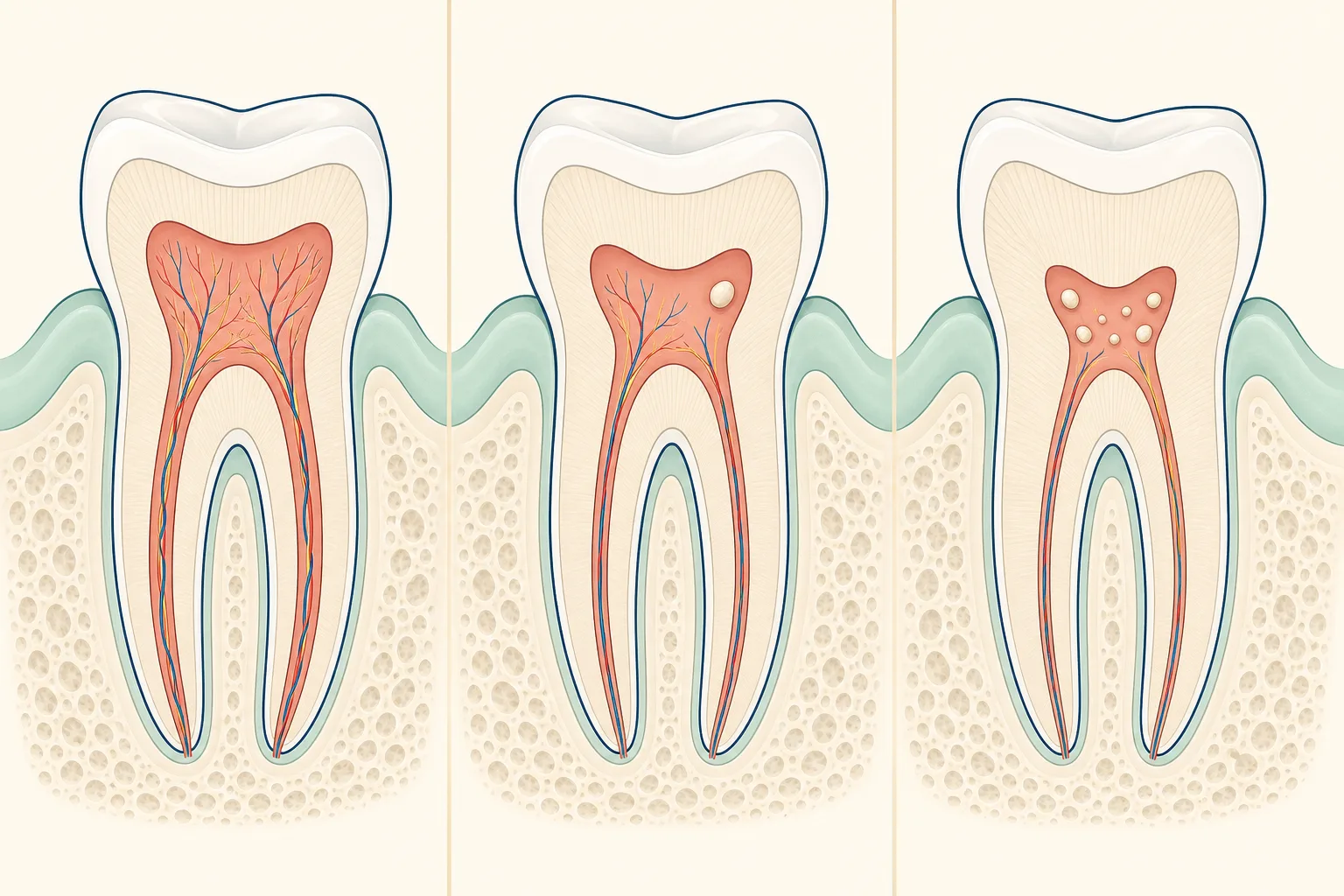
Pulp Degeneration dental educational illustration

What the change looks like

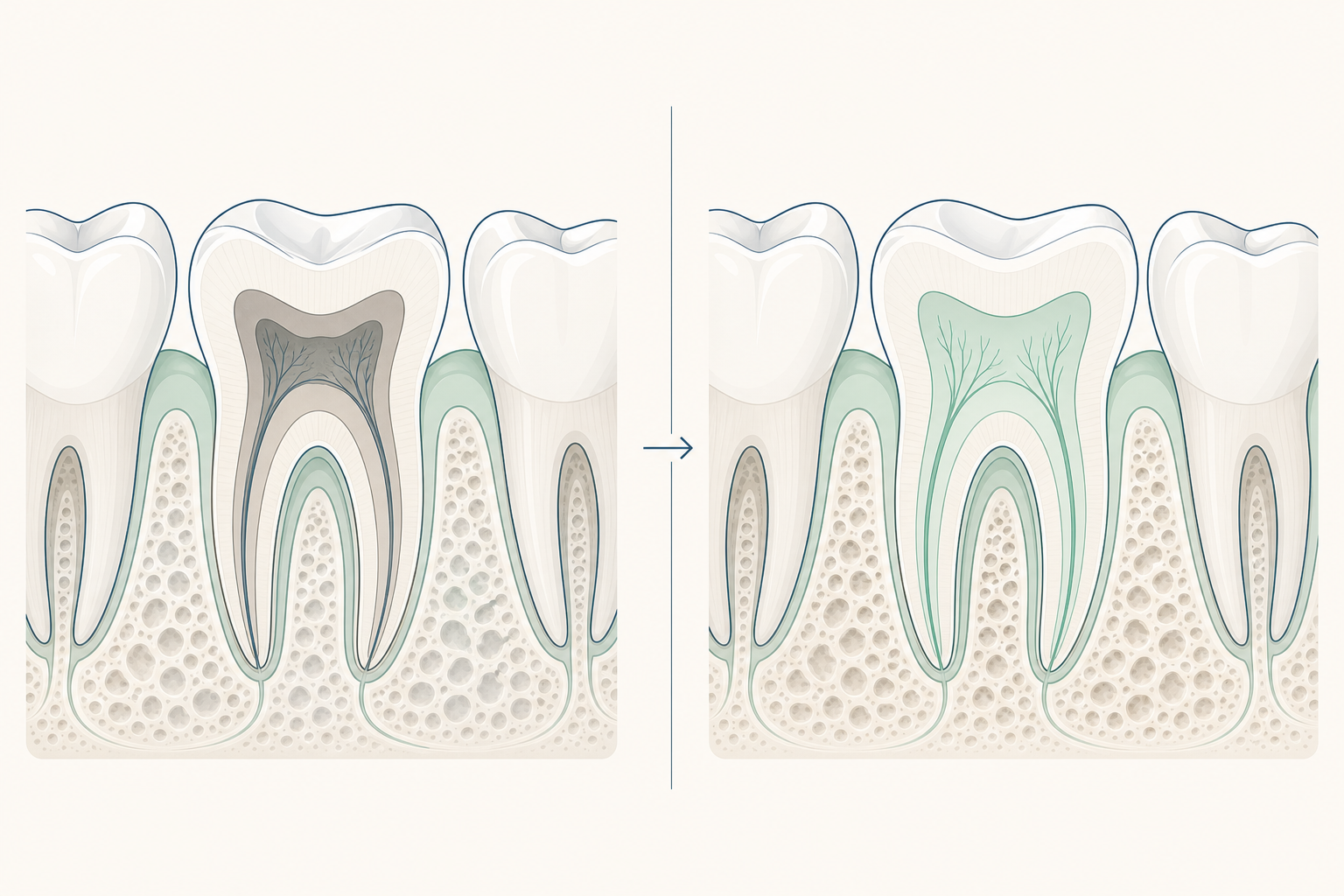
Illustrative diagram: Pulp Degeneration
Illustration — a representative diagram, not a patient photo.
The DN First Look799 AED
Book The DN First Look

How can a deteriorating pulp feel?

A tooth with reversible pulpitis can have severe pain made worse by temperature changes. Pulp necrosis may leave the tooth yellow, gray, brown or black.

[1][2]
Clues recorded as pulp vitality changes
FindingRecorded pattern
Temperature-triggered toothacheSeen with reversible pulpitis[1][2]
Constant pain or a dark toothCan develop as vitality deteriorates into necrosis[1][2]

[1][2]

What can lead to pulp problems?

Dental infections can begin in the tooth or its supporting structures. When bacteria invade the pulp, infection can spread into surrounding tissues.

[1][2]

What is the sequence from pain to necrosis?

Pulpitis can progress from temperature-sensitive pain to more constant pain as vitality deteriorates into irreversible pulpitis and necrosis. A necrotic pulp can be followed by a periapical abscess.

[1][2]
Changes described as pulp vitality declines
StagePossible finding
Reversible pulpitisSevere toothache exacerbated by temperature changes[1][2]
NecrosisMore constant pain and possible yellow, gray, brown or black discoloration[1][2]

[1][2]

Which signs need urgent attention?

Fever, facial swelling, difficulty opening the mouth, swallowing difficulty, drooling, a swollen mouth floor or voice change can signal infection beyond the mouth.

[1][2]

How are pulp and infection problems assessed?

History and examination identify early local pain or swelling. Dental radiographs can show caries, a periapical abscess or bone loss that is not obvious on visual examination.

[1][2]

What treats a diseased pulp or a related infection?

Definitive care removes the source of infection through drainage, endodontic treatment or extraction. Antibiotics alone delay proper treatment and can increase the risk of systemic spread.

[1][2]
Procedures used to remove a dental infection source
ProblemProcedure named in the record
Dental infection sourceDrainage or endodontic therapy may remove the source[1][2]
When the tooth cannot be maintainedExtraction is a named definitive option[1][2]

[1][2]

What can make treatment more complex?

Infection can extend from a necrotic pulp into surrounding tissues. Deep-space infection can require hospital admission, intravenous treatment and sometimes an operation.

[1][2]

What happens if infection spreads?

Untreated dental infection can spread into deep spaces of the neck, the mediastinum, facial sinuses or brain. Airway compromise and sepsis are serious complications.

[1][2]

What lowers the chance of dental infection?

Daily toothbrushing, flossing and reducing sugar-containing foods help reduce cavities. Early identification and treatment reduce the prevalence of dental infections and serious complications.

[1][2]

Frequently asked questions

Can a tooth become darker when its pulp dies?

Yes. As pulp necrosis develops, a tooth can appear yellow, gray, brown or black.

[1][2]
Why are antibiotics alone not enough for a dental infection?

Definitive treatment removes the infection source through a dental procedure; antibiotics alone can delay proper care and increase the risk of systemic spread.
[1][2]
