Dental Nation
Condition guide

Pulp Calcification

A yellow crown and a narrowed pulp space on an X-ray can follow a tooth injury.

[1][2]

The short answer

After tooth trauma, pulp calcification can make the pulp space disappear on an X-ray and turn the crown yellow.

[1][2]
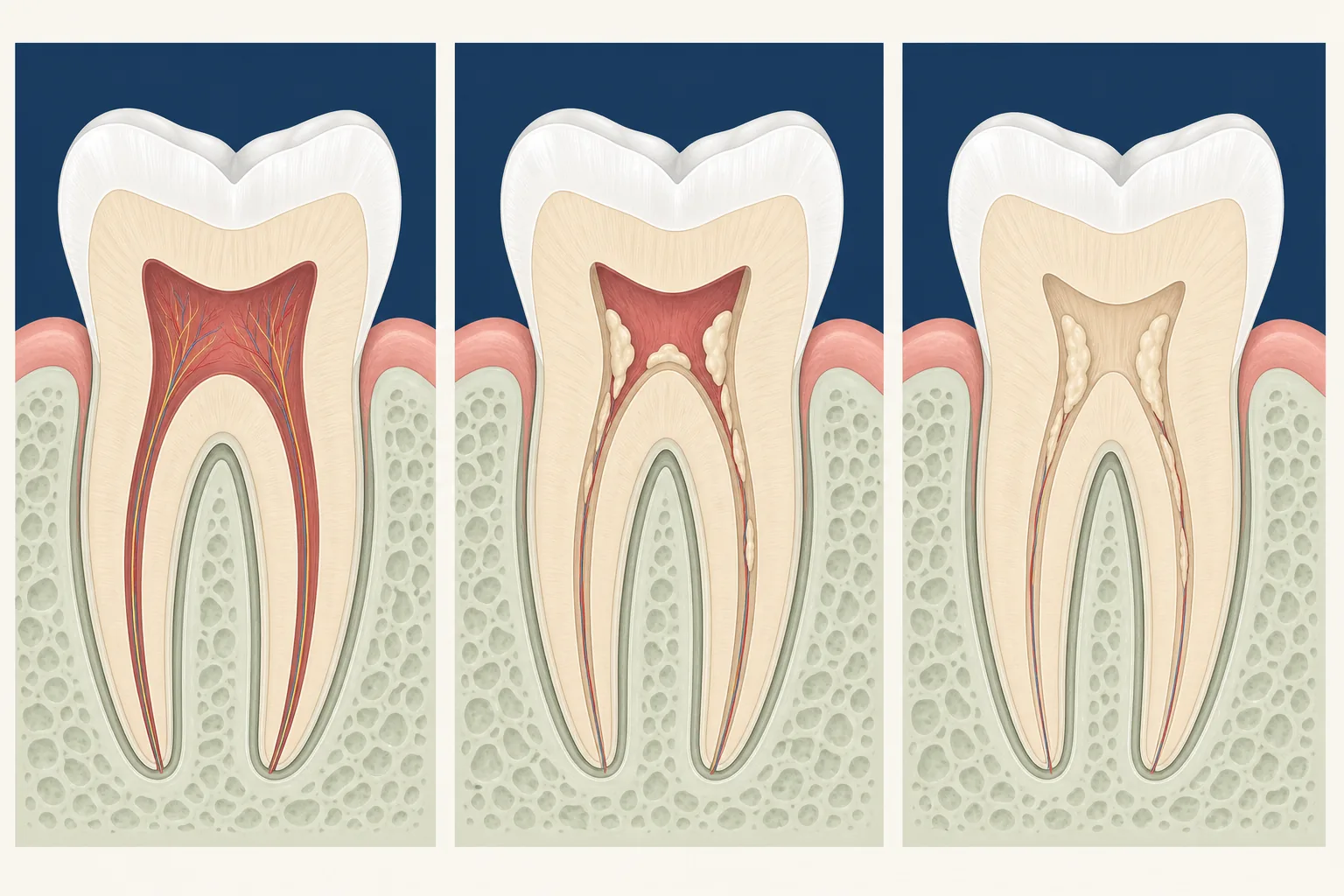
Pulp Calcification dental educational illustration

What the change looks like

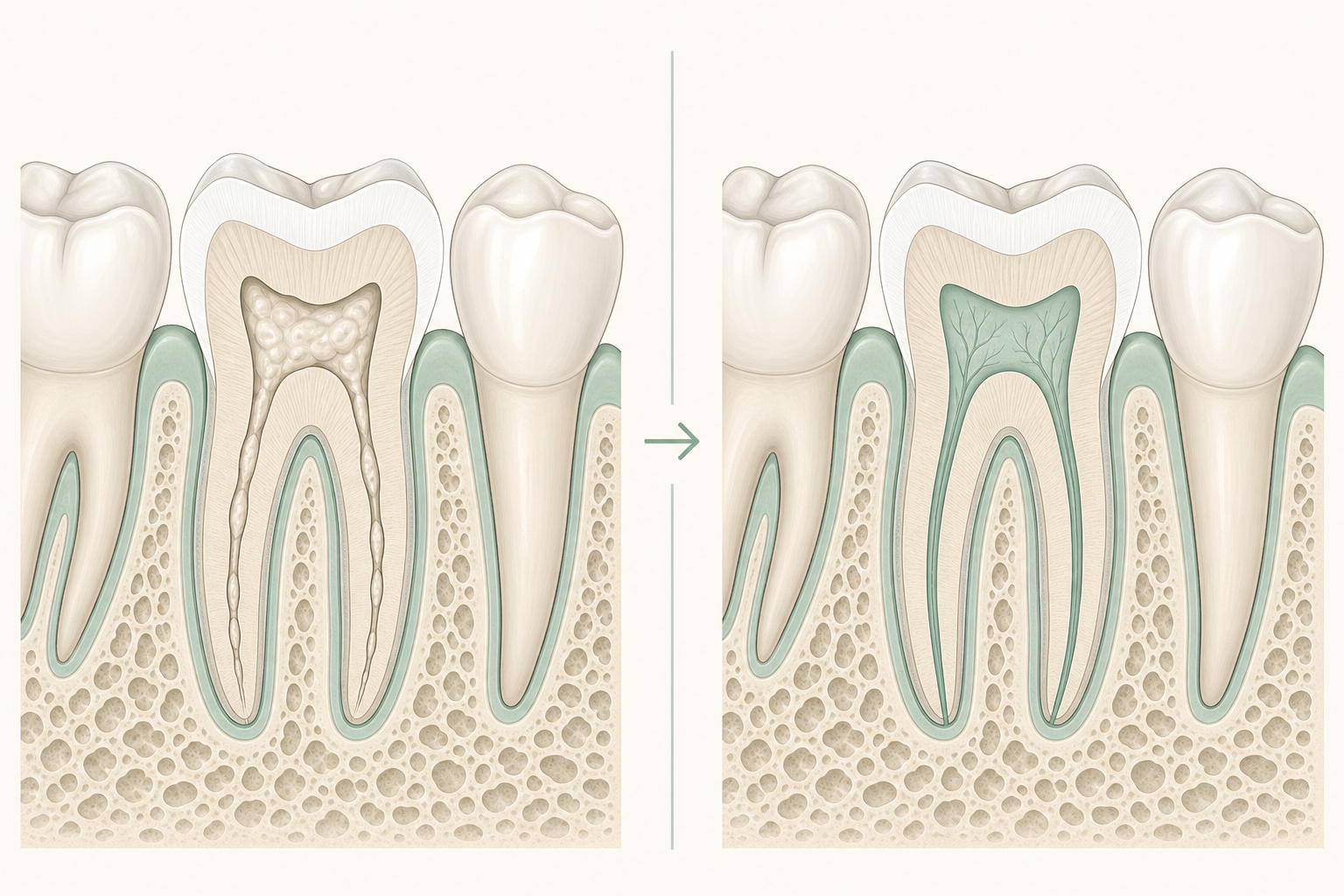
Illustrative diagram: Pulp Calcification
Illustration — a representative diagram, not a patient photo.
The DN First Look799 AED
Book The DN First Look

What might I notice?

A tooth with pulp canal obliteration commonly gives no normal response to sensibility testing, even when no pulp or root-end disease is present.

[1][2]
Findings associated with pulp canal obliteration
FindingWhat it means
Yellow clinical crownA visible colour change can accompany pulpal obliteration[1][2]
Apparent loss of pulp spaceThe pulp space may no longer be visible radiographically[1][2]

[1][2]

Why can the pulp space calcify?

Pulp canal obliteration commonly follows a traumatic injury to a tooth. Traumatic dental injuries include fractures, luxation and avulsion.

[1][2]

What can happen over time?

Traumatised teeth can develop different degrees of pulpal obliteration. Only about 7% to 27% of teeth with this finding develop pulp necrosis with radiographic periapical disease.

[1][2]
Possible course after pulp canal obliteration
Point in the courseRecorded finding
After traumaPulpal obliteration may develop to varying degrees[1][2]
Later diseaseA minority develop pulp necrosis with radiographic periapical disease[1][2]

[1][2]

Who is more likely to have it?

The documented setting is a tooth that has been traumatised. Trauma-related complications can include pulpal obliteration, tooth discolouration and loss of pulp vitality.

[1][2]

How is pulp calcification found?

Radiographs show the apparent loss of pulp space. Examination can also record colour change, while sensibility tests may fail to produce a normal response.

[1][2]

When is root canal treatment considered?

The management choice is whether to treat at detection or wait for symptoms or signs of pulp or periapical disease. Root canal treatment can be difficult when the pulp canal is obliterated.

[1][2]
The two management points described for an obliterated pulp canal
SituationManagement point
Obliteration is detectedImmediate endodontic treatment is one option considered[1][2]
Symptoms or periapical signs occurEndodontic treatment may be considered at that point[1][2]

[1][2]

What can make treatment more involved?

An obliterated pulp canal creates an endodontic treatment challenge. The limited or missing visible pulp space is the feature that makes root canal treatment difficult.

[1][2]

What are the possible complications?

Pulp necrosis with radiographic signs of periapical disease can occur in a minority of teeth with pulp canal obliteration. Trauma can also be followed by tooth discolouration or a dental abscess.

[1][2]

What helps after a tooth injury?

Early identification and treatment of dental problems reduce the risk of serious infection complications. Dental trauma is the recorded trigger for pulp canal obliteration.

[1][2]

Frequently asked questions

Can a yellow tooth after an injury have pulp calcification?

Yes. A yellow crown and an apparent loss of pulp space on a radiograph are recorded features of pulp canal obliteration after trauma.

[1][2]
Does every calcified pulp need root canal treatment?

The recorded decision is between treatment at detection and waiting for symptoms or signs of pulp or periapical disease; root canal treatment is challenging in an obliterated canal.
[1][2]
