
Pregnancy Gingivitis
Pregnancy can increase gum inflammation, so bleeding and swelling may occur even with little extra plaque.
[3][4]The short answer
Pregnancy gingivitis is gum inflammation during pregnancy that can cause bleeding, redness, swelling, or tenderness and should be assessed by a dental professional. You may notice blood when brushing or flossing, a puffy gum line, or gums that feel sore. Symptoms can vary, and bleeding gums should not be treated as a normal change that needs no attention.
[3][4]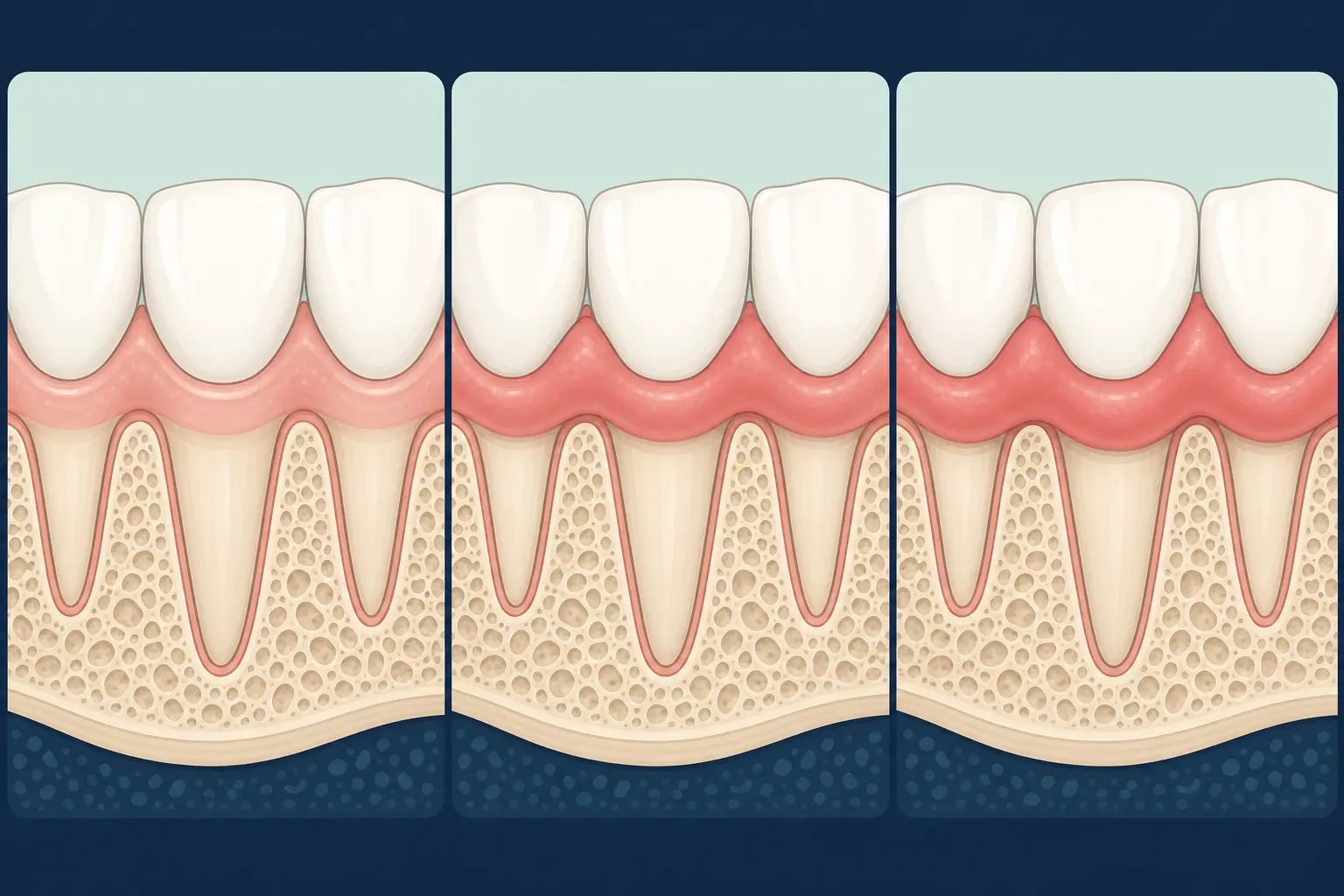
What the change looks like
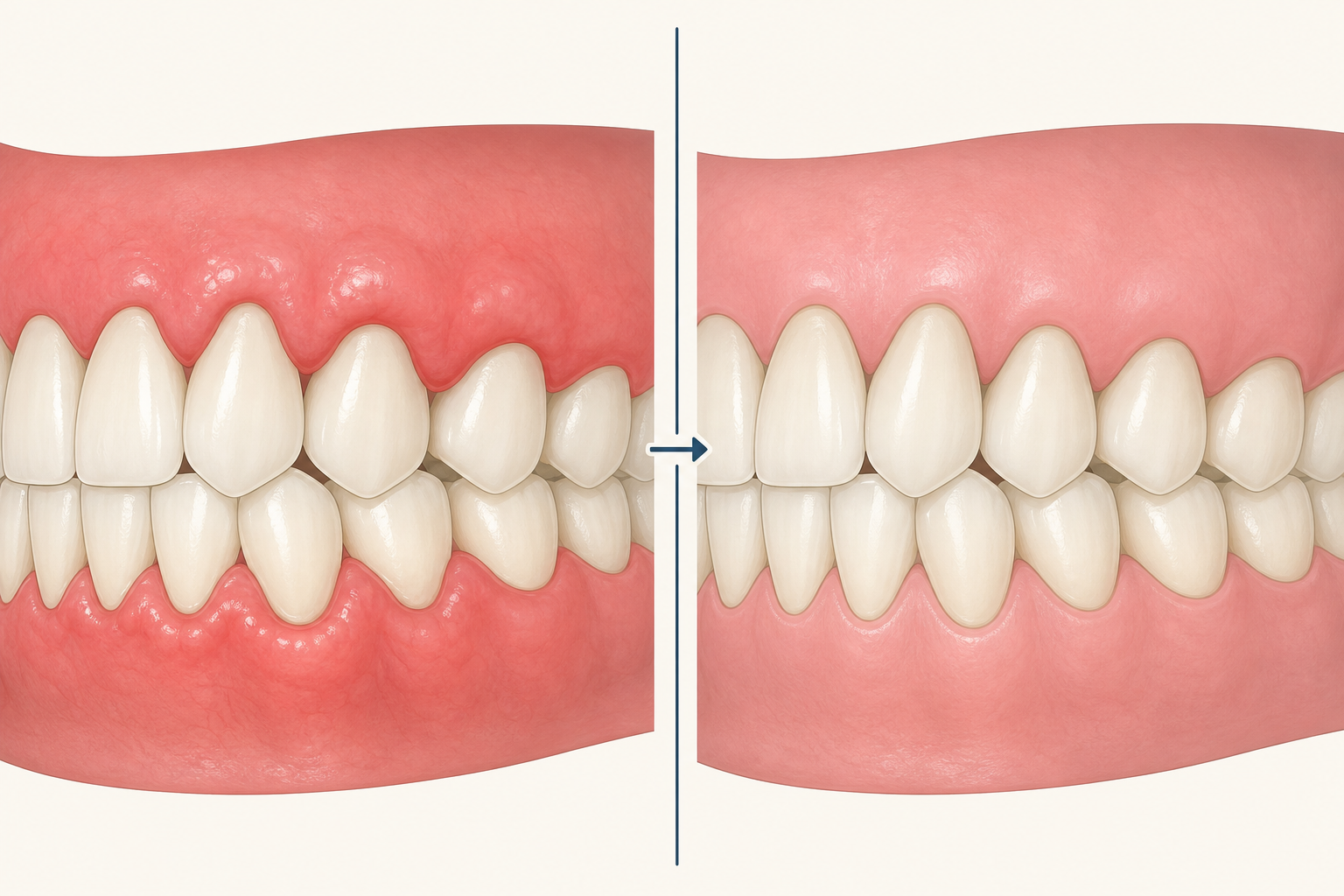
What gum changes can happen during pregnancy?
Why can gums become more reactive in pregnancy?
Pregnancy can change the gum response to dental plaque. Research on pregnancy gingivitis examines the relationship between pregnancy and gingival inflammation, while plaque remains relevant to gingivitis. The useful next step is to check plaque control and gum health rather than assuming that hormones alone explain every symptom.
[4]How can mild gum inflammation become more noticeable?
What can make gum inflammation harder to control?
Plaque at the gum line is a direct contributor to gingivitis. Pregnancy may alter the inflammatory response of the gums, so areas that were previously easy to manage can need more attention. Nausea, sensitivity, or fatigue can also make daily cleaning feel harder, which is a practical reason to ask for tailored advice.
[4]How does a dentist check pregnancy gingivitis?
A dentist examines the gums for inflammatory signs such as bleeding, redness, and swelling. The visit also considers plaque and the condition of the teeth and supporting tissues. Tell the dental team that you are pregnant and mention any symptoms, medicines, or care instructions from your maternity clinician.
[3]What treatment may be discussed?
Treatment for gingivitis focuses on plaque control and professional care. The dental team may clean the teeth and gums and review brushing and interdental cleaning. Care is tailored to the examination findings, the stage of pregnancy, and the symptoms that are making oral hygiene difficult.
[3]What should I ask about costs in Dubai?
Scaling and oral-hygiene instruction are often sufficient for early or moderate gingivitis, with healing commonly assessed one to two months after treatment.
[3]Why should bleeding gums be checked in pregnancy?
How can I protect gum health during pregnancy?
Daily brushing and cleaning between teeth reduce plaque that contributes to gingivitis. Keep routine dental appointments and ask for help early if nausea or gum tenderness disrupts cleaning. A dental professional can adapt instructions to the areas that are bleeding or difficult to reach.
[3]