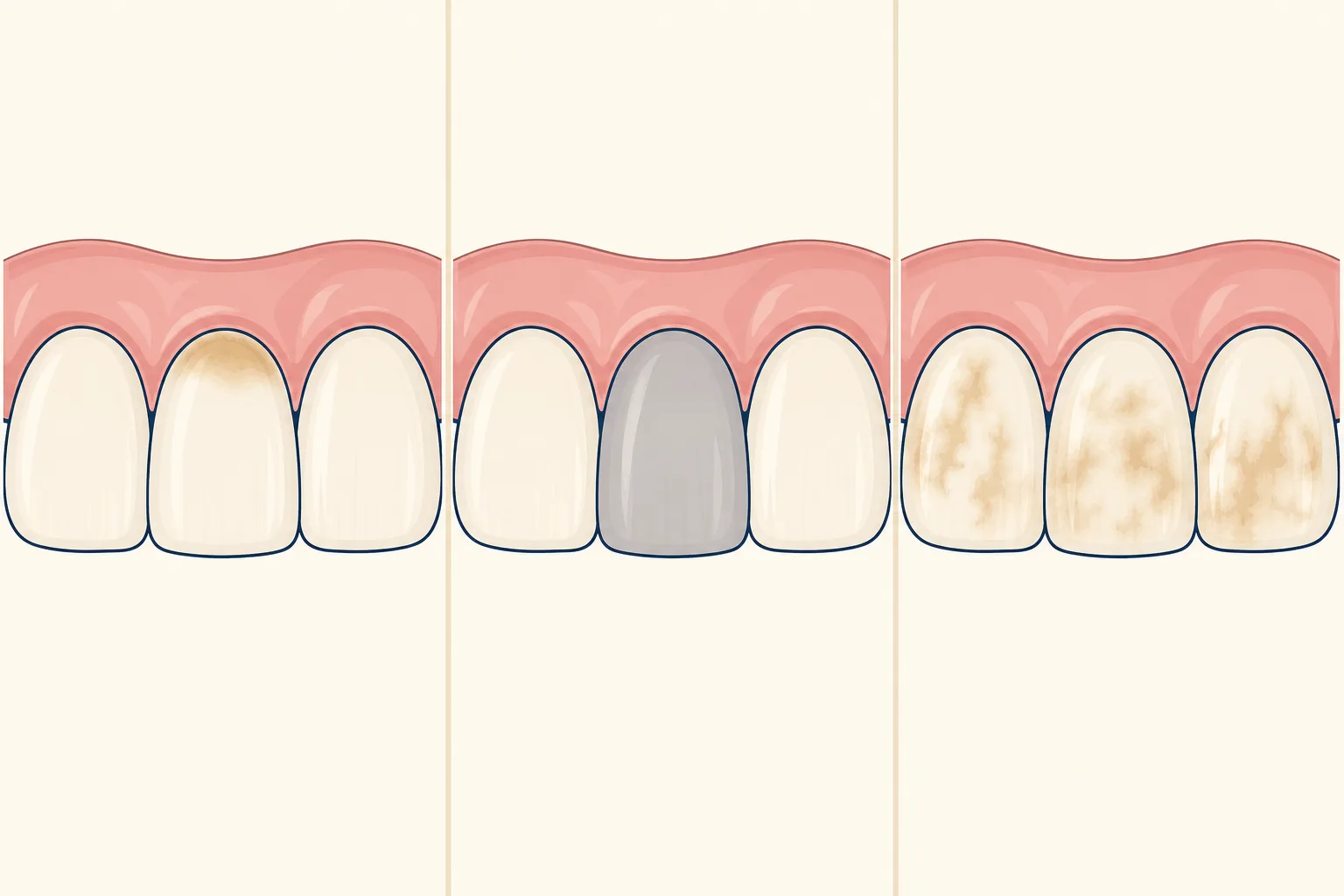
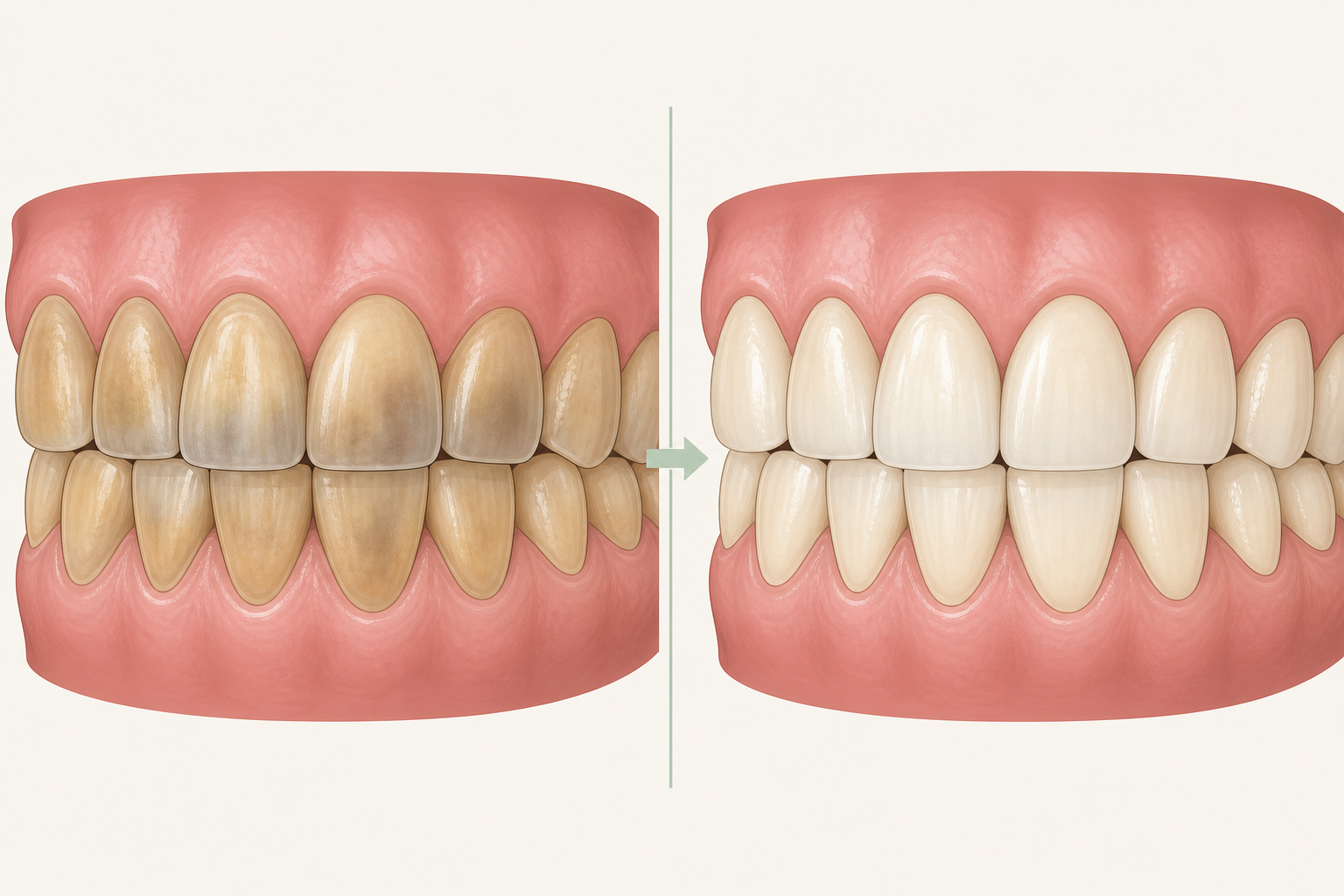
Tetracycline exposure during tooth calcification and mineralisation can leave teeth fluorescent yellow when they erupt. Light exposure can later oxidise the tetracycline pigment.
A detailed history can include childhood illness, medicines, infections affecting primary teeth, trauma, family patterns of abnormal teeth and fluoride exposure.
The cause guides treatment. The history distinguishes possible contributors such as trauma, infection, tetracycline exposure, fluorosis, hypoplasia and inherited enamel or dentine disorders.
Tooth whitening is used to improve discoloration. Whitening agents work through a redox reaction, but the choice of treatment is influenced by the cause of the colour change.
The cause of intrinsic discoloration influences the treatment selected. Teeth affected by amelogenesis or dentinogenesis imperfecta may also have a structurally at-risk dentition.
Tooth sensitivity and irritation of the gums or other oral soft tissues can occur with whitening. Protecting oral soft tissues is particularly relevant during office whitening.
Some intrinsic colour changes are linked to events during tooth development, including tetracycline exposure during calcification and mineralisation. They may remain after the tooth erupts.