
Dental Plaque
Dental plaque is a bacterial film whose acids can damage enamel and whose buildup can inflame gums.
[5][3]The short answer
Dental plaque is a sticky bacterial film on teeth that can contribute to tooth decay and gum disease when it is not removed regularly. It may feel fuzzy on teeth or collect near the gum line, yet plaque itself may not cause a clear sensation. Bleeding gums, tooth sensitivity, or a visible change need a dental assessment because they can have more than one cause.
[3]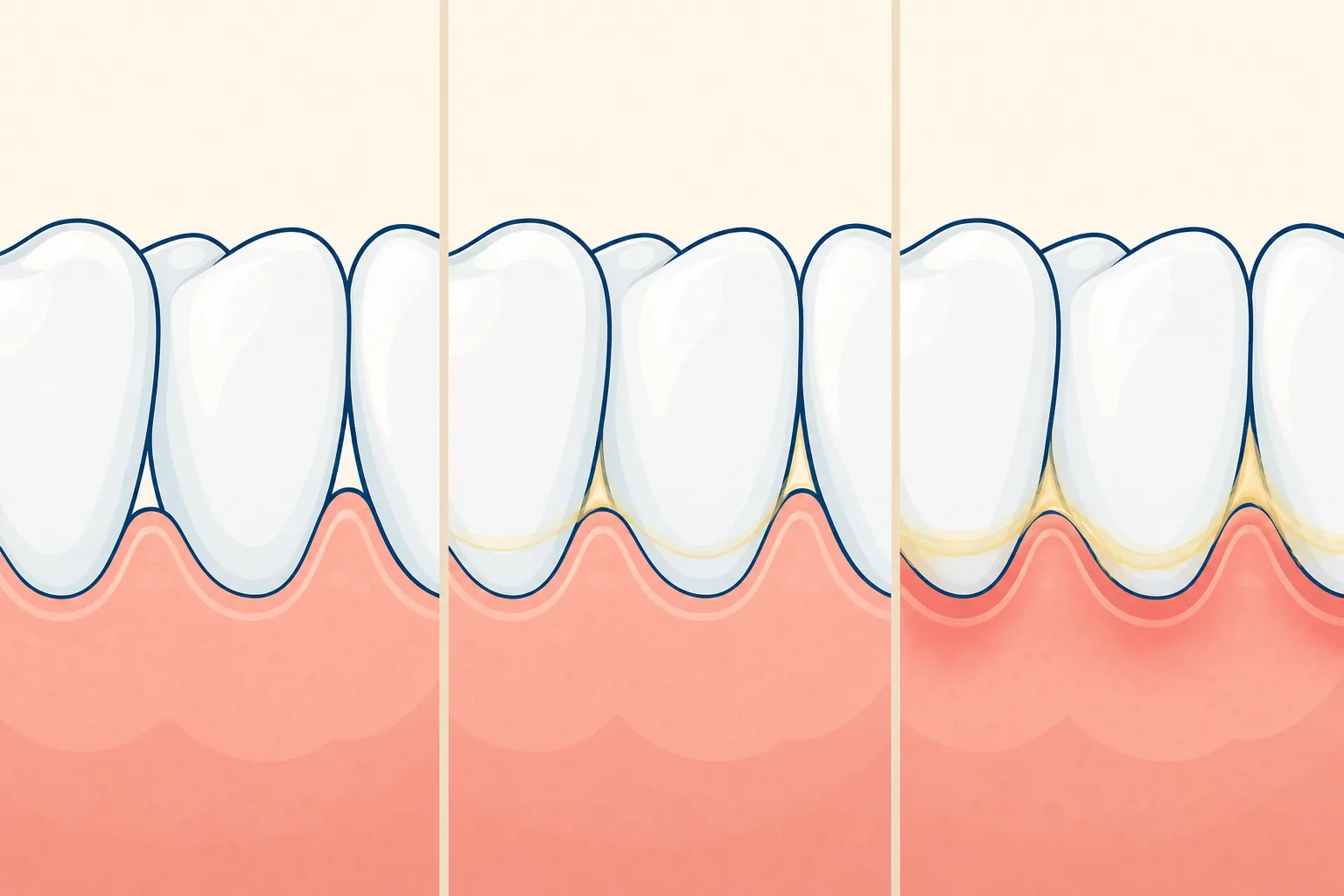
What the change looks like
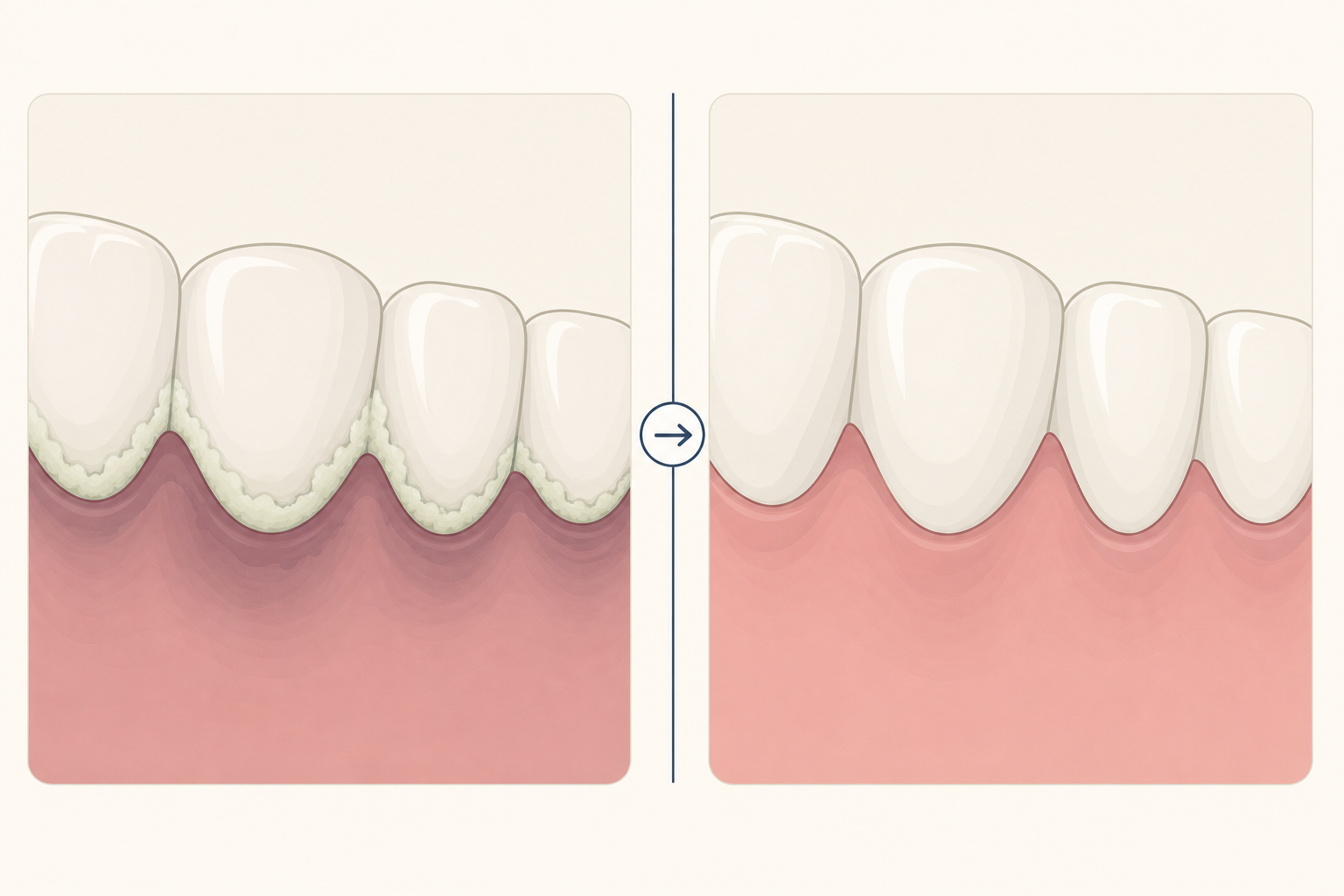
Can I see or feel dental plaque?
Why does plaque build up?
Plaque develops when bacteria in the mouth use sugars from food and drinks. The acids produced can damage tooth enamel over time. Plaque commonly remains in areas that are hard to clean, including between teeth and along the gum line, which is why technique matters as well as frequency.
[3]What can happen when plaque stays on teeth?
Plaque is a biofilm on the tooth surface. With repeated exposure to sugars, its bacteria produce acids that can start the process of dental caries. If plaque is not removed, it can also irritate gum tissue. A dentist can identify whether there is only plaque, early decay, gum inflammation, or a different issue.
[1][2][3][4]| Situation | What to check |
|---|---|
| Plaque is present without obvious symptoms | Review the areas missed during daily cleaning and whether professional cleaning is due.[5][3] |
| A tooth or gum has changed | A dental examination can check for tooth decay or gum disease rather than assuming plaque is the only cause.[3] |
Which areas are easiest to miss when brushing?
Plaque can build up wherever a toothbrush or interdental cleaner does not reach well. Spaces between teeth, the gum line, and areas around dental work need deliberate cleaning. Frequent sugar exposure gives plaque bacteria more opportunity to produce acid, which raises the risk of caries.
[3]How does a dentist check whether plaque has caused damage?
A dental examination looks at the teeth and gums for signs that require care. Caries assessment considers the tooth surface and whether decay is present. The examination is more useful than trying to judge a rough area at home, because early changes and established cavities need different decisions.
[3]What care may be discussed for plaque?
Plaque is removed through daily oral hygiene and professional care when needed. A dental team may review brushing and cleaning between teeth, then treat any tooth decay or gum condition found at examination. The treatment is based on the condition plaque has contributed to, rather than on plaque alone.
[5]What should I ask about costs in Dubai?
Plaque can harden into tartar when it remains on teeth; professional cleaning removes tartar, while brushing and flossing remove plaque and food particles.
[5]