
Dental Nation
Condition guide

Periodontitis

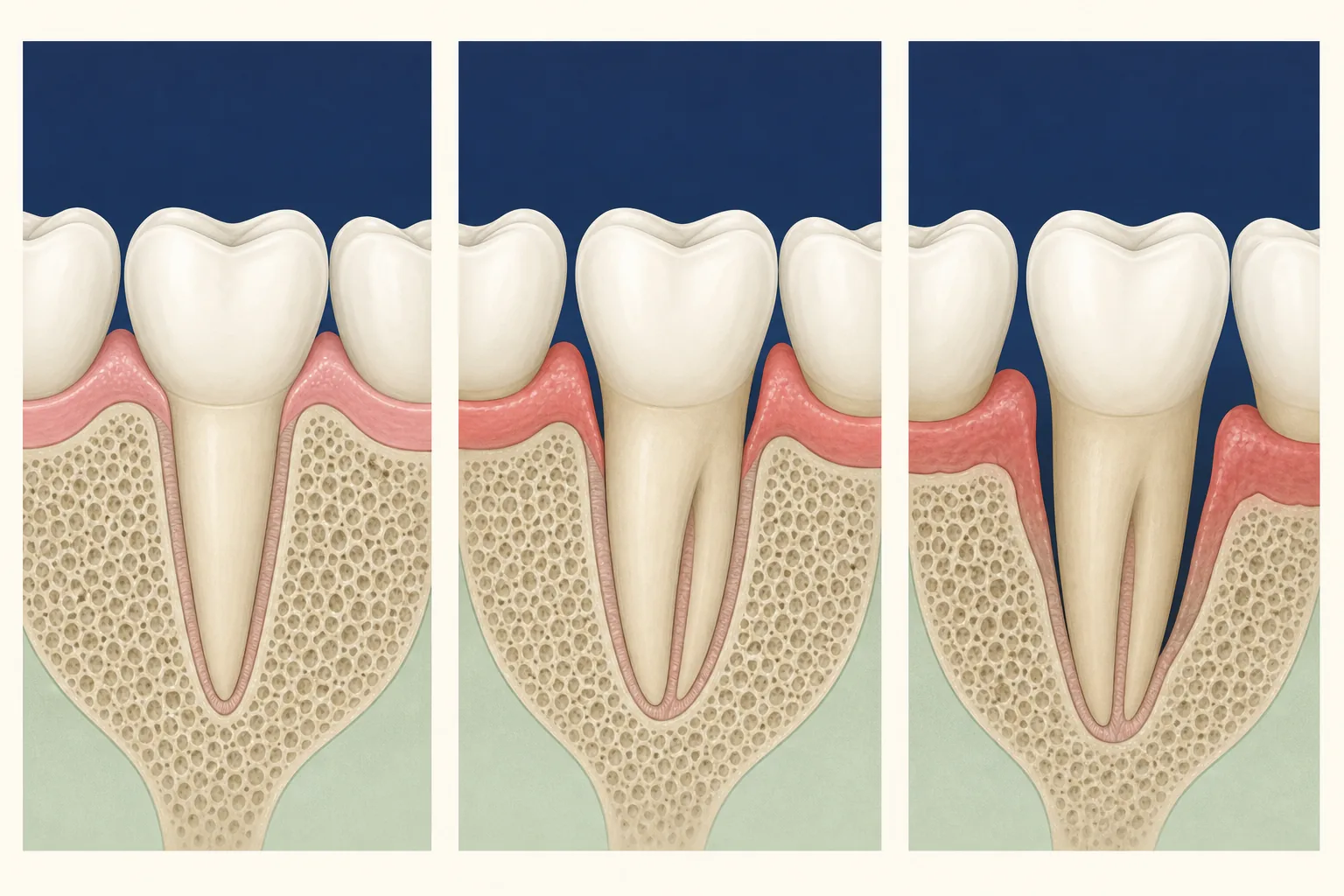
Plaque below the gum line can deepen infected pockets, destroy supporting bone, and eventually loosen or cost teeth.

[2][1]

The short answer

Periodontitis breaks down the tissues and bone that hold teeth in place, creating infected pockets that deepen over time.

[2][1]
Periodontitis dental educational illustration

What the change looks like
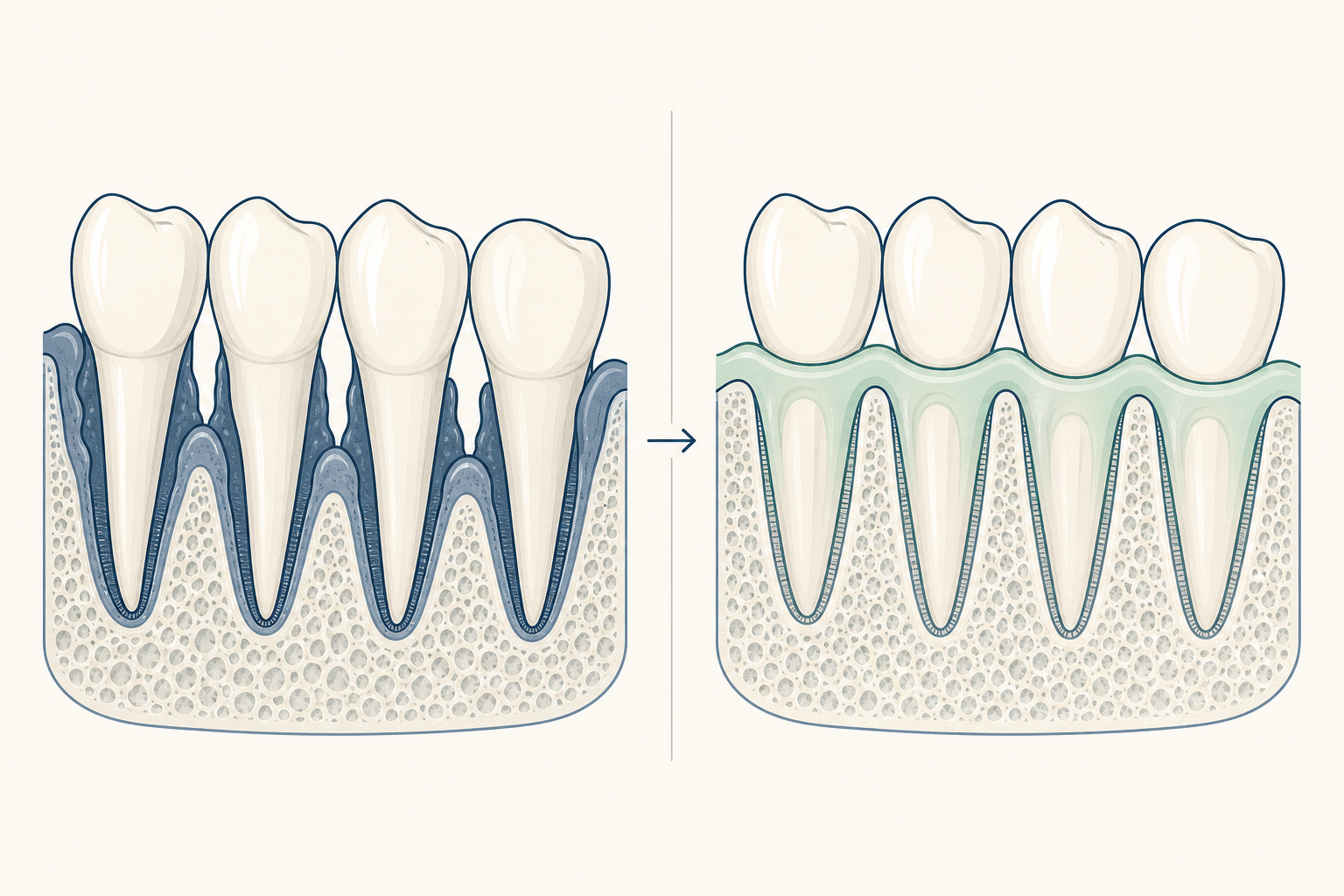
Illustrative diagram: Periodontitis
Illustration — a representative diagram, not a patient photo.
The DN First Look799 AED
Book The DN First Look

What symptoms can periodontitis cause?

Bleeding, swollen or tender gums, persistent bad breath, and changes in tooth stability can occur. Symptoms alone cannot show the condition of the supporting tissues.

[2][1]
Changes worth discussing at a dental visit
ChangeWhy it matters
Bleeding or swollen gumsThese can occur with periodontal disease.[2][1]
Persistent bad breath or loose teethThese changes warrant assessment of the gums and supporting tissues.[2][1]

[2][1]

What causes periodontitis?

It usually starts when poor brushing and flossing allow bacterial plaque to build up and harden. Untreated gingivitis can progress as plaque spreads below the gum line and its toxins trigger chronic inflammation.

[2][1]

What do the stages mean?

Stages run from initial to severe and describe disease severity. Grades describe the rate of progression and the expected response to treatment.

[2]
Questions that make stage information useful
Finding to discussQuestion for the visit
Gum inflammation and bleedingWhat measurements were recorded around each tooth?[2]
Supporting-tissue changesHow do these findings affect the treatment plan?[2]

[2]

What can raise the chance of progression?

Smoking and diabetes are named contributors to gum disease. Plaque that remains near the teeth is the underlying problem that allows infection and inflammation to continue.

[2][1]

How is periodontitis diagnosed?

Assessment includes examining inflamed gums and measuring pockets with a probe. Healthy pockets are usually 1 to 3 millimetres; deeper pockets can signal periodontal disease, and X-rays can show bone loss.

[2]

How is treatment chosen?

Treatment aims to control infection. The number and type of treatments depend on the extent of disease, alongside daily home care and stopping smoking where relevant.

[2][1]
Treatment-planning questions
Plan discussionUseful question
Current gum and tissue findingsWhich findings is this step intended to address?[2][1]
Follow-up careWhen will the gums and supporting tissues be checked again?[2][1]

[2][1]

What should you ask about treatment costs in Dubai?

Treatment can range in type and number as disease becomes more extensive. Ongoing daily care at home is part of every treatment approach.

[2][1]

What can happen without treatment?

As pockets deepen, more gum tissue and bone are destroyed. Teeth can become loose, fall out, or need removal; chewing can become painful.

[2][1]

How can you protect your gums?

Brush twice daily with fluoride toothpaste, clean between teeth regularly, have routine check-ups and professional cleanings, and quit smoking.

[2][1]

Frequently asked questions

Can periodontitis affect tooth stability?

Periodontal disease can affect the tissues supporting teeth, and changes in tooth stability can occur. A dental examination can assess the gums and supporting tissues.

[2][1]