
Pericoronitis
Pain and swelling around a partly erupted wisdom tooth can result from infected gum tissue.
[1]The short answer
Pericoronitis is inflammation around a partly erupted tooth that needs dental assessment when symptoms develop. The area can feel painful or swollen, with a bad taste or unpleasant breath. Some people find opening the mouth, chewing, or swallowing uncomfortable.
[1]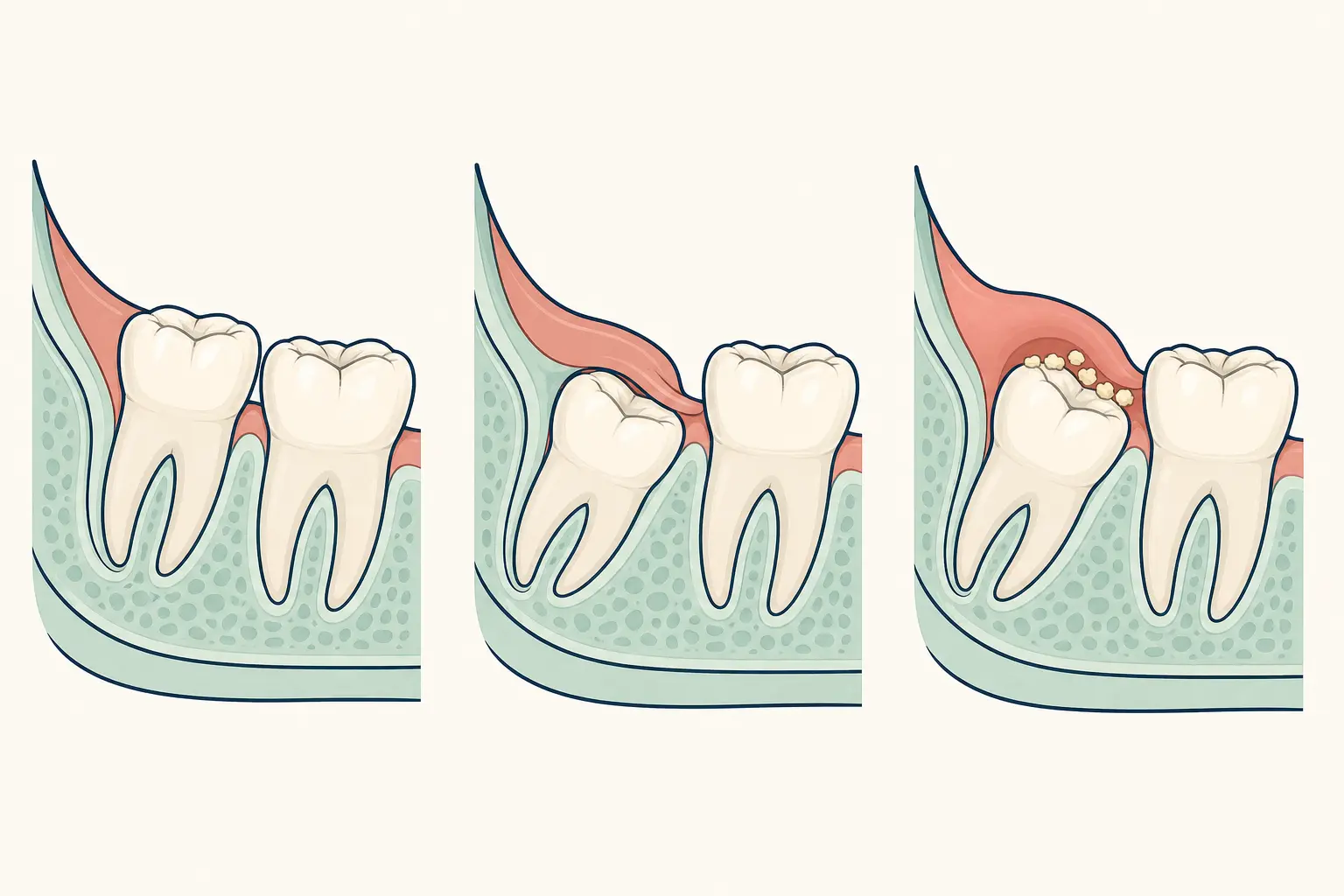
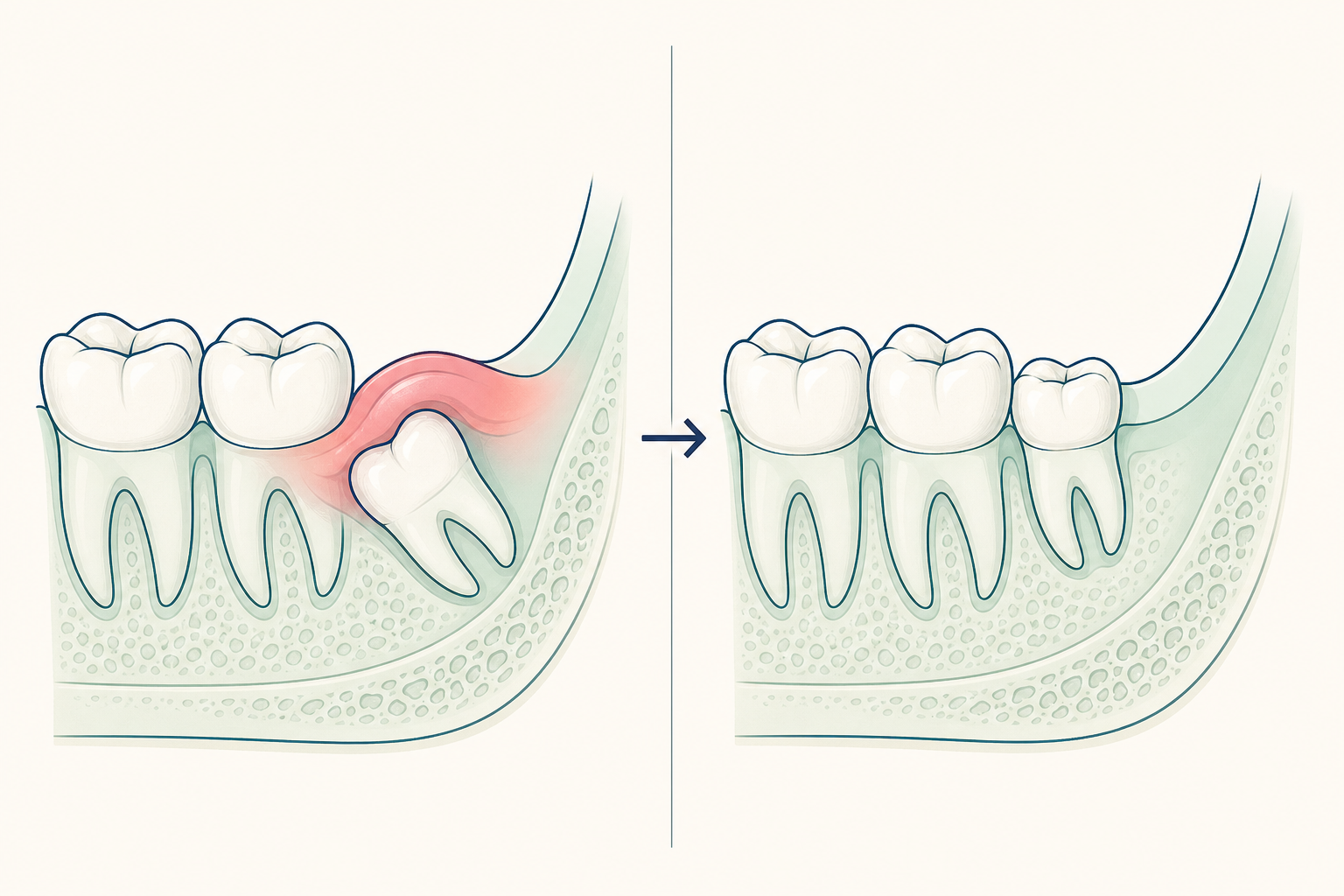
What the change looks like
What symptoms can it cause?
Why does the gum around a wisdom tooth flare?
A partly erupted tooth may remain covered by a flap of gum. Food debris and bacteria can collect beneath that flap, which can trigger inflammation. The tooth position and the ability to clean the area help a dentist decide whether a flare is likely to recur.
[1]Can it settle and then come back?
Symptoms can settle after the local area is cleaned, yet a partly covered tooth can still leave the same space where debris collects. Repeated episodes are useful clinical information because they show that the local anatomy may still be causing a cleaning problem.
[1]What makes another flare more likely?
The main local issue is a partly erupted tooth with a gum flap that is difficult to clean. Debris and bacteria can remain under the flap. A previous episode, persistent difficulty cleaning the area, or new swelling are reasons to arrange a dental examination.
[1]How does a dentist check for pericoronitis?
A dentist checks the gum around the tooth, nearby swelling, mouth opening, and the tooth position. This examination helps distinguish pericoronitis from other causes of pain at the back of the mouth. Imaging may be used when the tooth and surrounding structures need assessment.
[1]What treatment may be discussed?
Treatment can include cleaning or irrigating the affected area. When episodes return, the dentist may discuss treatment of the gum flap or the tooth itself. The choice depends on the examination findings and whether the tooth can be kept clean over time.
[1]What should I ask about costs in Dubai?
Treatment can range from cleaning the pocket around the tooth to removing the gum flap or extracting a tooth that cannot erupt into a cleansable position.
[1]When should I seek urgent help?
How can I reduce recurrence?
Careful cleaning around an erupting tooth can reduce trapped debris. A dental team can show how to clean a difficult area and advise whether monitoring remains suitable. Report recurring pain, swelling, bad taste, or trouble opening the mouth instead of waiting for the next flare.
[1]Frequently asked questions
Can pericoronitis cause trouble opening the mouth?
Yes. Pain and swelling around a partly erupted tooth can make mouth opening uncomfortable, so a dentist should assess the area and the tooth position.
[1]