Dental Nation
Condition guide

Periapical Abscess Without Sinus

A periapical abscess is an infection at a tooth root; drainage and treatment of the source are needed when it is spreading.

[1][2]

The short answer

A periapical abscess is a localised infection at the end of a tooth root, usually arising from infected pulp.

[1][2]
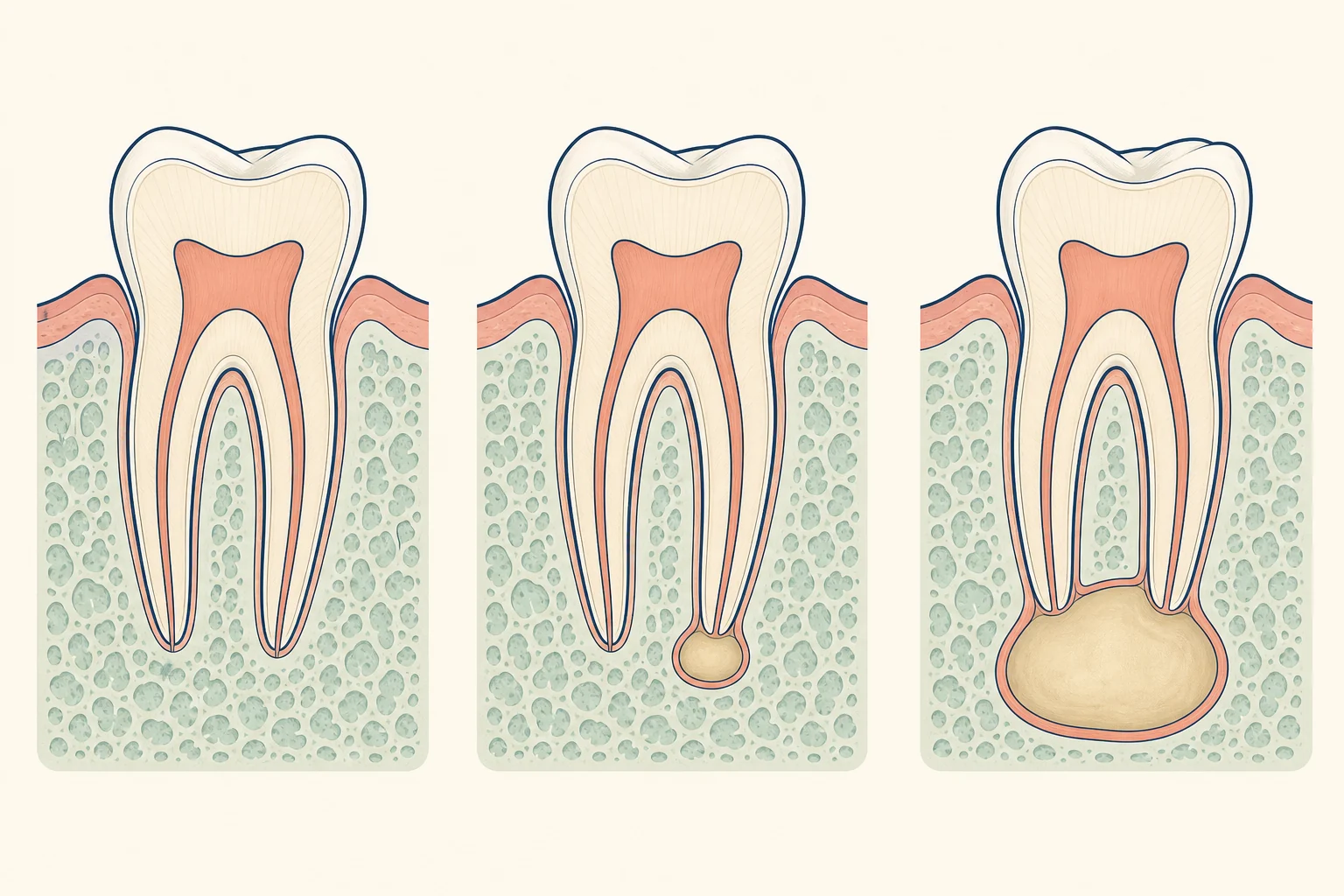
Periapical Abscess Without Sinus dental educational illustration

What the change looks like

Illustrative diagram: Periapical Abscess Without Sinus
Illustration — a representative diagram, not a patient photo.
The DN First Look799 AED
Book The DN First Look

What does it feel like?

Pain may be severe, localised, throbbing, or worse when chewing. Swelling, pus, a bad taste, fever, malaise, chills, difficulty swallowing, altered speech, or limited mouth opening can accompany the infection.

[1][2]
Symptoms that can occur
FindingPatient experience
Root-area painA painful tooth, often aggravated by chewing[1][2]
Systemic signsFever, malaise, or chills may indicate spread[1][2]

[1][2]

Why does it happen?

Dental caries can allow bacteria to reach the pulp. Pulpitis and a periapical abscess then prompt pain or swelling; previous dental work, trauma, recurrent infection, and untreated decay are relevant history points.

[1][2]

What is the difference between local and spreading infection?

An early abscess may be localised and treatable. Fever or cellulitis indicates systemic dissemination, while untreated infection can extend into deep neck spaces, facial sinuses, the mediastinum, or brain.

[1][2]
Pattern of infection
PatternClinical concern
Localised abscessInfection is concentrated around the affected tooth[1][2]
Systemic disseminationFever or cellulitis suggests bacteria are spreading[1][2]

[1][2]

What raises the risk?

Untreated caries, recurrent infections, diabetes, immunosuppression, smoking, and a history of cellulitis or abscess can make infection or its complications more concerning.

[1][2]

How is it checked?

The assessment records pain location, onset, duration, triggers, swelling, fever, swallowing, speech, mouth opening, recent procedures, trauma, and medical conditions. The teeth, gums, pus, facial tissues, lymph nodes, and airway are examined.

[1][2]

How is a periapical abscess treated?

Drainage is followed by endodontic therapy to remove necrotic pulp and restore the tooth. If the tooth cannot be preserved, extraction is an appropriate alternative. Antibiotics do not replace removal of the source and are needed when fever or cellulitis shows systemic spread.

[1][2]
Treatment according to tooth prognosis
Dental situationUsual treatment direction
Restorable toothDrainage, root canal treatment, and restoration[1][2]
Tooth cannot be preservedExtraction after managing the infection[1][2]

[1][2]

What shapes the cost in Dubai?

The price is shaped by whether care involves drainage and root canal treatment with restoration or extraction. The infection itself does not determine one fixed procedure.

[1][2]

What if it is left untreated?

Pain can intensify and bacteria can spread beyond the tooth. Deep-space infection, airway compromise, and severe infections affecting the neck, sinuses, chest, or brain are possible complications.

[1][2]

How can another abscess be prevented?

Brush daily, floss, attend regular dental care, and deal with decay before bacteria reach the pulp. Stopping smoking and controlling diabetes also address recognised risk factors for infectious emergencies.

[1][2]

Frequently asked questions

Will antibiotics alone cure a periapical abscess?

No. Definitive care removes the infected source through drainage, endodontic treatment, or extraction; antibiotics are used when systemic spread is present.

[1][2]