
Peri-Implantitis
Inflammation with supporting bone loss around an implant is peri-implantitis and can affect implant support.
[1]The short answer
Peri-implantitis is inflammation around an implant with supporting bone loss and needs prompt dental assessment. Bleeding, swelling, pus, or tenderness around the implant can occur. An implant may also feel different when biting, though symptoms alone cannot show how much supporting tissue is affected.
[1]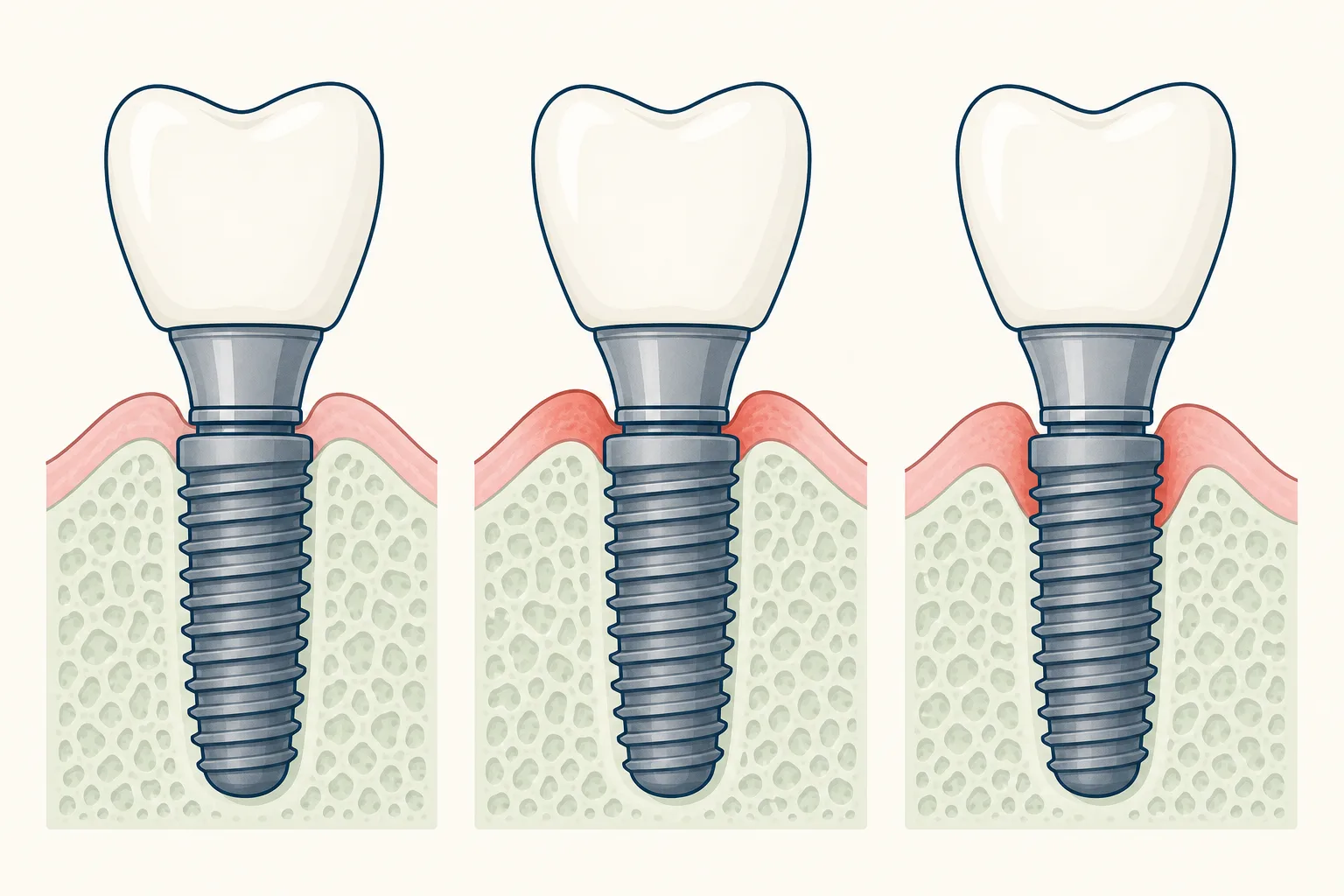
What the change looks like
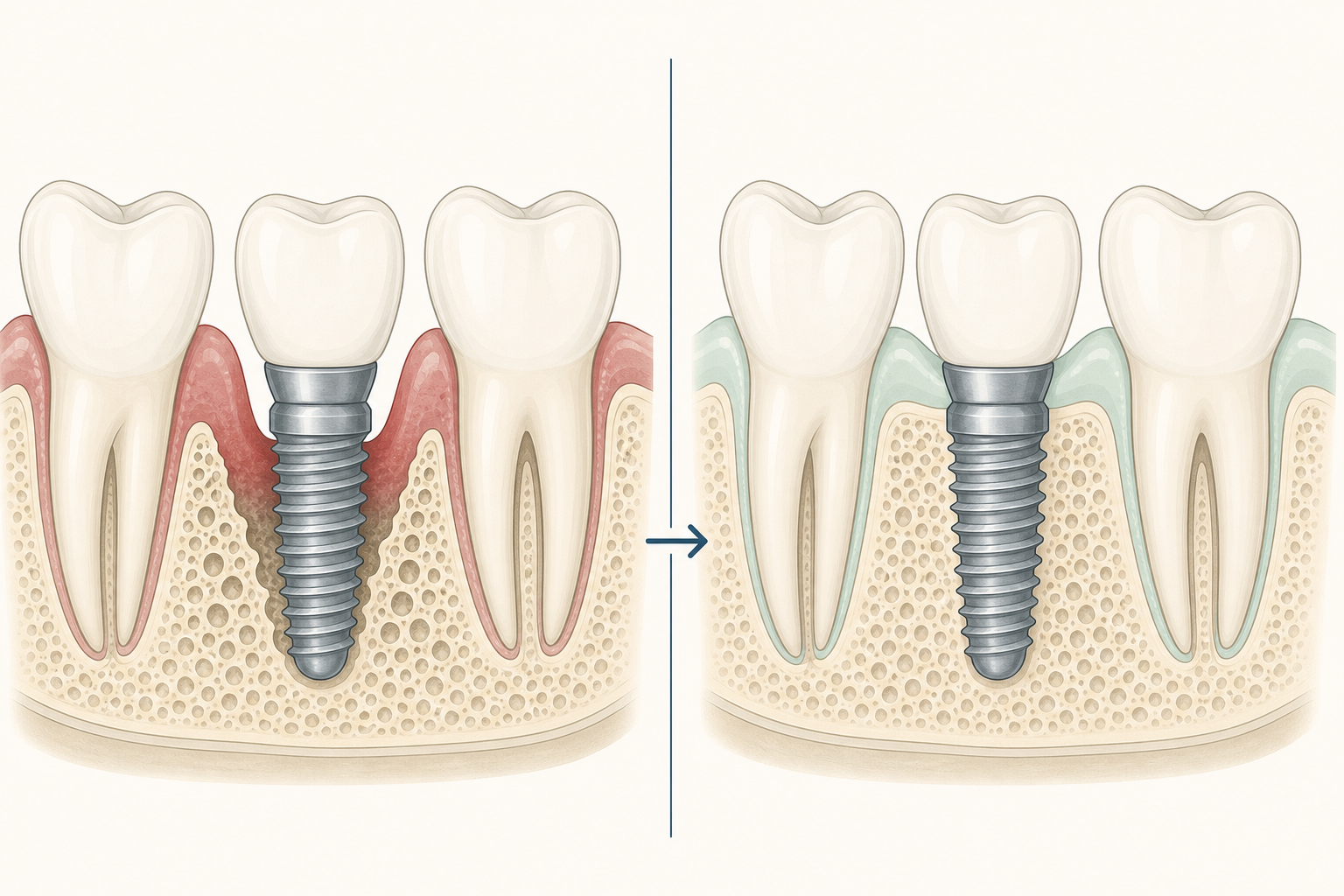
What changes around an implant need attention?
Why can peri-implantitis develop?
Peri-implantitis is associated with bacterial plaque around an implant. A dentist also considers whether the implant area is difficult to clean and whether there is a history of periodontal disease. The cause and extent need examination because an implant can have inflammation without the same symptoms each time.
[1]How is it different from peri-implant mucositis?
Inflammation confined to the soft tissue around an implant is called peri-implant mucositis. Peri-implantitis includes loss of supporting bone. That distinction matters because bone loss changes the treatment discussion and cannot be judged by bleeding or soreness alone.
[1]What can raise the risk?
Plaque accumulation around an implant and a history of periodontal disease are relevant risk considerations. Access for daily cleaning and regular professional maintenance also matter. These factors do not confirm peri-implantitis, but they give the dentist a reason to inspect the tissues and supporting bone carefully.
[1]How does a dentist assess an implant?
Assessment includes examining the tissue around the implant and checking for bleeding, pus, probing findings, and bone changes. Dental imaging can help assess supporting bone. The dentist also reviews implant cleaning, symptoms, and previous periodontal or implant history before recommending treatment.
[1]What treatment may be needed?
Treatment aims to control inflammation and manage the implant site. Professional cleaning and changes to daily cleaning may be part of care. When peri-implantitis is present, treatment can also involve surgical approaches; the plan depends on the clinical findings and the amount of bone affected.
[1]What should I ask about costs in Dubai?
Peri-implantitis usually requires surgical treatment because inflammation is accompanied by deterioration in the bone supporting the implant.
[1]What can happen without treatment?
How can I protect an implant long term?
Keep to the maintenance plan agreed for the implant and clean the areas around it as instructed. Regular professional assessment can identify inflammation early. Contact the dental team if the gum bleeds, swells, produces pus, or becomes tender around an implant.
[1]Frequently asked questions
Is bleeding around an implant always peri-implantitis?
Bleeding can be a sign of inflammation around an implant, but a dentist must examine the tissue and supporting bone to distinguish peri-implant mucositis from peri-implantitis.
[1]