
Peri-Implant Mucositis
Bleeding or tenderness around an implant may be mucositis, inflammation limited to soft tissue.
[1]The short answer
Peri-implant mucositis is inflammation around an implant that can cause bleeding, redness, swelling, or tenderness and needs a dental assessment. A change may be noticed while brushing, when touching the gum, or during a routine implant review. Symptoms can be mild, so a lack of severe pain does not settle the question of gum health.
[1]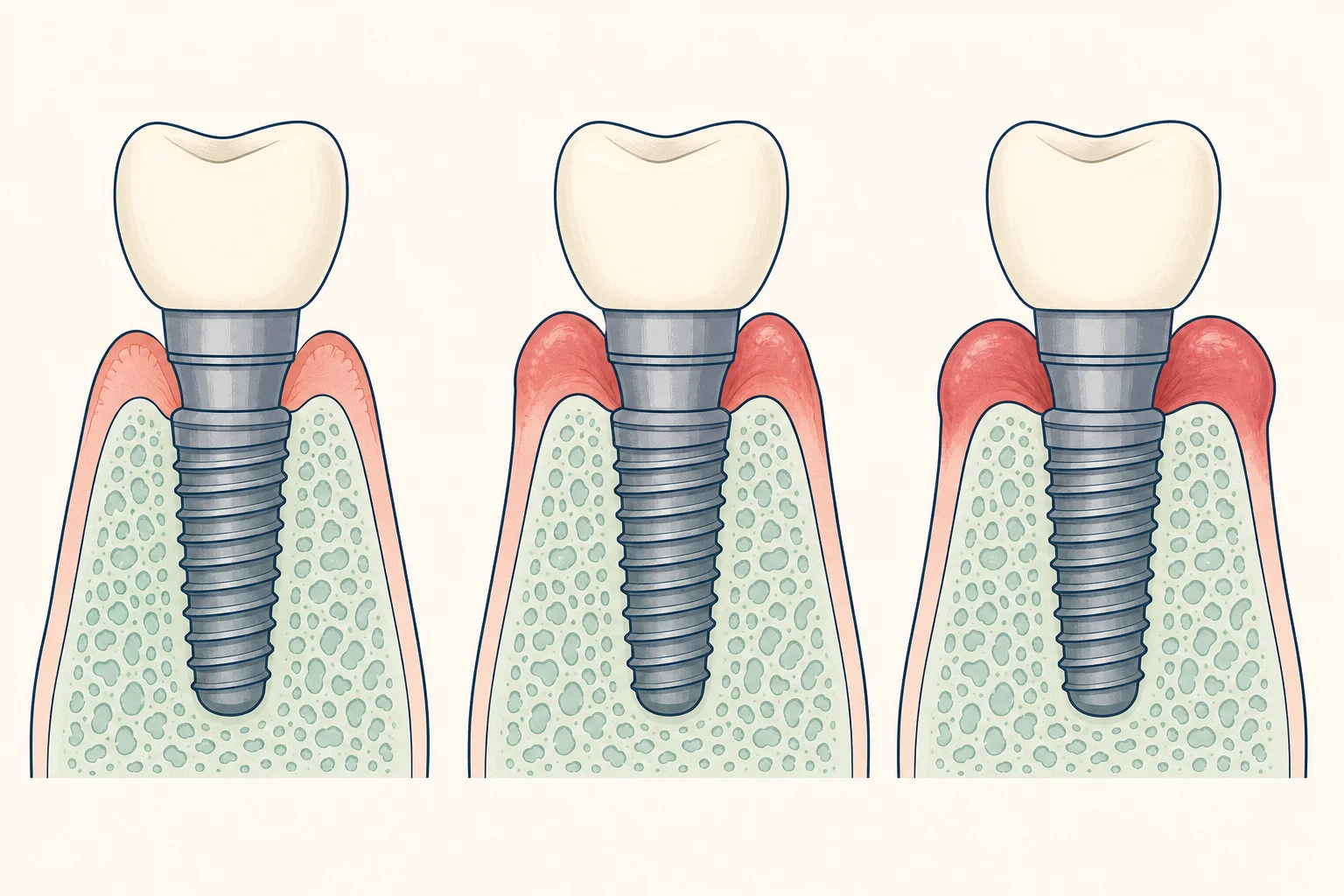
What the change looks like
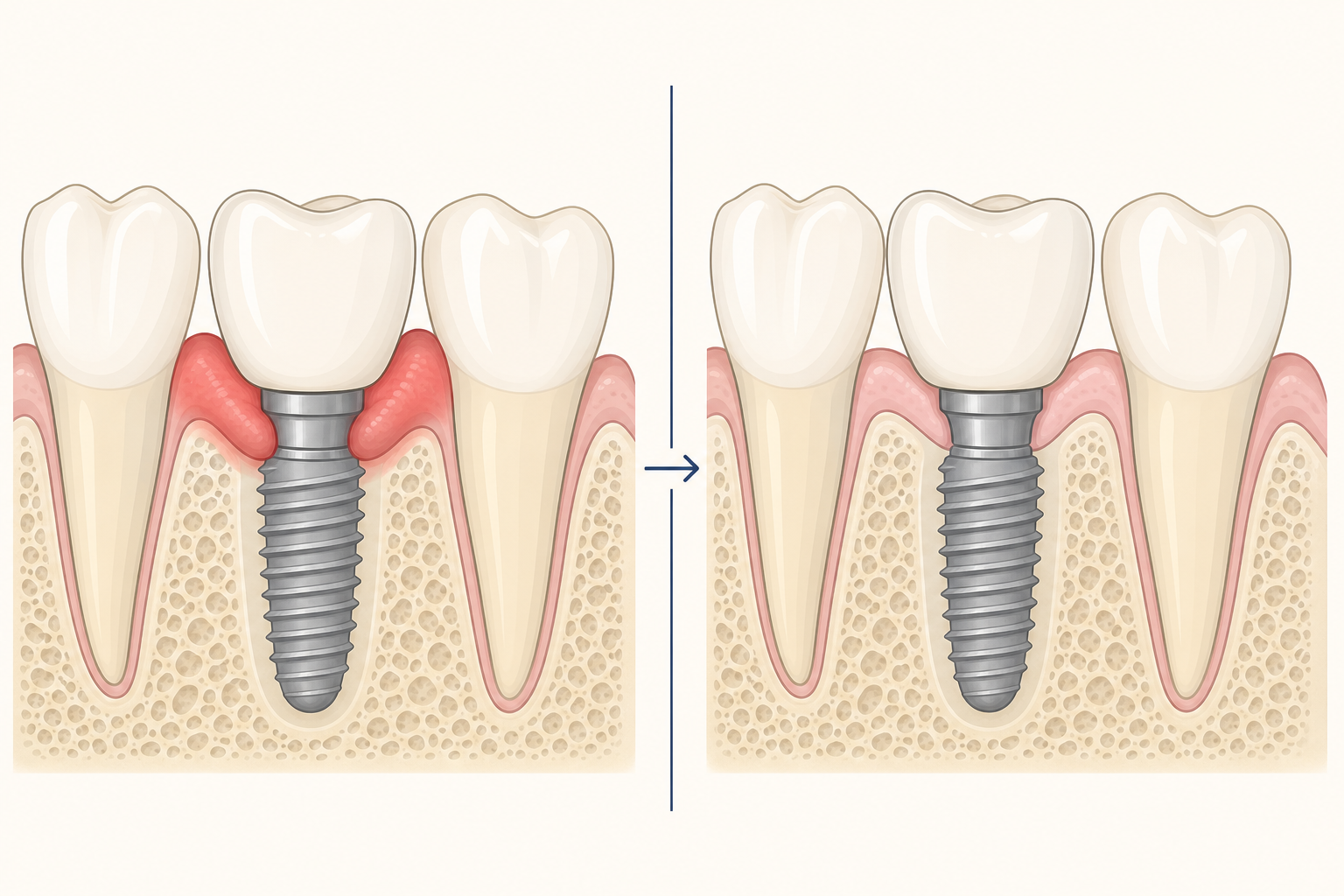
What changes around an implant should I notice?
Why can the tissue around an implant become inflamed?
Peri-implant mucositis is associated with bacterial plaque around the implant. Plaque can collect where the implant meets the gum and restoration. The aim of assessment is to identify the local plaque-retaining areas and the cleaning routine that applies to that particular implant restoration.
[1]How is mucositis different from peri-implantitis?
Mucositis affects the soft tissues around an implant. Peri-implantitis includes inflammation with loss of supporting bone. A clinician examines the implant tissues and supporting structures so that a bleeding or swollen gum is not treated as a diagnosis by appearance alone.
[1]What can make plaque control harder around an implant?
Plaque is the immediate factor discussed in peri-implant mucositis. Individual implant designs, restorations, and gum contours can make some areas harder to reach. Bring your normal cleaning tools to an implant review so the dental team can check whether they reach the areas that need attention.
[1]How does a dentist assess an inflamed implant gum?
Assessment includes examination of the tissue around the implant and checking for bleeding or other inflammatory signs. The clinician also considers the supporting structures because peri-implant diseases are distinguished by whether bone loss is present. Your previous implant records and maintenance history can help with comparison.
[1]What treatment may be discussed?
Care for peri-implant mucositis focuses on controlling plaque and managing the local inflammation. Professional cleaning and tailored home-care instruction may be part of the plan. The exact approach depends on the implant restoration, tissue findings, and whether assessment identifies disease beyond the soft tissue.
[1]What should I ask about costs in Dubai?
Mucositis is limited to the soft tissue around an implant and may be treated successfully when found early; peri-implantitis usually requires surgery.
[1]Why should bleeding around an implant be checked?
Mucositis is a soft-tissue condition, while peri-implantitis involves inflammatory changes with supporting bone loss. A prompt assessment helps establish which condition is present and whether the implant support needs attention. An implant that feels loose, or a new change around it, needs professional review.
[1][2]How can I care for the gum around an implant?
Daily plaque control and regular professional maintenance are part of implant care. Ask the dental team to show you how to clean around your own implant and restoration, because access differs between patients. Report bleeding, swelling, or tenderness rather than changing the routine without advice.
[1]Frequently asked questions
Can peri-implant mucositis cause bleeding around an implant?
Yes. Bleeding can be a sign of inflammation in the soft tissue around an implant and should be assessed with the implant support in mind.
[1]