
Dental Nation
Condition guide

Overbite (Deep Bite)

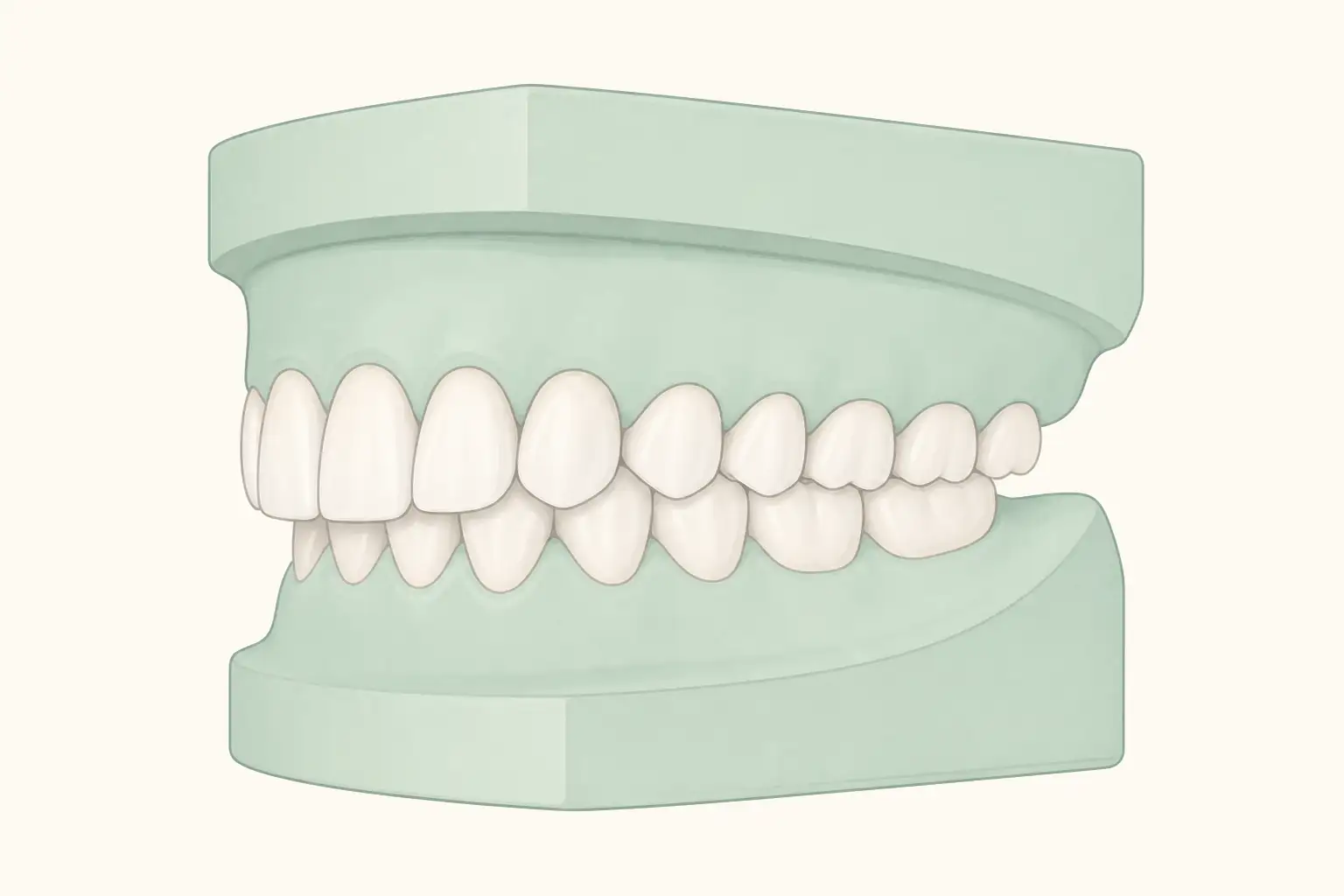
An overbite occurs when upper teeth overlap lower teeth too far, which can alter how the teeth meet when biting.

[1]

The short answer

An overbite is a Class II bite in which the upper teeth and jaw overlap the lower teeth and jaw too far.

[1]
Overbite (Deep Bite) dental educational illustration

What the change looks like
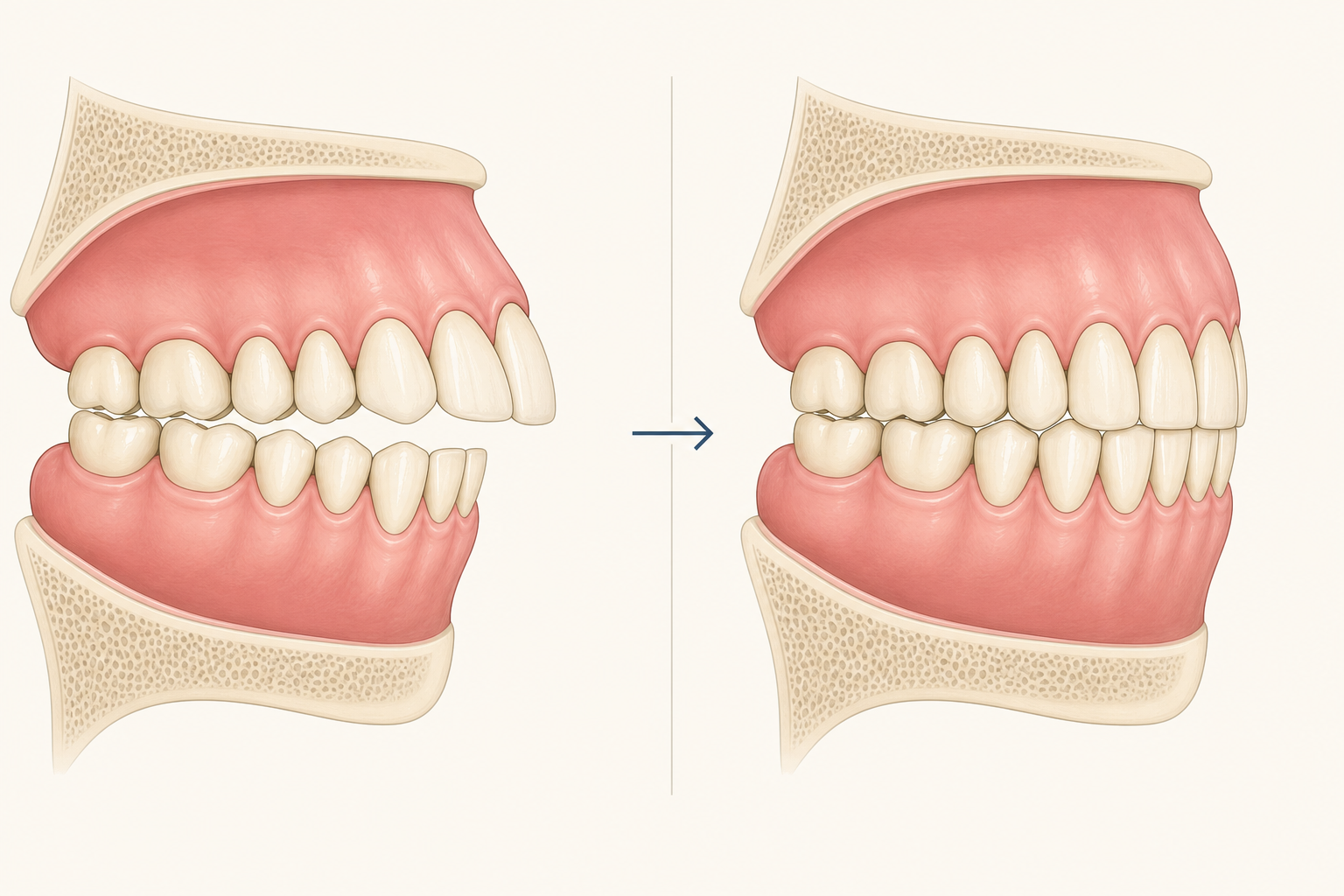
Illustrative diagram: Overbite
Illustration — a representative diagram, not a patient photo.
The DN First Look799 AED
Book The DN First Look

What does an overbite affect?

When the teeth do not meet normally, biting or chewing can be difficult or uncomfortable. Teeth may look misaligned, and some people have speech difficulty, mouth breathing or trouble biting into food correctly.

[1]
Effects of an uneven bite
EffectWhat may be noticed
Chewing difficultyBiting down or chewing is uncomfortable[1]
Visible alignment changeTeeth or facial appearance may look uneven[1]

[1]

What can contribute to an overbite?

Overbite can run in families when upper and lower jaw sizes, or jaw and tooth sizes, differ. Childhood thumb sucking, tongue thrusting, prolonged bottle use and pacifier use beyond age three can also contribute to an abnormal bite pattern.

[1][2]

How can an overbite develop?

The bite develops as baby teeth are replaced and the jaws grow. Premature loss of baby teeth can reduce arch length and worsen excessive overbite, crowding, rotations or unfavourable molar relationships as the developing teeth shift.

[1][2]
Changes that can affect the bite
ChangePossible result
Jaw and tooth size mismatchAn abnormal bite pattern can develop[1][2]
Early loss of a baby toothLoss of arch length can increase excessive overbite[1][2]

[1][2]

Which habits are relevant?

Persistent thumb sucking and tongue thrusting can alter tooth position. Extra, lost, impacted or unusually shaped teeth, poorly fitting fillings or crowns, and jaw fractures are other listed contributors to malocclusion and bite changes.

[1][2]

How is an overbite checked?

A dental examination checks how the back teeth come together while you bite. X-rays of the teeth, face or skull and diagnostic models can be used to assess the tooth and jaw relationship and record the problem.

[1][2]

How is an overbite treated?

Orthodontic appliances can move teeth and improve overbite, overjet and the way the back teeth meet. In growing patients, treatment aims for a bite and profile compatible with the person’s skeletal pattern; adult treatment may require longer appliance use.

[1][2]
How treatment timing differs
TimingWhat can be expected
During growthTreatment can improve overbite and how the back teeth meet[1][2]
In adulthoodCorrection can succeed but may take longer[1][2]

[1][2]

What determines the Dubai treatment cost?

The amount of bite correction and treatment time are relevant to the work required. Orthodontic treatment can last six months to two years or more, and adults may need braces or other devices for a longer period.

[1][2]

What can happen while the bite is being corrected?

An uneven bite can make chewing or speaking difficult. During orthodontic treatment, appliances may irritate the mouth and gums; discomfort, tooth decay and gingivitis are among the possible complications listed for malocclusion care.

[1]

Can an overbite be prevented?

Inherited jaw and tooth proportions cannot always be prevented. Reducing thumb sucking and tongue thrusting can help address modifiable habits, and maintaining space after an early baby-tooth loss can reduce the alignment changes caused by lost arch length.

[1][2]

Frequently asked questions

Can an overbite be corrected after childhood?

Yes. Orthodontic treatment in adults is often successful, but braces or other devices may need to be used longer than they would be in children and adolescents.

[1][2]