
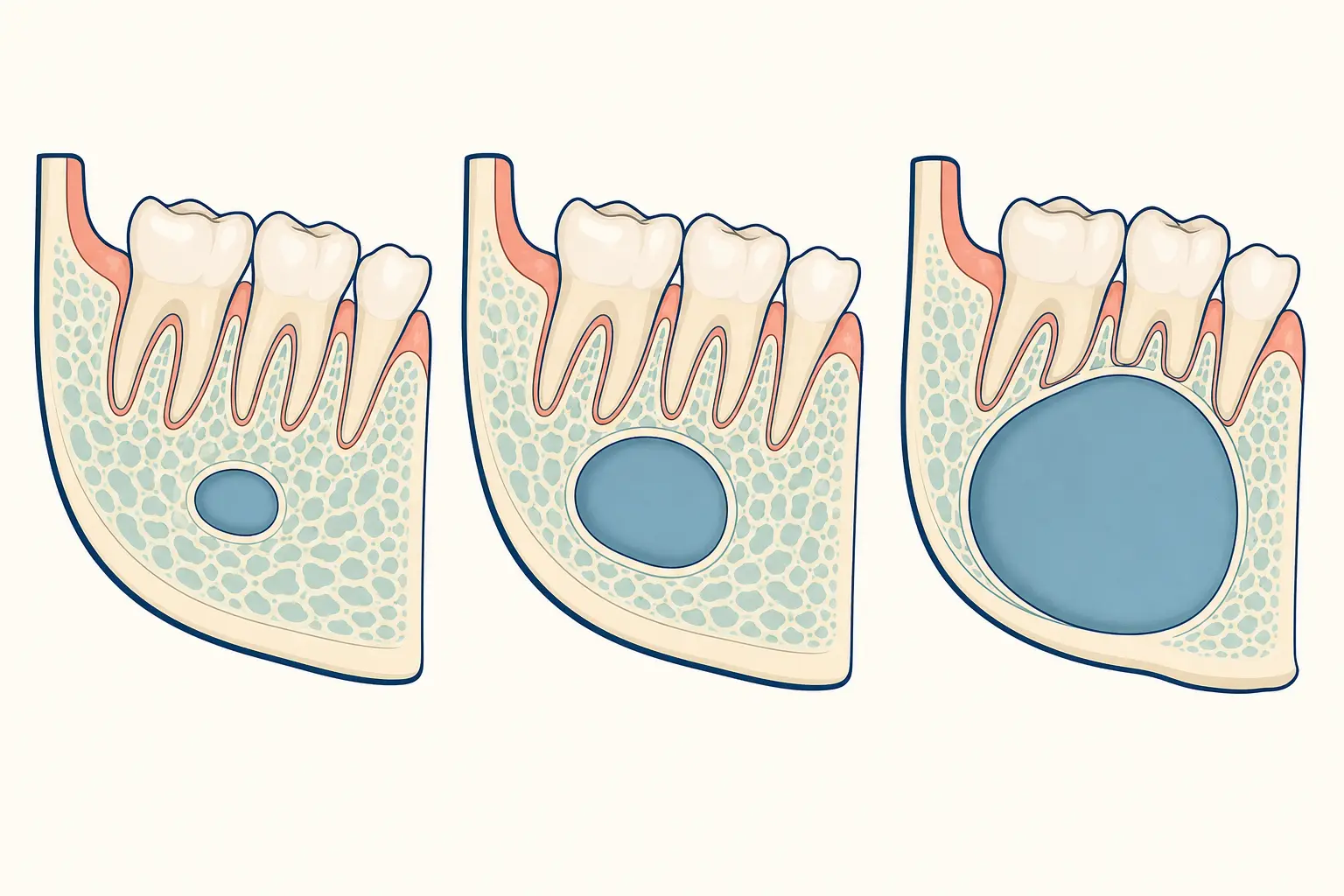
What the change looks like
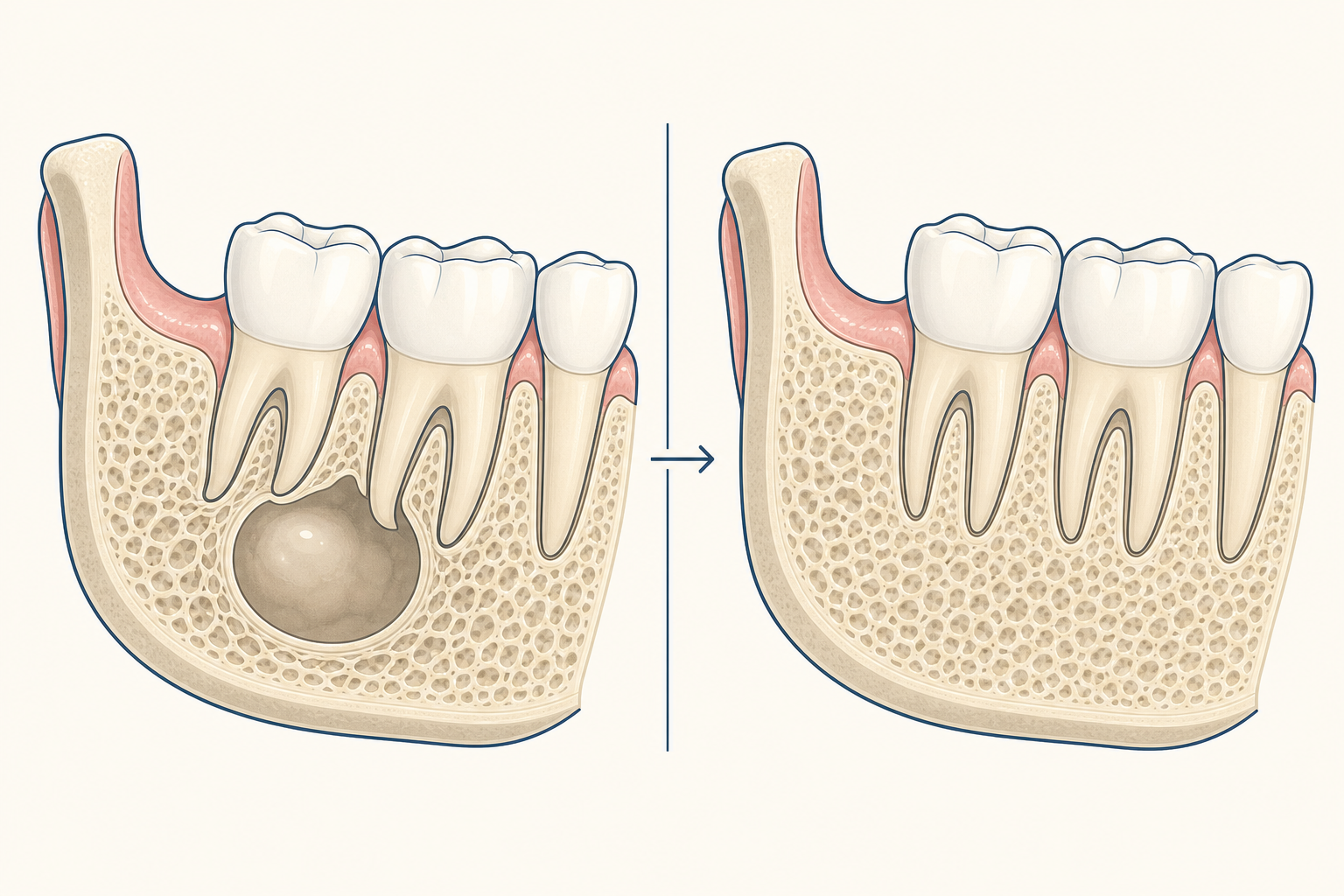
What symptoms can a jaw cyst cause?
When a jaw cyst expands or becomes inflamed, it can cause swelling, pain, infection, delayed eruption, tooth displacement or altered sensation.
[2]Why do jaw cysts form?
Jaw cysts can be developmental or inflammatory. Periapical cysts are inflammatory and develop at the root apex of a non-vital tooth after inflammation from decay or trauma.
[2]What happens as a cyst grows?
Jaw cysts often cause symptoms late. As a cyst reaches a larger size, it can expand bone and damage adjacent teeth or other structures.
[2]Which findings make assessment more important?
Delayed tooth eruption can be associated with an odontogenic keratocyst. Eruption cysts occur as teeth erupt and may produce swollen tissue with a bluish hue.
[2]How is a jaw cyst diagnosed?
Radiographs assess a jaw cyst's size and position, but different cysts cannot be distinguished by radiographic appearance alone. A biopsy can help, although some cysts need removal before their type is certain in the laboratory.
[2]How are jaw cysts treated?
Treatment commonly involves surgical removal with laboratory examination of the tissue. A dentigerous cyst can be treated by removing the impacted tooth with a biopsy, while eruption cysts are often self-limiting.
[2]What affects the cost in Dubai?
Treatment may include imaging, biopsy, surgical removal and care for damaged teeth or jawbone. A larger lesion can require removal of adjacent teeth or part of the bone.
[2]What can happen if it is left untreated?
Once a jaw cyst reaches a certain size, it can damage the jawbone or adjacent teeth. Some cases require removal of bone or nearby teeth.
[2]Can jaw cysts be prevented?
Frequently asked questions
Can a jaw cyst be benign and still need treatment?
Yes. Jaw cysts are normally benign, but a large untreated lesion can damage bone or adjacent teeth and may need surgical removal.
[2]