
Condition guide
Jaw Bone Infection (Osteomyelitis)
Jaw bone infection can cause pain, swelling and bone damage; scans help show its extent and treatment removes the infection source.
[2][4]The short answer
Jaw bone infection is an infectious inflammation of the medullary cavity, Haversian systems and nearby cortical bone, often beginning as an acute infection.
[2][4]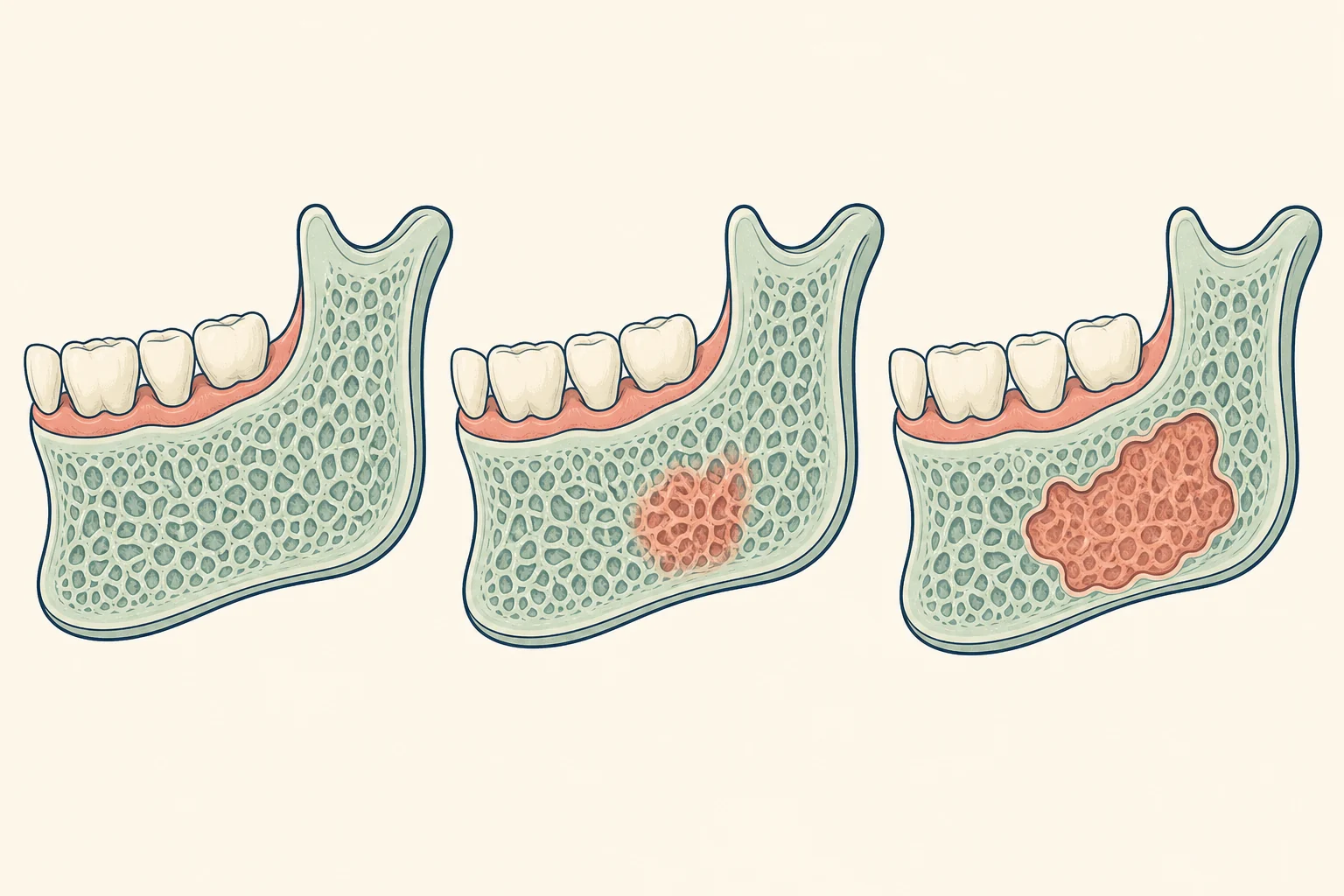
What the change looks like
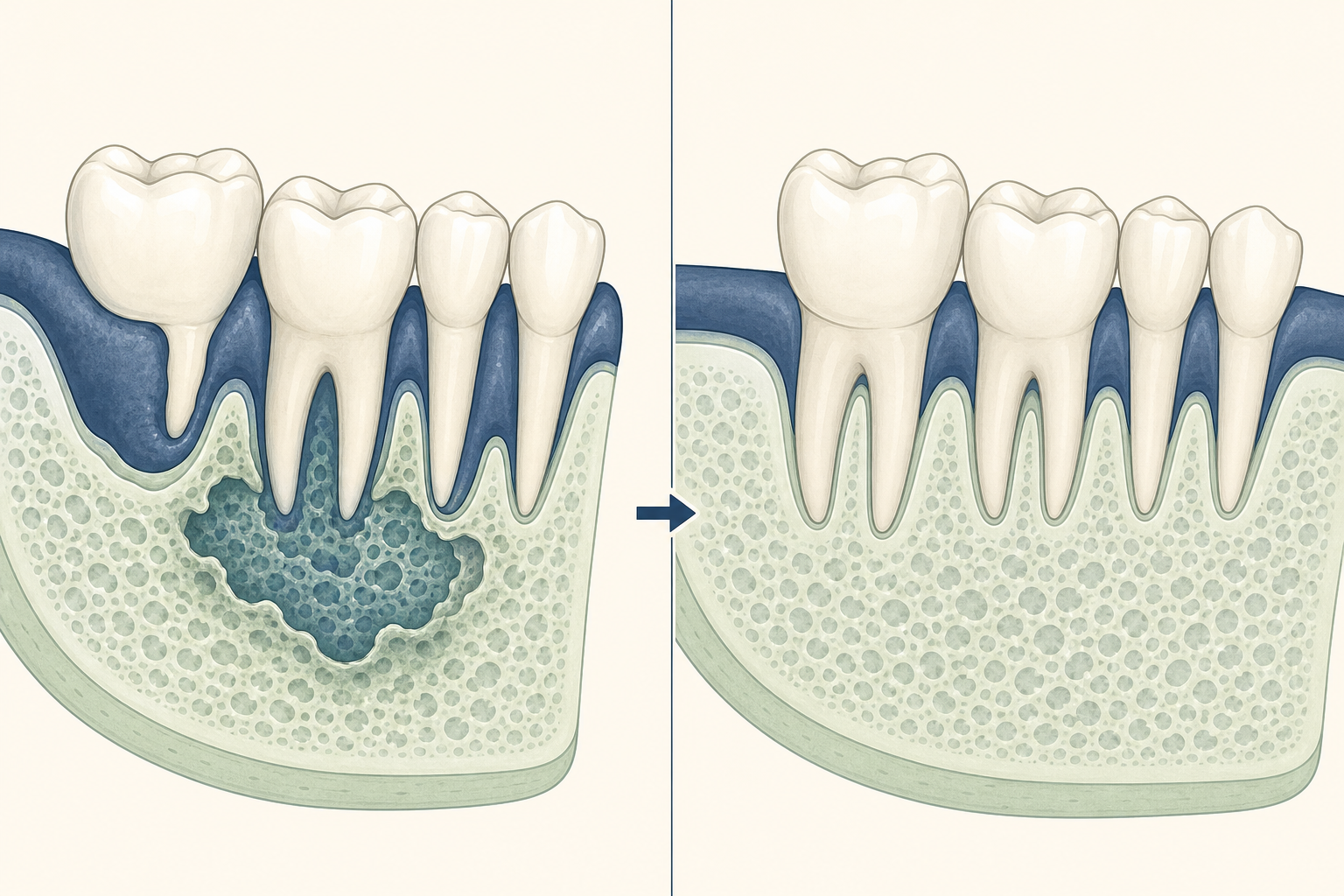
The DN First Look799 AED
Book The DN First LookWhat symptoms can jaw conditions cause?
| Situation | What the clinician checks | What the finding changes |
|---|---|---|
| A quieter or early presentation | Symptoms, history, and local examination | The need for assessment and monitoring[2][4] |
| A persistent, larger, or function-affecting presentation | Examination plus imaging or further testing when indicated | The treatment discussion and follow-up plan[2][4] |
What can cause it?
What are the stages?
The practical stages are the early clinical picture, established bone involvement, and a persistent or recurrent process. These labels describe the extent and course of the problem; imaging and examination are needed before a stage is assigned.
[2][4]| Situation | What the clinician checks | What the finding changes |
|---|---|---|
| A quieter or early presentation | Symptoms, history, and local examination | The need for assessment and monitoring[2][4] |
| A persistent, larger, or function-affecting presentation | Examination plus imaging or further testing when indicated | The treatment discussion and follow-up plan[2][4] |
Which risks matter?
How is it diagnosed?
How is treatment chosen by stage?
Treatment addresses the infection and its source. Infected teeth or implants may need removal when they cause the infection or surrounding bone is affected, and replacement is considered after healing and resolution.
[2][4]| Situation | What the clinician checks | What the finding changes |
|---|---|---|
| A quieter or early presentation | Symptoms, history, and local examination | The need for assessment and monitoring[2][4] |
| A persistent, larger, or function-affecting presentation | Examination plus imaging or further testing when indicated | The treatment discussion and follow-up plan[2][4] |