Dental Nation
Condition guide

Oral Thrush

White velvety mouth patches that leave red, bleeding areas can be oral thrush, a Candida overgrowth treated with antifungal medicine.

[1][2]

The short answer

Oral thrush can cause white mouth patches, soreness, altered taste and difficulty eating or drinking when Candida overgrows.

[1][2]
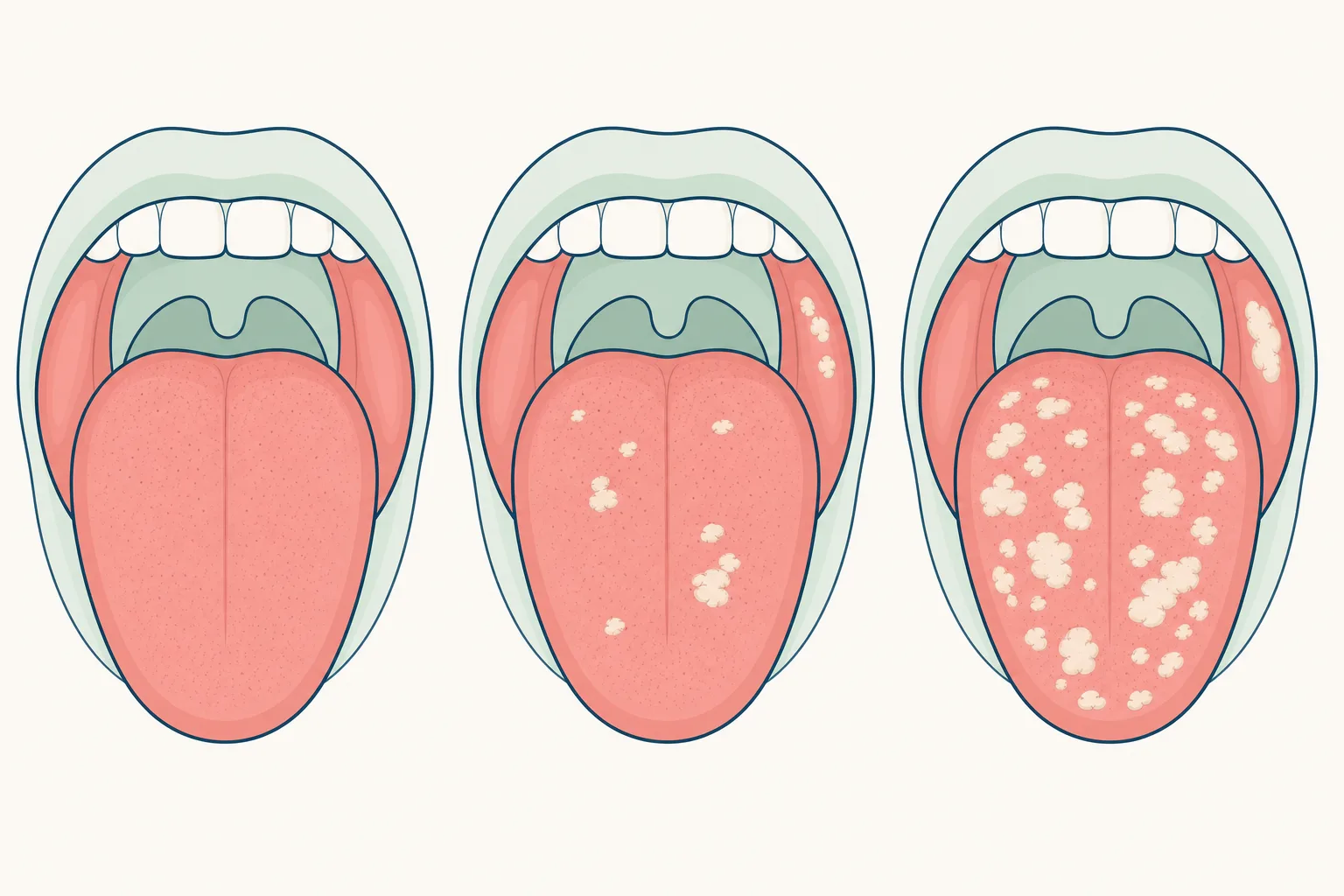
Oral Thrush dental educational illustration

What the change looks like

Illustrative diagram: Oral Thrush
Illustration — a representative diagram, not a patient photo.
The DN First Look799 AED
Book The DN First Look

What does oral thrush feel and look like?

Mouth changes linked with oral thrush
ChangeWhat it may mean
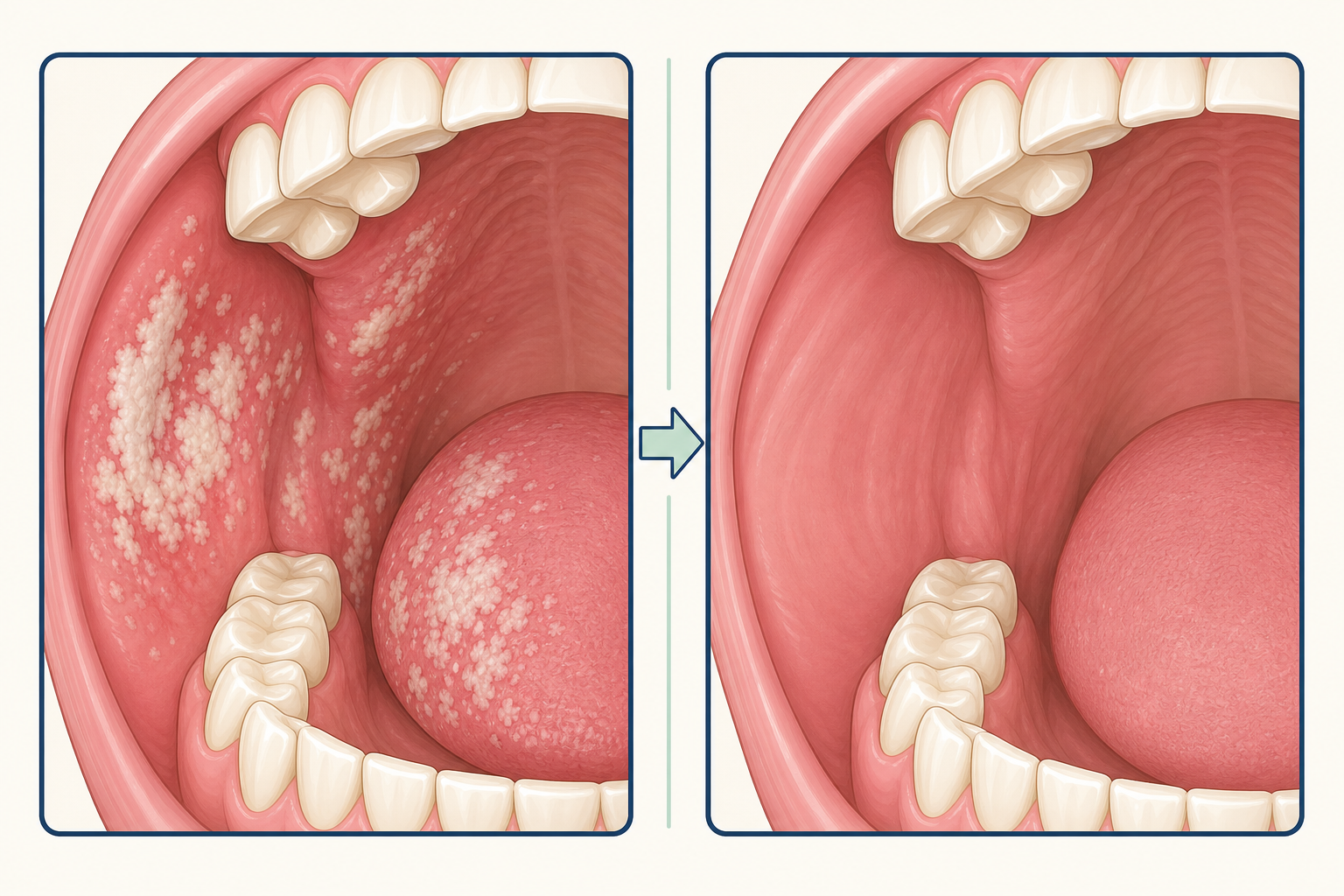
White patchesWhite, velvety sores can appear on the tongue or elsewhere in the mouth.[1][2]
Patch removedA wiped patch can leave a red spot that bleeds.[1][2]
Eating and tastePain, an unpleasant taste, reduced taste and difficulty eating or drinking can occur.[1][2]

[1][2]

Why does Candida overgrow in the mouth?

A small amount of Candida normally lives in the mouth. Thrush develops when the fungus grows too much, which can happen when immunity is weak or antibiotics reduce the bacteria that usually keep it in check.

[1][2]

Can oral thrush progress beyond mouth patches?

Thrush may clear with treatment, but it can return when the immune system is weak. In that setting, Candida can spread beyond the mouth and cause a serious infection.

[1][2]
How the condition can change
SituationPossible course
Candida grows in the mouthWhite sores, mouth soreness and pain on swallowing can develop.[1][2]
Immunity is weakenedThrush can recur and Candida can spread through the body.[1][2]

[1][2]

Who is more likely to get oral thrush?

Long-term antibiotics, steroid asthma inhalers, chemotherapy, high blood sugar, immune-weakening medicines and dentures that do not fit well are among the factors linked with thrush. Babies, older people and people in poor health are also more likely to develop it.

[1][2]

How is oral thrush recognised?

The characteristic pattern is white, velvety mouth or tongue sores, sometimes with bleeding after brushing or scraping. Cracks at the mouth corners, a sore tongue and pain on swallowing add useful clues.

[1][2]

How is oral thrush treated?

Antifungal medicine can cure oral thrush. Nystatin is a liquid medicine held in the mouth for as long as possible before swallowing, so it stays in contact with the affected area.

[1][2]
Antifungal treatment detail
TreatmentHow it is used
Antifungal medicineIt treats the Candida infection and can cure oral thrush.[1][2]
Nystatin liquidHold the liquid in the mouth as long as possible before swallowing it.[1][2]

[1][2]

What treatment is used for oral thrush?

Oral thrush is treated with antifungal medicine rather than a filling, crown or other dental restoration. Nystatin is one antifungal supplied as a liquid for use in the mouth.

[1][2]

When can oral thrush be serious?

Candida can cause a serious body-wide infection when immunity is weakened. The infection may affect the brain, oesophagus, eyes, heart or joints, rather than remaining confined to the mouth.

[1][2]

What can reduce the chance of oral thrush?

Thrush is less likely when the factors that let Candida multiply are addressed. Long antibiotic courses, asthma inhalers and cancer treatment are recognised circumstances in which the fungus can grow more than usual.

[1][2]

Frequently asked questions

Can oral thrush affect swallowing?

Yes. Oral thrush can cause pain when swallowing and can make eating or drinking difficult.

[1][2]
Can oral thrush come back?

Thrush can recur when the immune system is weak, even after it has been cured.

[1][2]