
Oral Submucous Fibrosis
Stiff, pale mouth tissues can progressively limit opening, cause burning and alter taste in oral submucous fibrosis.
[2]The short answer
Oral submucous fibrosis progressively stiffens the mouth lining, causing burning, pale fibrous bands and reduced mouth opening.
[2]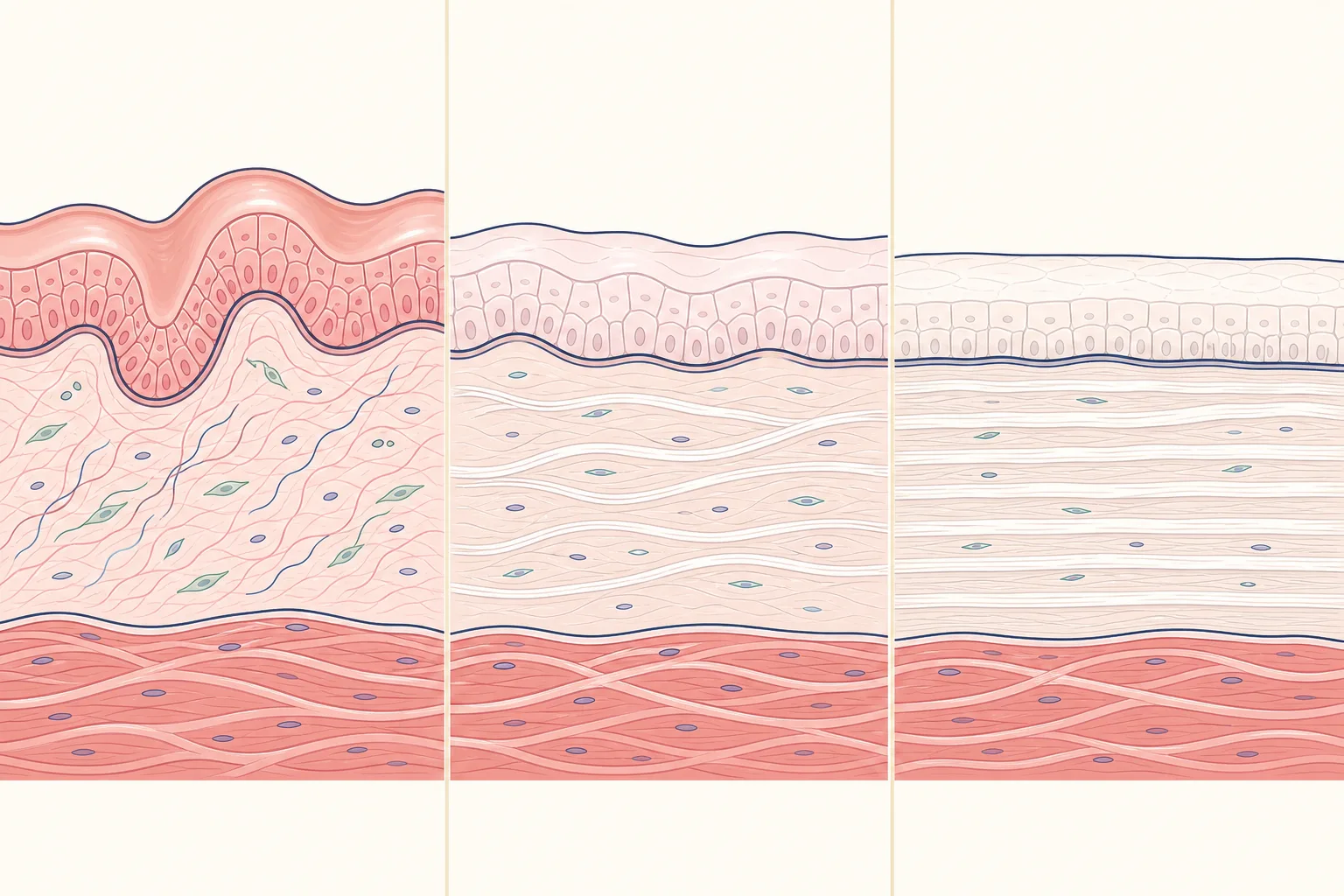
What the change looks like
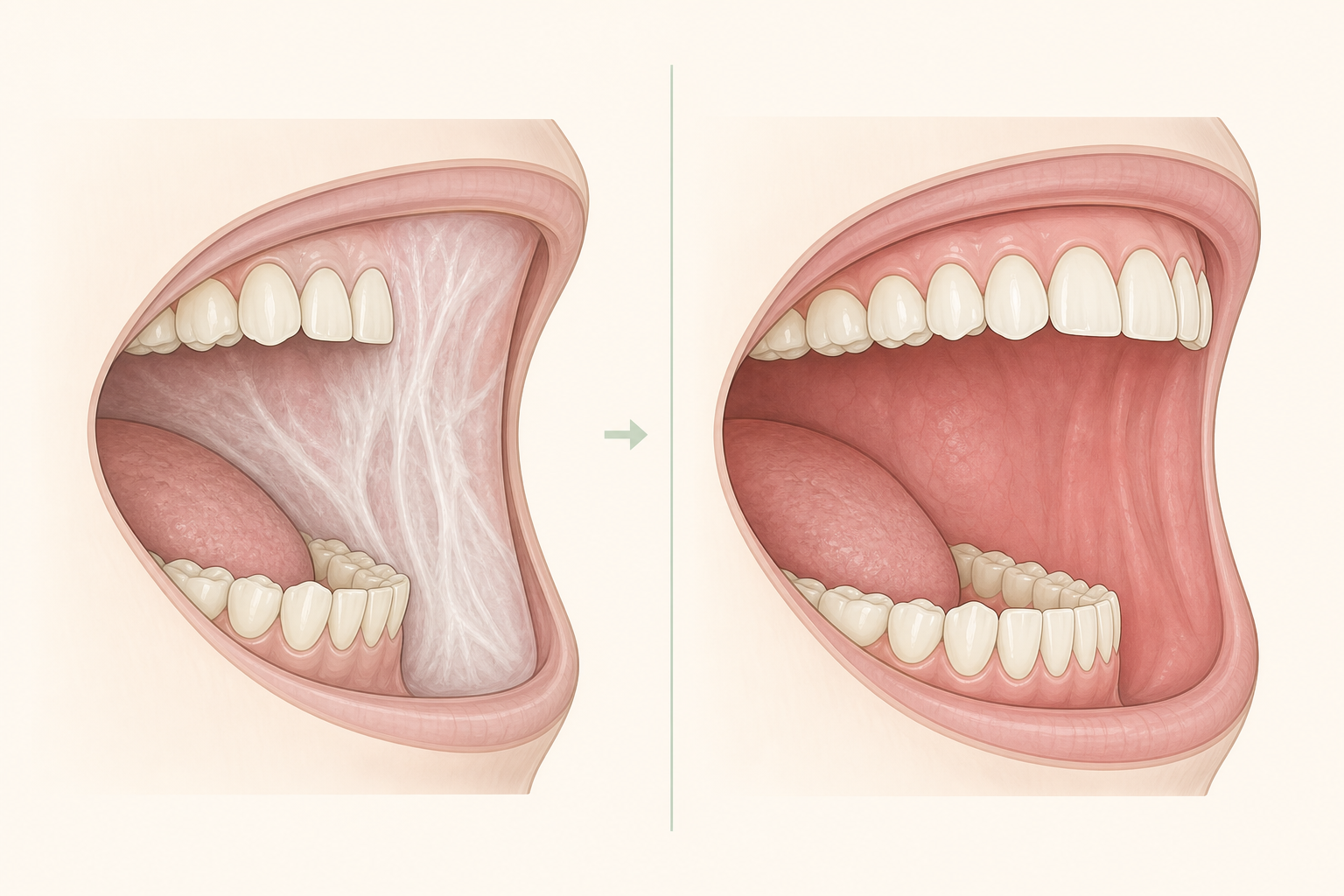
What does oral submucous fibrosis feel and look like?
Mouth pain and a reduced sense of taste can accompany the stiffness. As opening becomes more limited, the restriction is called trismus.
[2]What is oral submucous fibrosis associated with?
Oral submucous fibrosis is usually associated with chewing areca nut, which is an ingredient in betel quid. Its exact cause is still unknown.
[2]How can the condition progress?
This is a chronic, progressive disease. The mouth and throat lining become stiffer, and mouth opening can continue to reduce as fibrous bands develop.
[2]Who is more likely to develop it?
Chewing areca nut is the association most often reported for oral submucous fibrosis. The condition is prevalent in India and Southeast Asia and is rare elsewhere.
[2]What findings point to oral submucous fibrosis?
The recognised pattern includes burning or pain, loss of taste, blanched fibrous bands, stiff mouth tissues and progressively reduced mouth opening.
[2]Can oral submucous fibrosis be cured?
There is currently no effective treatment that cures oral submucous fibrosis. Care therefore needs to account for the progressive restriction and the condition's longer-term risks.
[2]What does care need to address?
Care needs to address a condition that has no effective cure, can progressively restrict mouth opening and carries an increased risk of oral squamous cell cancer.
[2]What are the serious risks?
Oral submucous fibrosis increases the risk of oral squamous cell cancer. A consensus review reports malignant transformation figures of 4% to 7%, while another clinical record gives a wider 3% to 19% range.
[2]Can oral submucous fibrosis be prevented?
Frequently asked questions
Can oral submucous fibrosis make it hard to open my mouth?
Yes. Stiffening of the oral and throat lining can lead to trismus, which is a progressive reduction in mouth opening.
[2]