
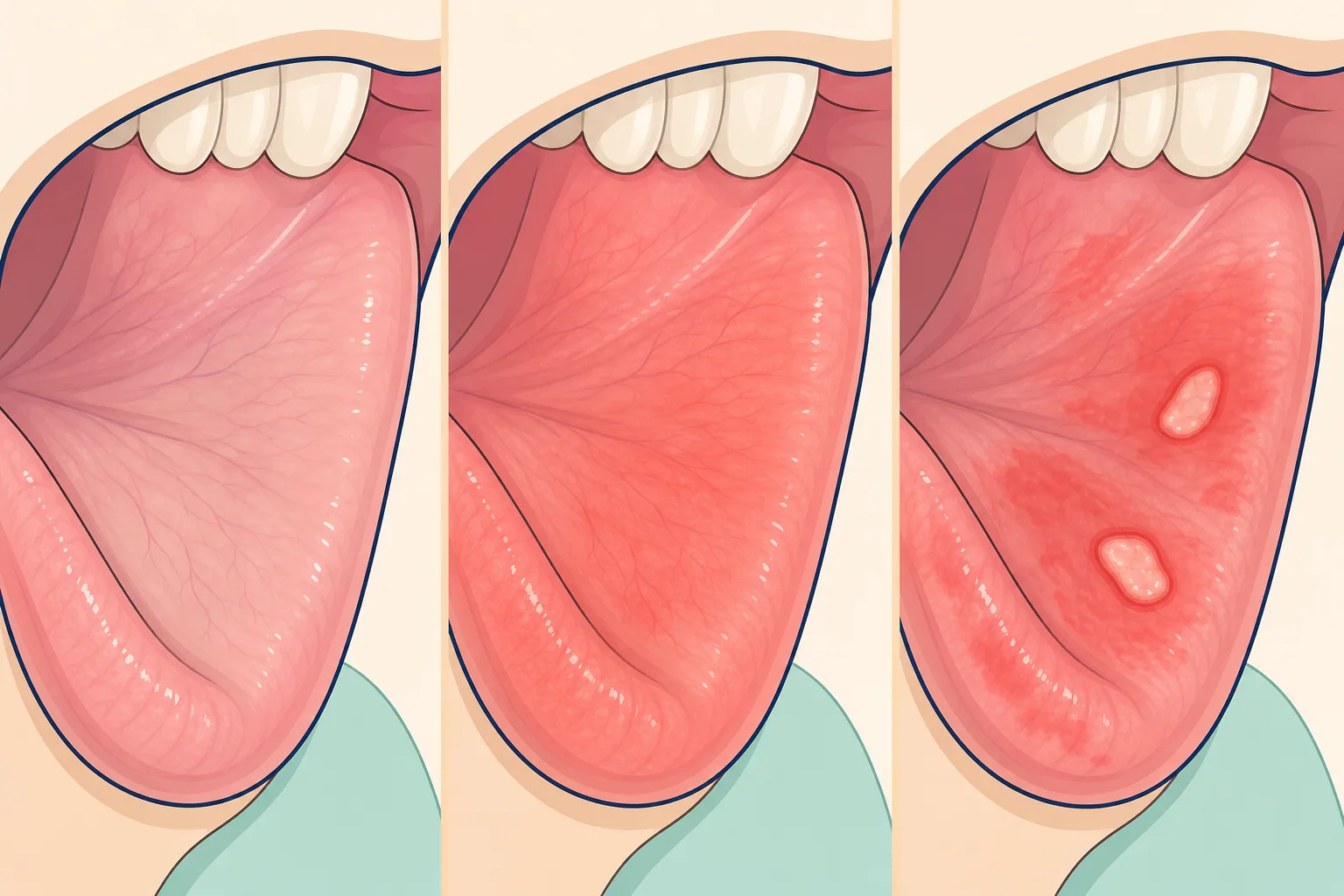
What the change looks like
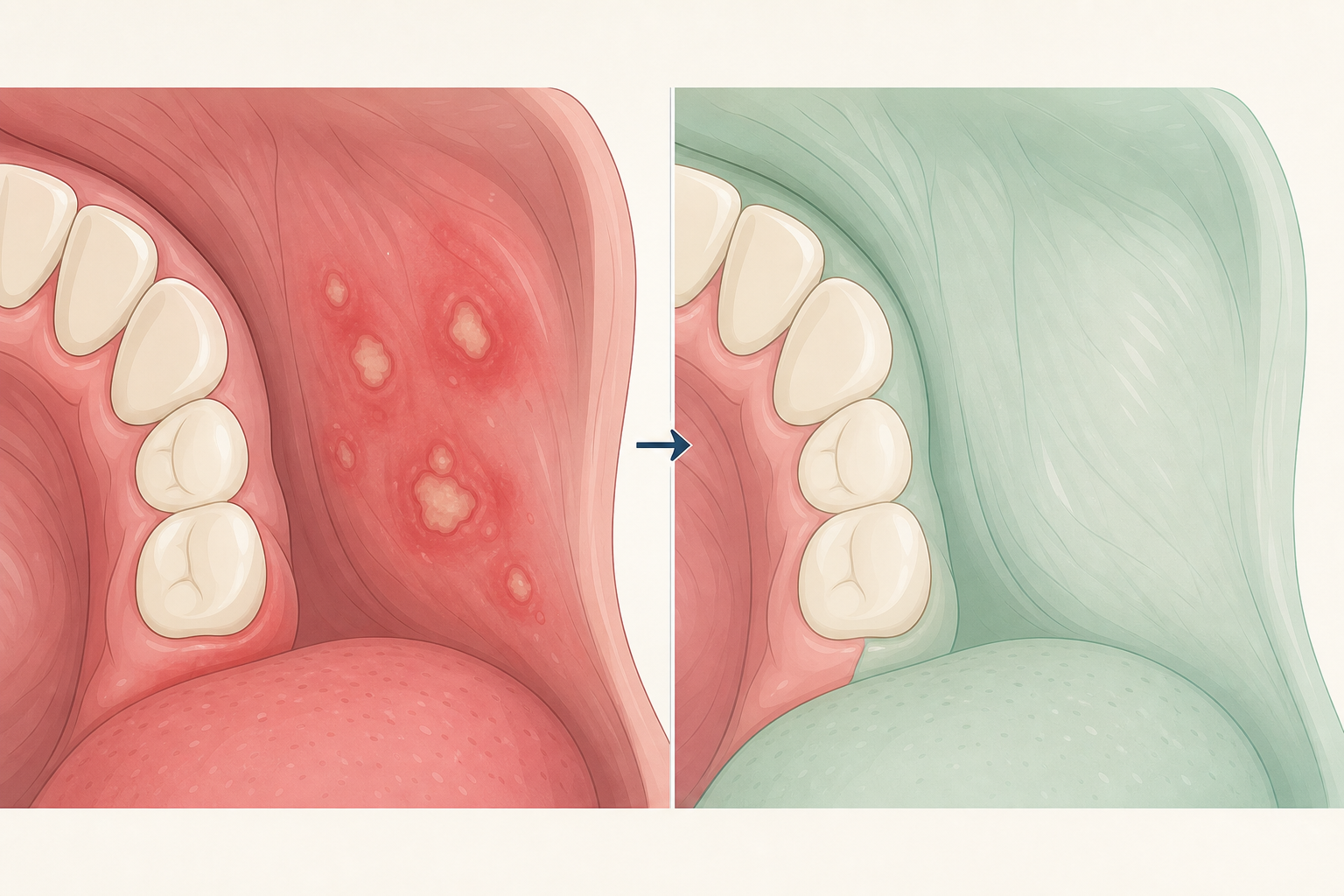
What does oral mucositis feel like?
The lesions can affect speech, chewing, swallowing, and nutrition. When severe, they may damage the mucosal barrier and permit local or systemic infection.
[1]What causes oral mucositis?
Chemotherapy, radiotherapy, and haematopoietic stem cell transplantation are recognised settings in which oral mucositis develops.
[1]How severe can it become?
Milder disease produces inflamed or ulcerated mucosa. Severe disease can interfere with food intake, require parenteral nutrition, and allow infection through the broken mucosal barrier.
[1]Who is more likely to develop it?
People receiving chemotherapy, radiotherapy, or stem cell transplantation are the clinical groups specifically associated with oral mucositis in this page's treatment context.
[1]How is oral mucositis assessed?
Assessment focuses on the mouth lesions, their pain, and their effect on chewing, swallowing, speech, and nutrition. A broken mucosal barrier also raises concern for infection.
[1]How is it managed?
Management is directed at the painful mucosal injury, oral intake, nutrition, and infection risk. Severe cases may require parenteral nutrition when eating is no longer adequate.
[1]What can affect treatment cost?
The work involved may extend beyond a mouth examination when lesions affect nutrition or infection risk, because severe disease can require parenteral nutrition and management of systemic infection.
[1]What complications can occur?
A damaged mucosal barrier can permit local or systemic infection. Severe pain and swallowing difficulty can also worsen nutrition and quality of life.
[1]How can the impact be reduced?
Protecting oral health during cancer treatment matters because oral lesions can affect eating, swallowing, speech, nutrition, and infection risk.
[1]Frequently asked questions
Can oral mucositis lead to an infection?
Yes. Ulcerated lesions can break the mucosal barrier and allow local or systemic infection.
[1]