
Dental Nation
Condition guide

Oral Granuloma

An oral pyogenic granuloma is a red, fragile growth that can ulcerate or bleed and may recur after incomplete removal.

[7]

The short answer

An oral pyogenic granuloma is a fragile red growth in the mouth that can grow quickly, ulcerate, and bleed when disturbed.

[7]
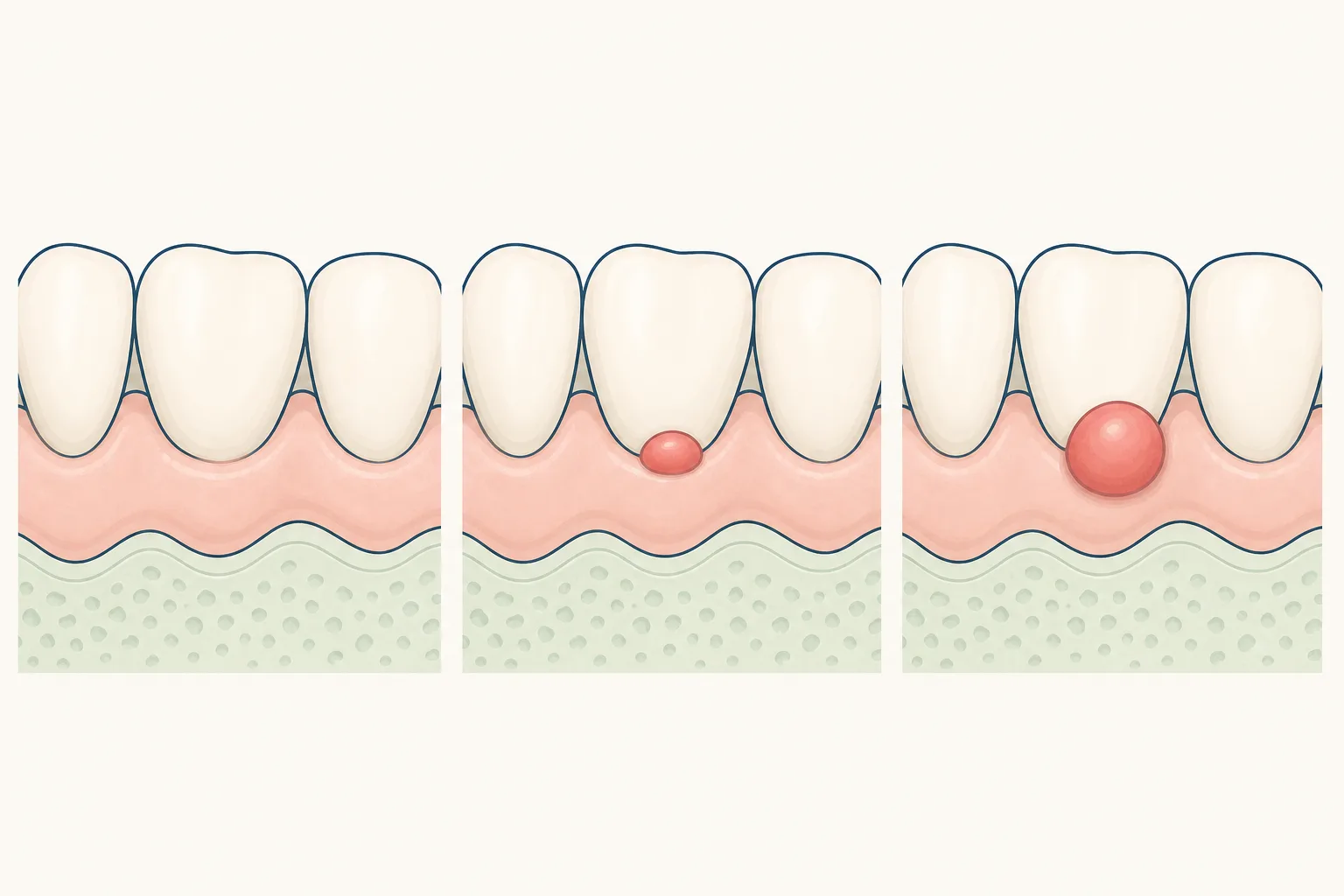
Oral Granuloma dental educational illustration

What the change looks like
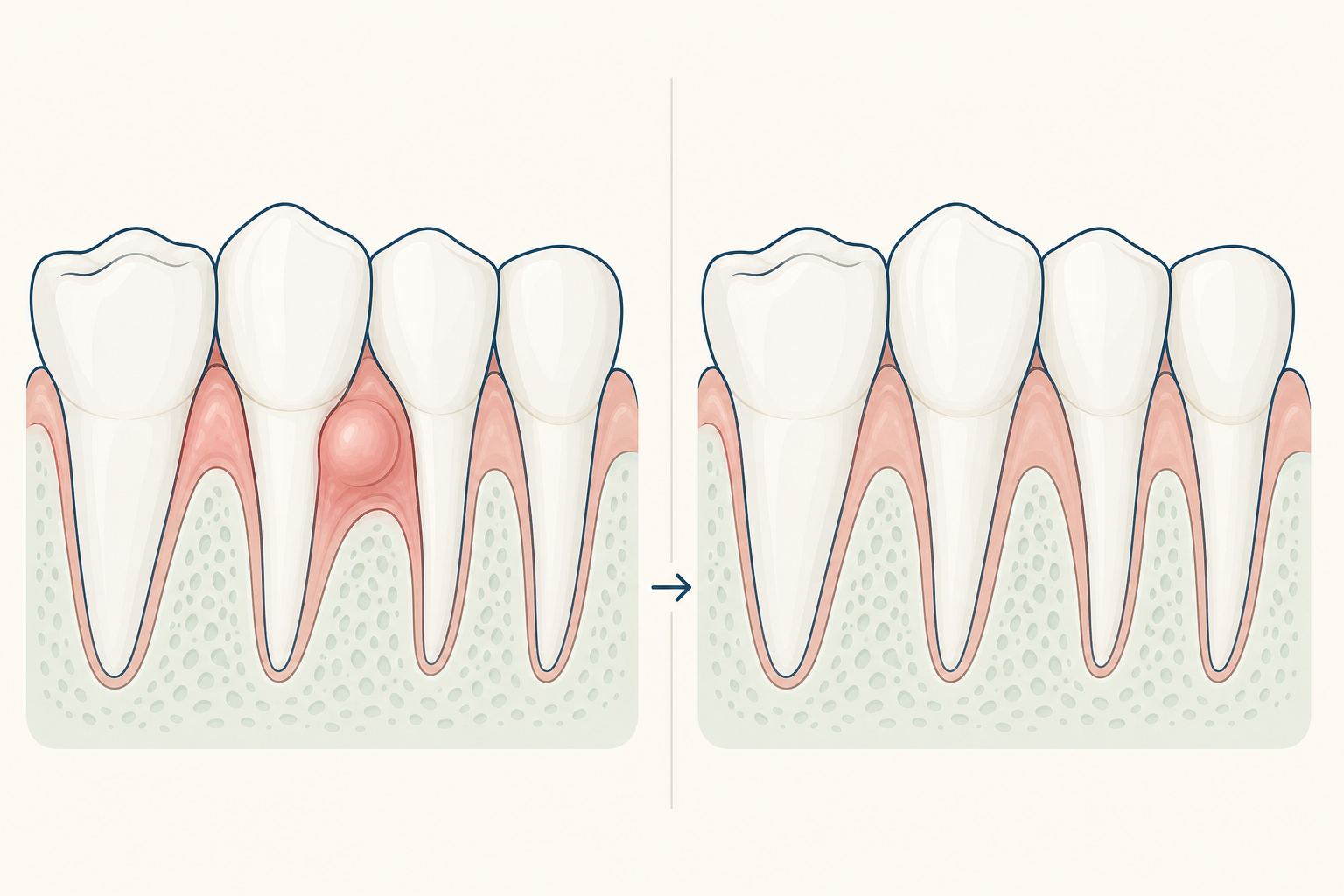
Illustrative diagram: Oral Granuloma
Illustration — a representative diagram, not a patient photo.
The DN First Look799 AED
Book The DN First Look

What might an oral granuloma feel or look like?

Features a clinician will ask about
FeatureWhy it matters
A raised growth that bleeds after contactBleeding can occur when a pyogenic granuloma is irritated.[7]
A growth that changes or persistsIts appearance needs clinical assessment rather than self-diagnosis.[7]

[7]

What can trigger this kind of mouth growth?

Pyogenic granuloma is associated with local irritation, trauma, and other factors that affect oral tissues. The history of the growth helps identify a possible trigger.

[7]

How is a changing growth assessed over time?

These lesions commonly appear as a single red, pedunculated and very friable growth, although some are flatter; the surface may ulcerate as it grows.

[7]
Changes worth reporting at an assessment
ChangeClinical question
New or recently noticed growthWhat is its site, surface, and history?[7]
Repeated bleeding or irritationIs local trauma contributing to the lesion?[7]

[7]

Who should arrange an assessment sooner?

A growth that repeatedly catches on food, teeth, or an appliance deserves assessment, especially if it continues to bleed or changes. Local irritation is relevant but does not establish the diagnosis.

[2][3][4][5][7]

How does a dentist identify the lesion?

Diagnosis begins with the site, appearance, symptoms, and history. When the clinical appearance leaves uncertainty, examination of tissue can help distinguish pyogenic granuloma from other oral lesions.

[7]

What treatment may follow the assessment?

Complete primary excision is preferred because shave excision or curettage can allow recurrence; a recurrent lesion warrants complete surgical excision.

[7]
How findings shape the care discussion
FindingDiscussion point
A lesion with a likely local irritantThe clinician may discuss addressing the irritant and the lesion.[7]
A lesion requiring confirmationTissue assessment may help establish the diagnosis before care is chosen.[7]

[7]

What should you ask about the treatment plan?

Treatment may be needed because oral pyogenic granulomas can bleed, ulcerate, become infected, or cause cosmetic distress, even though they have no malignant potential.

[7]

What happens if a changing growth is left unchecked?

Repeated irritation and bleeding can continue while the cause remains unclear. Assessment matters because lesions with a similar appearance can require different diagnostic and treatment decisions.

[2][3][4][5][7]

Can local irritation be reduced?

Reducing avoidable trauma and addressing a source of repeated irritation may help prevent further injury to the site. This does not replace assessment of a growth that is already present.

[1][2][3][4][7]

Frequently asked questions

Can an oral granuloma be diagnosed from a photograph?

A photograph cannot identify the cause of an oral growth; examination is needed because similar-looking lesions can require different care.

[7]