
Oral Cellulitis
Facial or mouth swelling can signal oral cellulitis, which may spread from a dental infection into deeper spaces and affect breathing.
[1]The short answer
Oral cellulitis begins with infection from a tooth or nearby dental tissue and can spread through the face and deep neck spaces.
[1]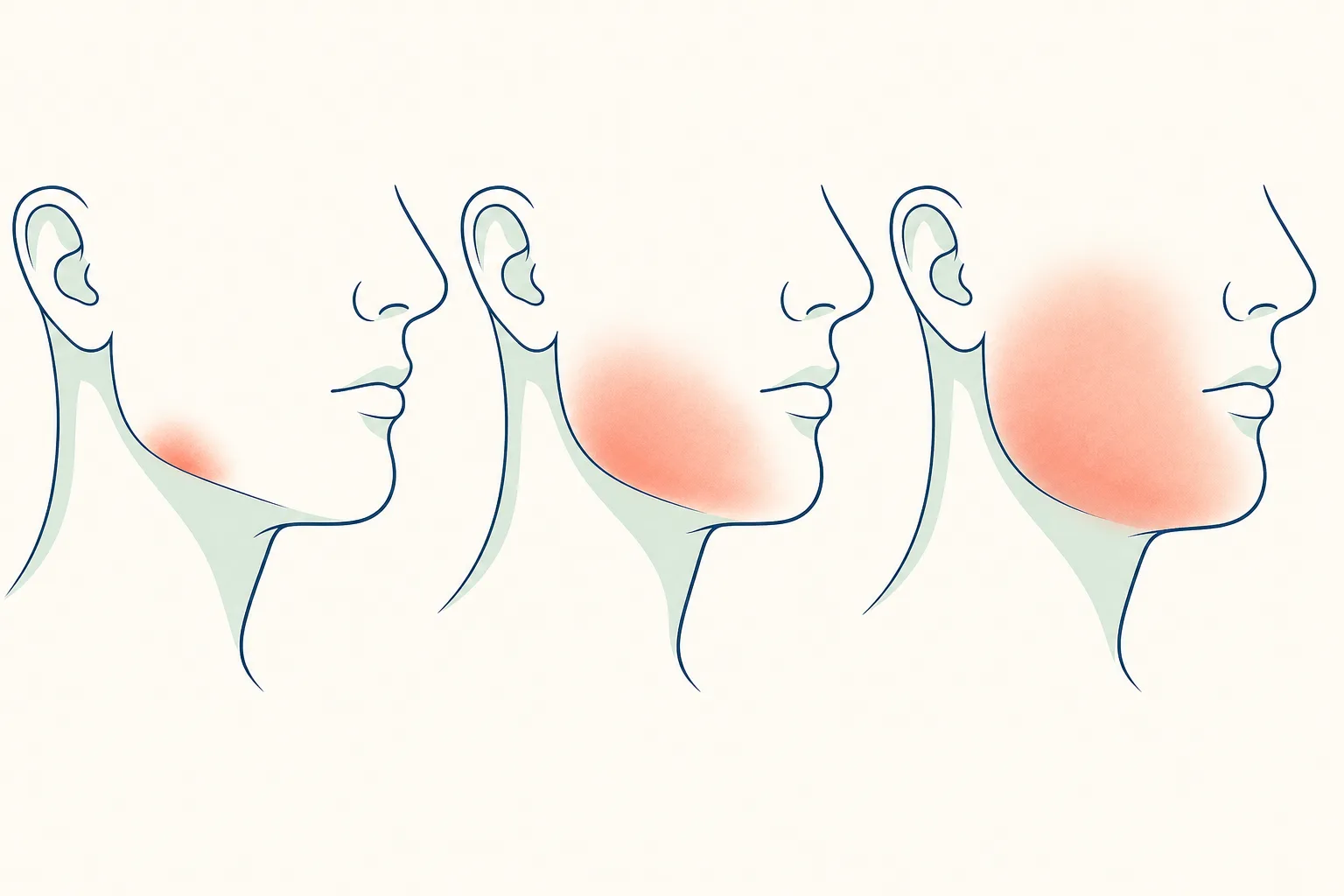
What the change looks like
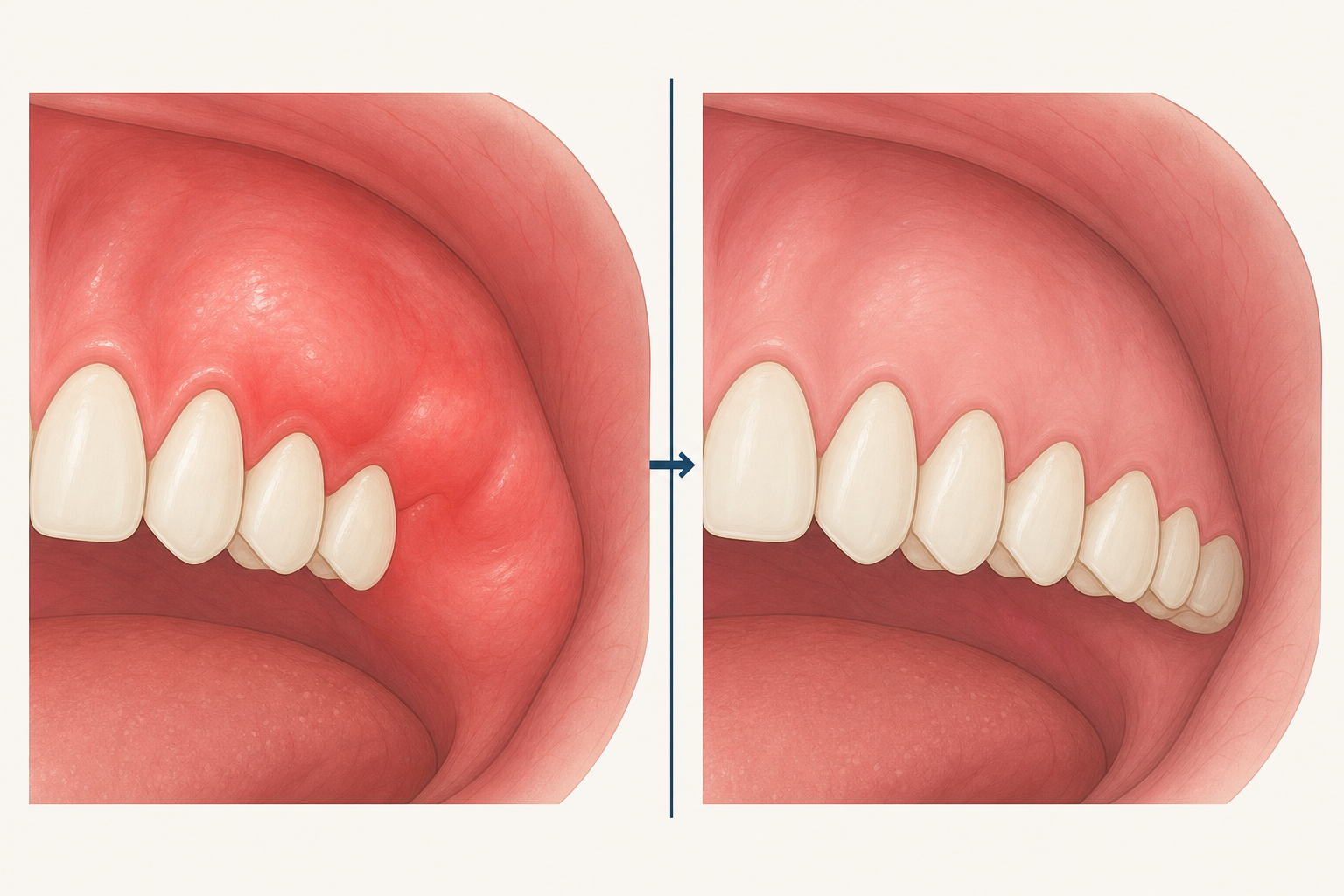
What does oral cellulitis feel like?
Swelling may be accompanied by tenderness, firm tissue, redness, or a marked mass effect. Stridor, breathlessness, and respiratory distress are warning signs of threatened airway function.
[1]What causes oral cellulitis?
Dental caries, apical abscesses, and other minor dental infections can seed an odontogenic infection. These infections are usually polymicrobial, so treatment is broadly directed even after culture results.
[1]How can it progress?
The infection is classified by the tissues and spaces involved and by its severity or progression. It can spread from the mouth into facial and deep neck spaces.
[1]Who is at greater risk of severe infection?
More extensive infections, immunodeficiency, and significant medical comorbidity increase the need for intravenous antibiotics and inpatient resuscitation and monitoring.
[1]How is oral cellulitis diagnosed?
Examination identifies swelling and tissue changes. Point-of-care ultrasound can identify many minor abscesses, while contrast CT of the face and neck helps distinguish cellulitis from abscess and assess suspected deep spread.
[1]How is it treated?
Treatment uses antibiotics and control of the dental source. An abscess may need needle aspiration, incision and drainage, temporary drainage, or extraction of the offending tooth with antibiotics.
[1]What affects the cost in Dubai?
The clinical work can include imaging, antibiotics, drainage, temporary drain placement, or removal of the offending tooth, so the treatment components depend on the infection's extent.
[1]What can happen if it spreads?
Odontogenic infection can compromise neurovascular structures and airway patency. Rarely, it can progress to necrotizing fasciitis, which requires rapid airway assessment and surgical debridement.
[1]How can oral cellulitis be prevented?
Good dental hygiene and prompt identification of caries, apical abscesses, and other minor dental infections reduce the chance of preventable spread.
[1]Frequently asked questions
Can oral cellulitis affect breathing?
Yes. Prominent mouth or neck swelling with stridor, breathlessness, or respiratory distress can signal an airway emergency.
[1]Who wrote this page
This library is published by Dental Nation, a licensed dental group practising in the United Arab Emirates. Pages are written and overseen by the same clinical team that treats patients in our clinics, and are held to a fixed editorial standard for safety and accuracy.
This page is patient education, not medical advice, and cannot replace an examination. Anything urgent — facial swelling, trauma, uncontrolled bleeding or severe pain — needs a dentist or emergency care now.