Dental Nation
Condition guide

Oral Cancer

A mouth sore, lump, red or white patch, or swallowing difficulty lasting over two weeks needs assessment.

[1][2]

The short answer

Oral cancer can cause a persistent sore, lump, thick patch, red or white patch, bleeding, numbness, or difficulty chewing, swallowing, or speaking.

[1][2]
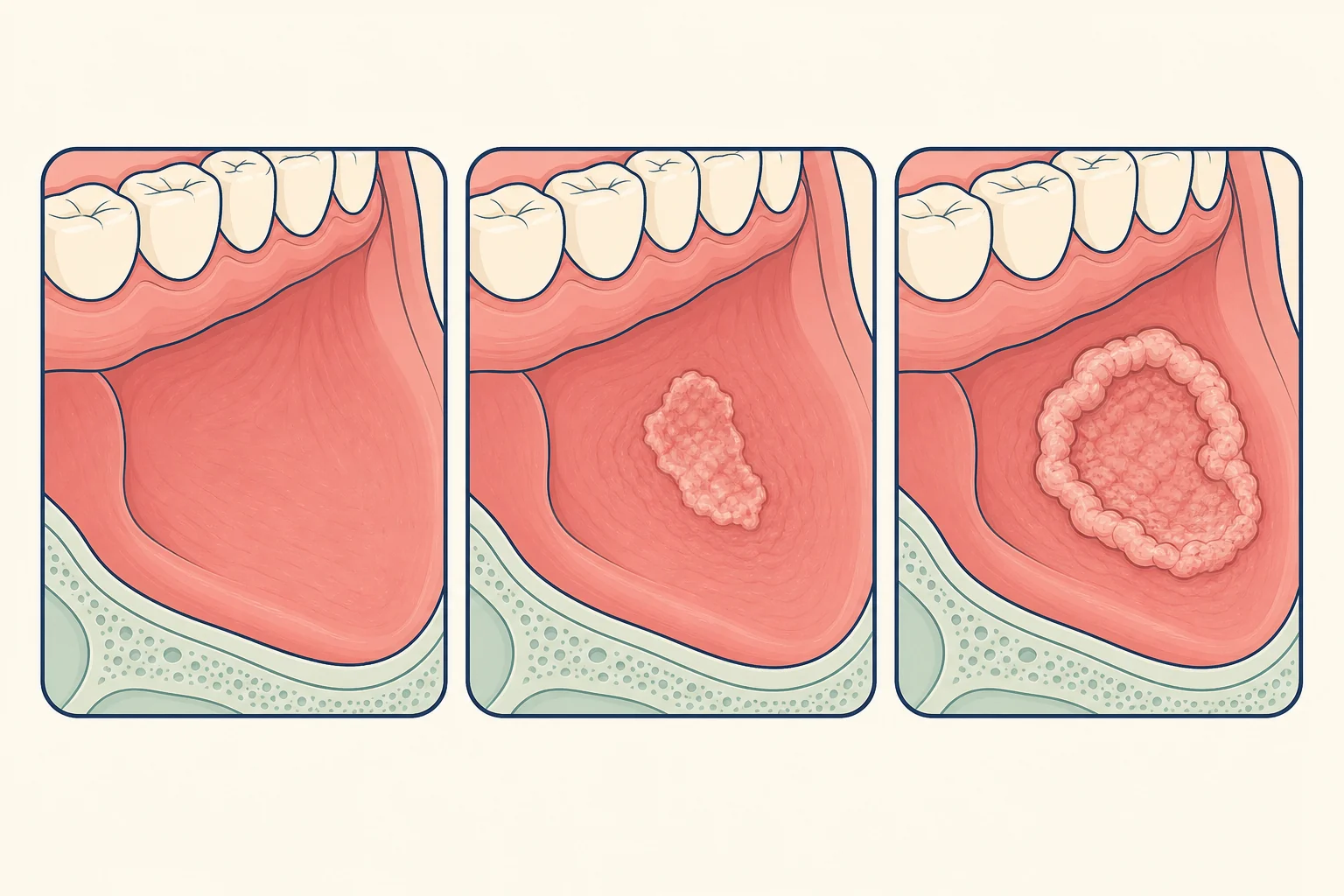
Oral Cancer dental educational illustration

What the change looks like

Illustrative diagram: Oral Cancer
Illustration — a representative diagram, not a patient photo.
The DN First Look799 AED
Book The DN First Look

Which mouth changes can be signs of oral cancer?

Mouth and throat changes that need attention
ChangeWhat it can affect
Sore throat or a stuck feelingSwallowing or speaking[1][2]
Jaw swellingHow dentures fit[1][2]

[1][2]

What can increase the chance of oral cancer?

Tobacco, heavy alcohol use, HPV 16 infection, increasing age, sun exposure to the lip, low fruit and vegetable intake, and inherited gene defects are linked with oral cancer.

[1][2]

How does the extent of cancer affect treatment?

A tumour's site, size, type, and whether it has spread are factors used when treatment is chosen; cancer found further along may need a combination of treatments.

[1][2]
Why the cancer assessment records extent
FindingWhy it matters
Where it beganIt guides treatment choice[1][2]
Whether it has spreadMore advanced disease may need combined treatment[1][2]

[1][2]

Which risks are worth acting on?

Using tobacco and alcohol together raises risk more than either exposure alone. Cancer of the lip is also linked with sun exposure, and oral cancer is more common after age 40.

[1][2]

What happens during an oral cancer examination?

An oral cancer examination checks the face, neck, lips, whole mouth, and back of the throat. It is painless, takes a few minutes, and can identify early signs.

[1][2]

How is oral cancer treated?

Treatment may involve surgery, radiation therapy, chemotherapy, targeted therapy, or immunotherapy. More advanced disease may need a combination, chosen according to the tumour and the person's general health.

[1][2]
Treatment approaches mentioned for oral cancer
ApproachPurpose
SurgeryRemoves cancer[1][2]
Radiation or chemotherapyMay be used with surgery or for advanced disease[1][2]

[1][2]

What determines the care involved?

Care can involve surgeons, oral and maxillofacial specialists, ear, nose and throat specialists, medical or radiation oncologists, and support for speech, nutrition, reconstruction, or mental health.

[1][2]

Why should persistent changes be checked?

Oral cancer can spread quickly. A mouth change that lasts more than two weeks, especially a sore, lump, patch, bleeding, numbness, or swallowing difficulty, warrants timely assessment.

[1][2]

What can reduce avoidable risk?

Avoiding tobacco, limiting alcohol, protecting the lips from sun exposure, and eating more fruit and vegetables address several recognised oral-cancer risk factors.

[1][2]

Frequently asked questions

Can a red or white patch in my mouth be a sign of oral cancer?

A persistent red or white patch is among the listed signs, particularly when it lasts more than two weeks.

[1][2]