
Condition guide
Oral Cancer
A mouth sore, lump, red or white patch, or swallowing difficulty lasting over two weeks needs assessment.
[1][2]The short answer
Oral cancer can cause a persistent sore, lump, thick patch, red or white patch, bleeding, numbness, or difficulty chewing, swallowing, or speaking.
[1][2]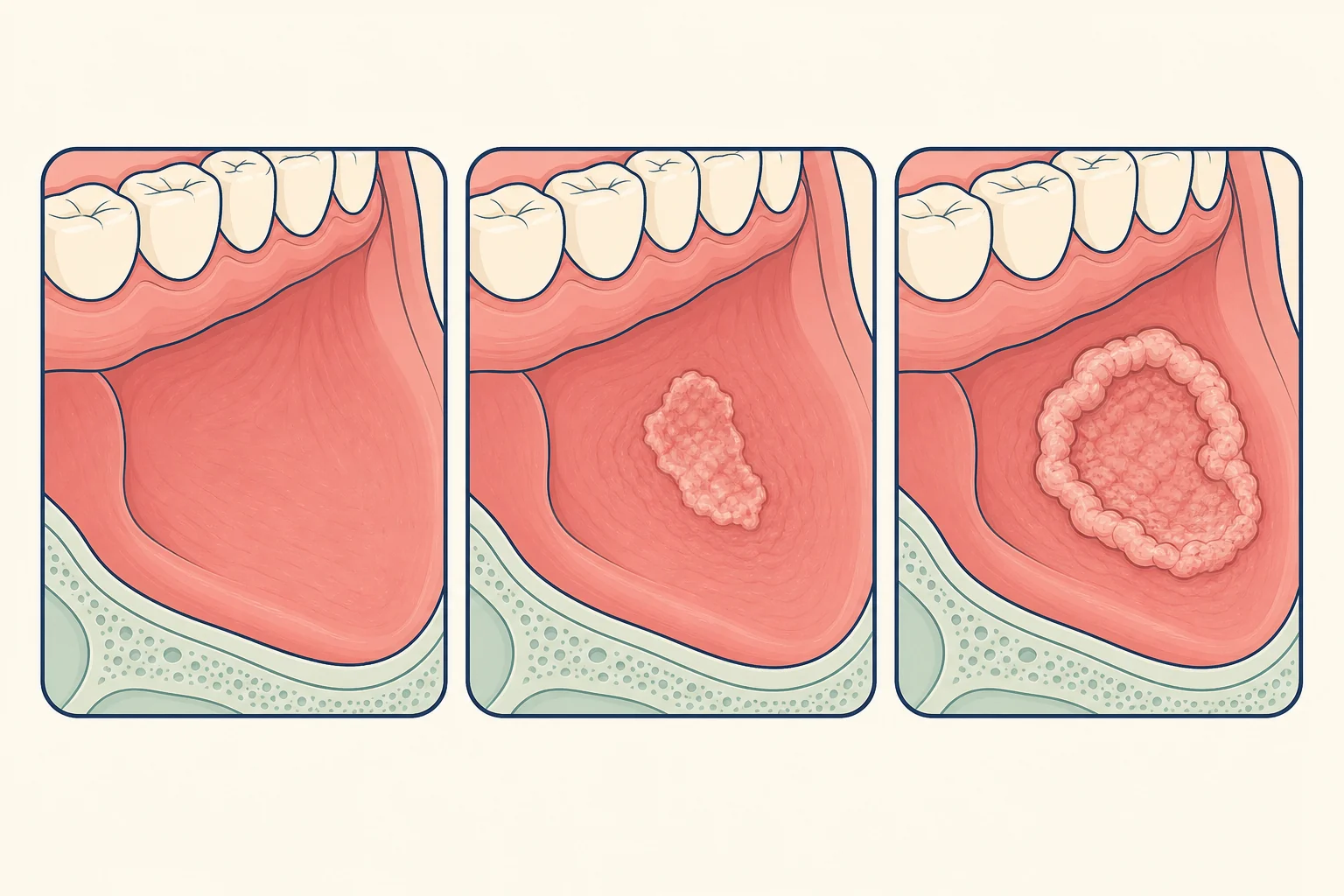
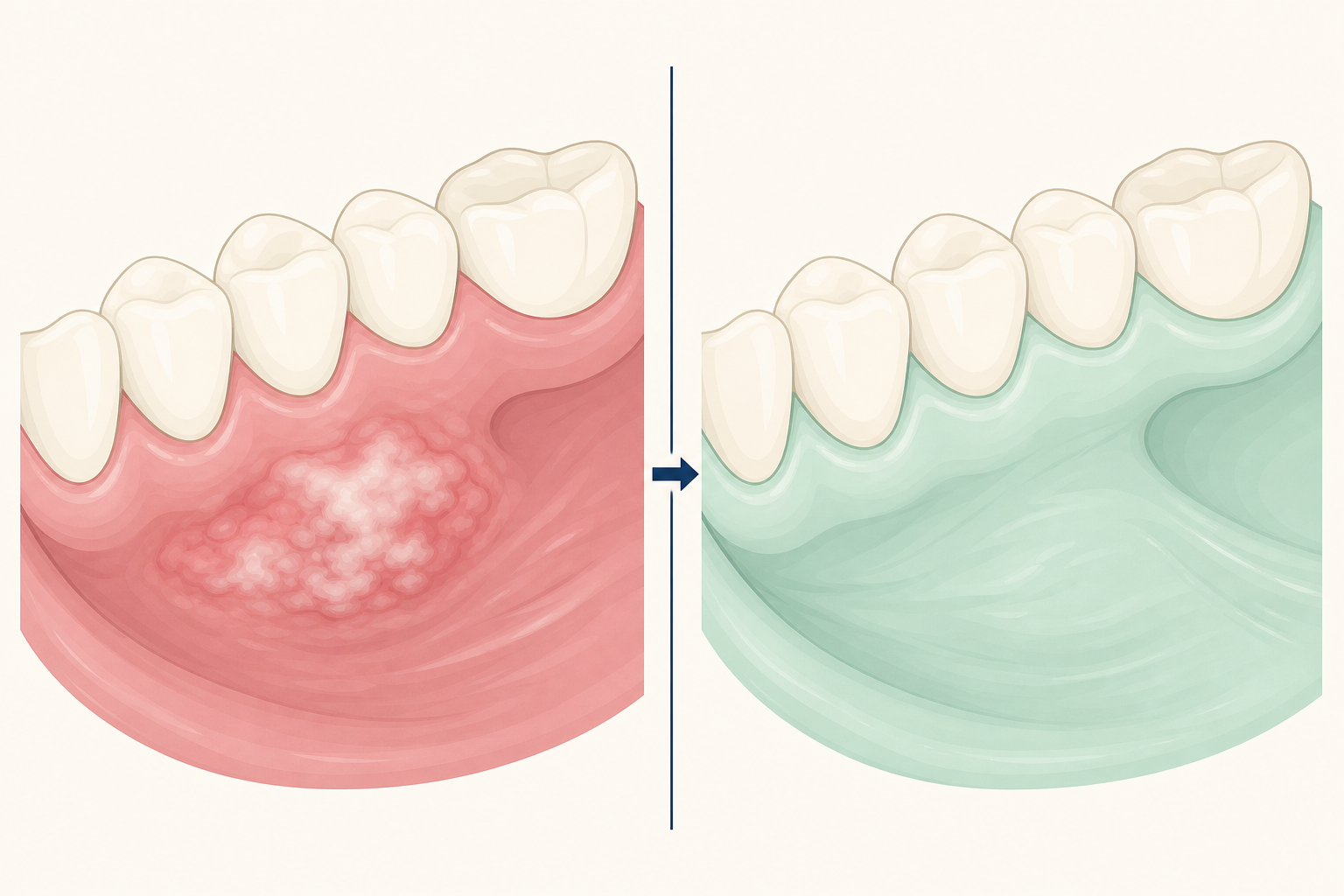
What the change looks like
The DN First Look799 AED
Book The DN First LookWhich mouth changes can be signs of oral cancer?
What can increase the chance of oral cancer?
How does the extent of cancer affect treatment?
Which risks are worth acting on?
What happens during an oral cancer examination?
How is oral cancer treated?
What determines the care involved?
Why should persistent changes be checked?
What can reduce avoidable risk?
Frequently asked questions
Who wrote this page
This library is published by Dental Nation, a licensed dental group practising in the United Arab Emirates. Pages are written and overseen by the same clinical team that treats patients in our clinics, and are held to a fixed editorial standard for safety and accuracy.
This page is patient education, not medical advice, and cannot replace an examination. Anything urgent — facial swelling, trauma, uncontrolled bleeding or severe pain — needs a dentist or emergency care now.