
Dental Nation
Condition guide

Open Bite

An open bite leaves teeth unable to bite into food correctly and may bring chewing discomfort, speech changes, or mouth breathing.

[1]

The short answer

An open bite is a malocclusion in which the teeth cannot bite into food correctly when the jaws close.

[1]
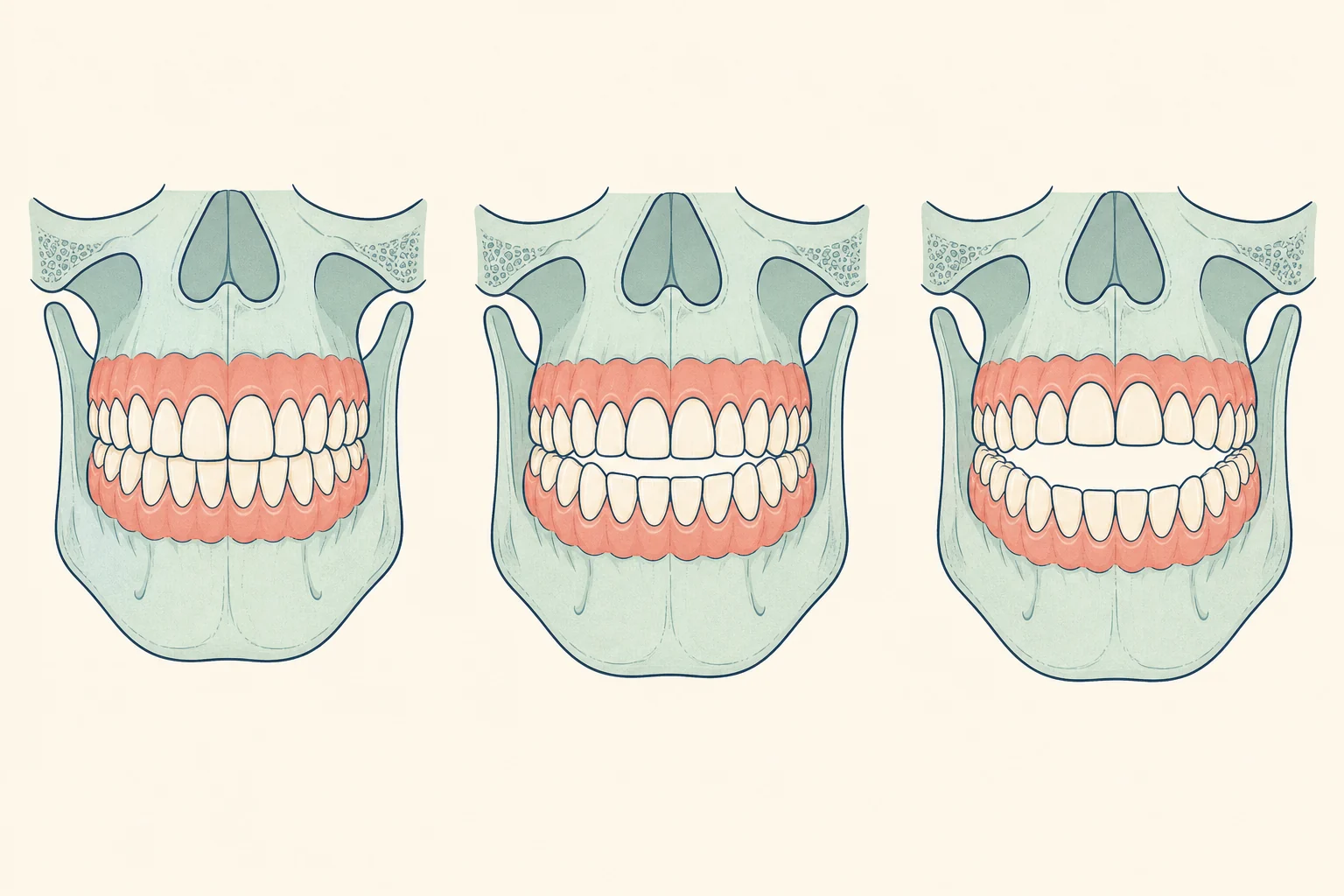
Open Bite dental educational illustration

What the change looks like
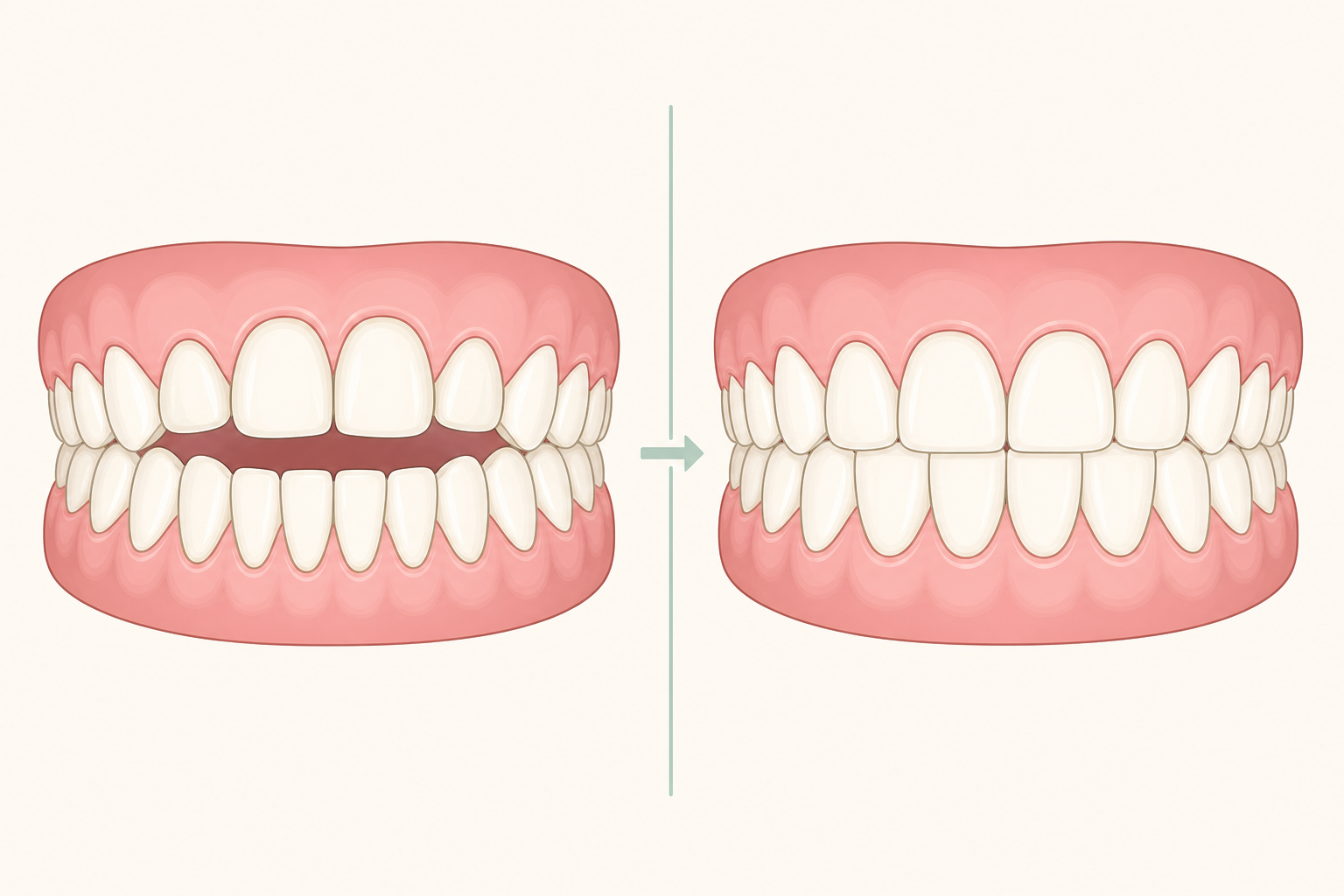
Illustrative diagram: Open Bite
Illustration — a representative diagram, not a patient photo.
The DN First Look799 AED
Book The DN First Look

What does an open bite make difficult?

People with malocclusion may have abnormal tooth alignment, discomfort when chewing, rare speech difficulty such as a lisp, mouth breathing, or an unusual facial appearance.

[1]
Possible effects of an open bite
FunctionPossible effect
Biting foodThe teeth may not bite into food correctly.[1]
SpeechSpeech difficulty can occur, including a lisp.[1]

[1]

What can lead to an open bite?

Jaw and tooth size differences, inherited growth patterns, thumb sucking, tongue thrusting, prolonged bottle use, and eruption problems can create abnormal bite patterns.

[1][2]

How can an open bite change during development?

The bite is reviewed as primary teeth, mixed teeth, and permanent teeth develop. Eruption, crowding, premature primary tooth loss, and adverse skeletal growth can change treatment priorities.

[1][2]
Developmental findings relevant to an open bite
FindingWhy it matters
Ectopic eruptionIt is assessed while treatment goals are set.[1][2]
Early primary tooth lossIt can contribute to arch-length change and malocclusion.[1][2]

[1][2]

What can increase the chance of an open bite?

Tongue thrusting pushes the tongue between upper and lower teeth. Together with thumb sucking and prolonged pacifier or bottle use, it is a recognised habit-related factor in malocclusion.

[1][2]

How is an open bite checked?

The examination records how teeth meet and whether food can be bitten into. Dental, skull, or facial X-rays and diagnostic tooth models may be used to identify the bite problem.

[1][2]

What treatments can close an open bite?

Braces, bonded appliances, wires, springs, or clear aligners can reposition teeth. Extraction may help where overcrowding is part of the problem, while rare jaw discrepancies may need surgical reshaping.

[1][2]
Treatment methods for malocclusion
MethodUse
Braces or alignersMove teeth by applying force.[1][2]
Jaw surgeryMay lengthen or shorten the jaw in rare cases.[1][2]

[1][2]

What determines the scope of open-bite correction?

Open-bite correction may use an appliance alone, include removal of crowded teeth, or rarely involve jaw surgery. The amount of correction determines treatment length.

[1][2]

What complications are linked with malocclusion treatment?

Malocclusion can make cleaning harder and raise the risk of decay and gum disease. Appliances may cause mouth and gum irritation, temporary discomfort, or chewing and speaking difficulty.

[1]

Can an open bite be prevented?

Not every open bite is preventable. Controlling thumb sucking or tongue thrusting and identifying the bite early can make correction quicker and more successful.

[1][2]

Frequently asked questions

Can an open bite affect speech?

Speech difficulties, including a lisp, are listed symptoms of malocclusion.

[1]