
Dental Nation
Condition guide

Odontoclasia

Tooth damage can lead to pain, infection and tooth loss. Fever, facial swelling or breathing difficulty needs urgent care.

[1][2]

The short answer

Odontoclasia involves a tooth finding that needs assessment when pain, infection or loss of tooth structure is present.

[1][2]
Odontoclasia dental educational illustration

What the change looks like
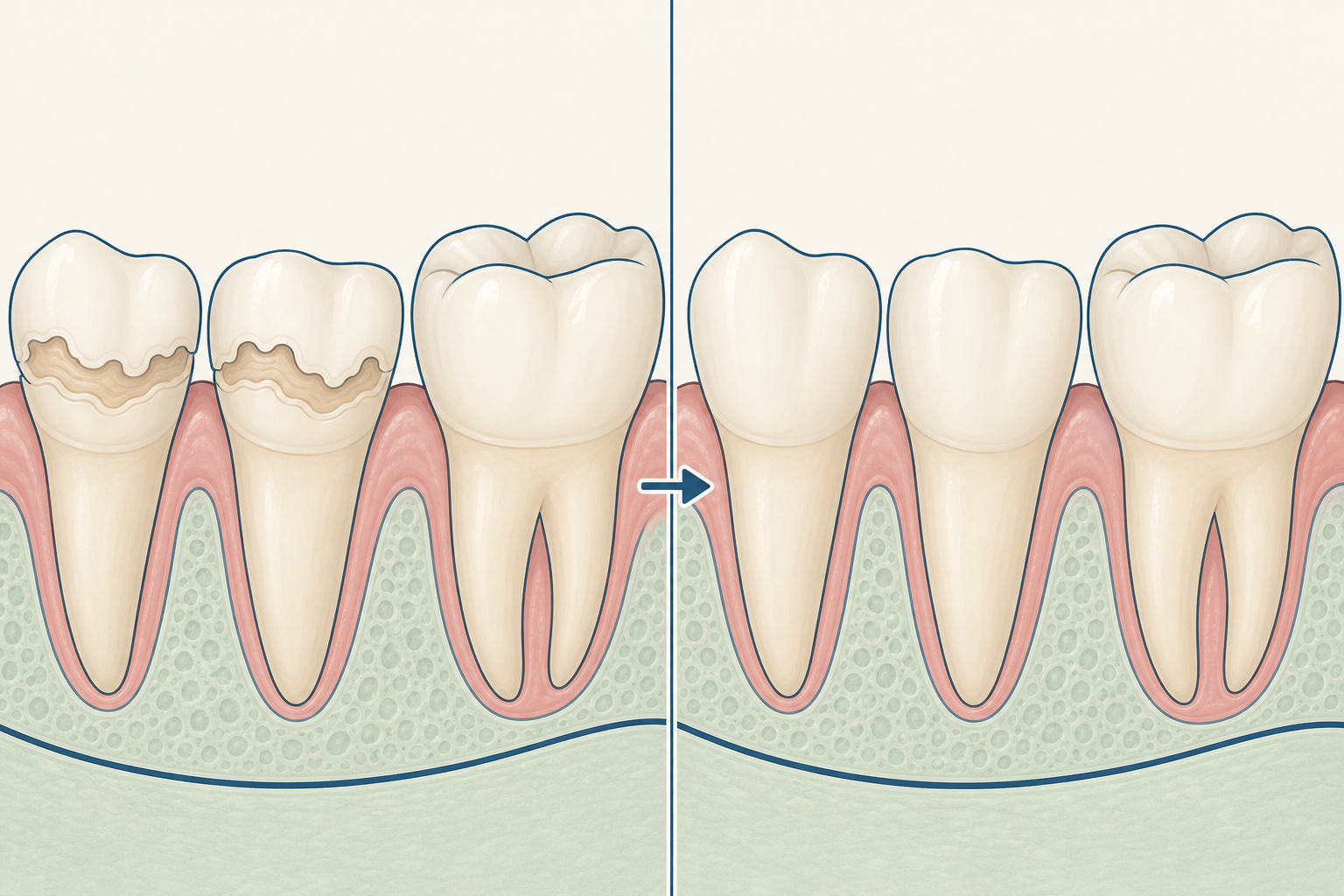
Illustrative diagram: Odontoclasia
Illustration — a representative diagram, not a patient photo.
The DN First Look799 AED
Book The DN First Look

What symptoms might I notice?

Symptoms and what to do next
FindingPatient-facing next step
Pain, sensitivity, swelling, or a visible changeArrange a dental assessment so the tooth and nearby tissues can be examined[1][2]
Fever, spreading facial swelling, or difficulty swallowing or breathingSeek urgent dental or medical care[1][2]
No obvious symptomKeep routine dental review because some findings are discovered during examination or imaging[1][2]

[1][2]

What can cause it?

Tooth decay is a multifactorial disease that demineralises teeth and forms areas of decay. Plaque bacteria depend on carbohydrates and create acids that dissolve calcium salts in tooth structure.

[1][2]

How is it described or staged?

Enamel is made before eruption and the cells that make it die after eruption, so enamel cannot be remade. Dentin forms the bulk of the tooth, while cementum covers the roots.

[1][2]
How the finding may be described
Assessment pointWhat the dentist is checking
Limited findingWhether the change is confined to the tooth or a small area[1][2]
Nearby tissue involvementWhether gums, supporting tissues, or adjacent structures are affected[1][2]
Function and progressionWhether the tooth works normally and whether the change is developing[1][2]

[1][2]

What increases the risk?

Falls, sports injuries, traffic accidents and physical violence can cause traumatic dental injuries. Regular intake of fermentable carbohydrates supports the plaque bacteria involved in decay.

[1][2]

How is it diagnosed?

Dental infections are often recognised from the history and physical examination, with local pain or swelling common in early infection. A tooth may become yellow, grey, brown or black as pulp necrosis develops.

[1][2]

How is it treated at each stage?

A reversible pulpitis caused by caries is treated by removing carious tissue and placing a restoration. Dental emergencies require prompt care to relieve pain or bleeding and prevent serious complications.

[1][2]
Treatment choices depend on the assessment
Clinical situationPossible direction of care
Limited or stable findingObservation or a tooth-preserving procedure may be considered after examination[1][2]
Active disease or symptomsTreatment is selected for the diagnosed cause and affected tissues[1][2]
Loss of function, spreading infection, or severe damagePrompt assessment is needed to choose the appropriate procedure[1][2]

[1][2]

What should I ask about the Dubai cost?

Early caries can be reversed with preventive care and remineralisation. When decay has caused loss of tooth structure, the tooth must be filled and rebuilt.

[1][2]

What can happen if it is untreated?

Untreated dental emergencies can become very painful, spread to deep spaces of the neck and facial sinuses, or compromise the airway. Dental caries can lead to abscess, cellulitis and osteomyelitis.

[1][2]

How can I reduce future problems?

Custom mouthguards reduce traumatic dental injuries in contact sports. Daily toothbrushing, flossing and fluoride use help control plaque and reduce dental caries risk.

[1][2]

Frequently asked questions

Can Odontoclasia be diagnosed from symptoms alone?

No. Symptoms can guide the history, but diagnosis requires a dental examination and may require imaging.

[1][2]

Sources used for this guide

  1. Dental EmergenciesNational Library of Medicine, National Institutes of Health · 2026-07-21
  2. Physiology, ToothNational Library of Medicine, National Institutes of Health · 2026-07-21