Dental Nation
Condition guide

Necrotizing Gingivitis (ANUG)

An acute, painful and destructive gum infection, necrotizing gingivitis is rare and predominantly associated with spirochetes.

[1][2]

The short answer

Necrotizing ulcerative gingivitis is a rare bacterial infection with an acute, painful and destructive presentation.

[1][2]
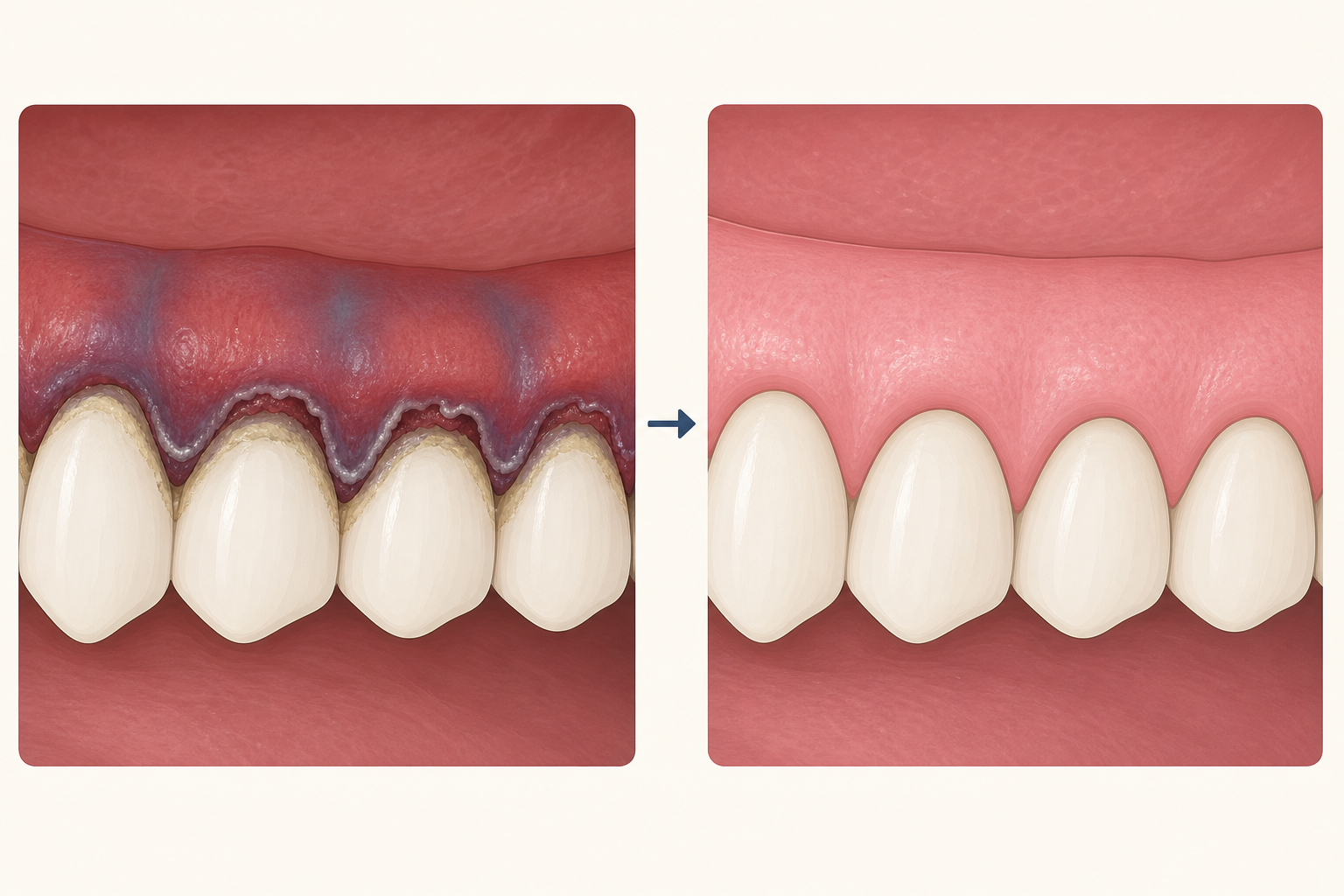
Necrotizing Gingivitis (ANUG) dental educational illustration

What the change looks like

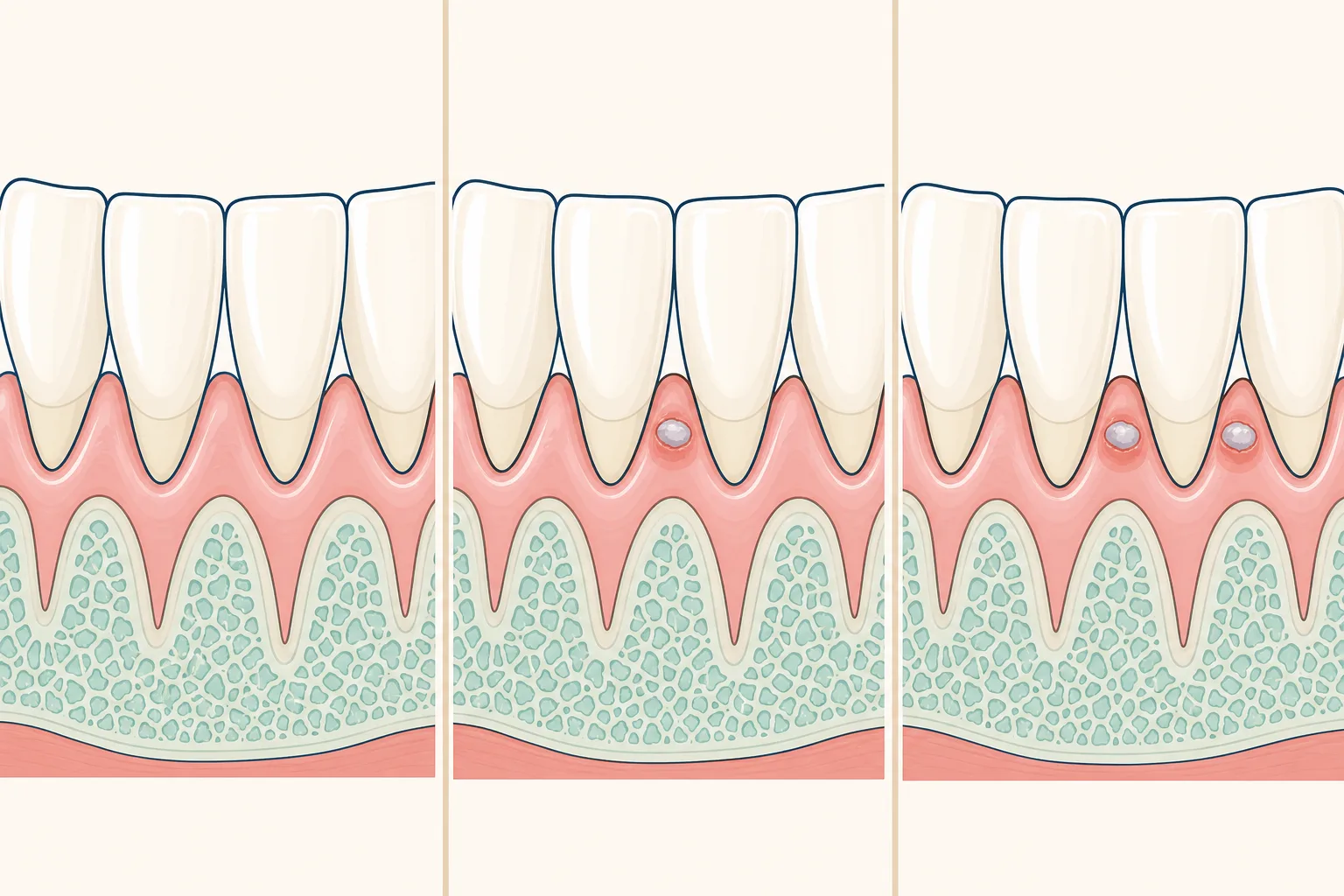
Illustrative diagram: Necrotizing Gingivitis
Illustration — a representative diagram, not a patient photo.
The DN First Look799 AED
Book The DN First Look

What symptoms can necrotizing gingivitis cause?

Its presentation can be painful and destructive rather than mild or slow to develop. The condition is reported in fewer than 1% of people.

[1][2]
Features of the acute presentation
FeatureWhat it means
AcuteThe illness has an acute presentation.[1][2]
Painful and destructivePain and tissue destruction are part of the reported presentation.[1][2]

[1][2]

What causes necrotizing gingivitis?

Necrotizing gingivitis is an opportunistic bacterial infection. It is predominantly associated with spirochetes, a group of spiral-shaped bacteria.

[1][2]

What gum changes are checked during assessment?

Bleeding on probing measures inflammation. Where bleeding comes from helps distinguish bleeding at the gum margin from bleeding at the base of a periodontal pocket.

[1][2]
How bleeding location is interpreted
Where bleeding is foundClinical meaning
At the gingival marginIt is an indicator of gingivitis.[1][2]
At the base of a pocketIt represents periodontitis and can reflect response to root debridement.[1][2]

[1][2]

Why can necrotizing gingivitis be serious?

The concern is its destructive presentation alongside pain. The infection can be extensive enough that treatment is tailored to the amount of infection and what a person can tolerate.

[1][2]

How is necrotizing gingivitis assessed?

Bleeding on probing is recorded on a periodontal chart before and after treatment. An absence of bleeding from the bottom of a pocket predicts periodontal stability at reassessment.

[1][2]

How is treatment chosen?

Treatment is tailored to the extent of infection and what the person can tolerate. Recording bleeding before and after treatment helps guide therapy to the affected sites and monitor response.

[1][2]
Findings used to monitor treatment
FindingHow it is used
Bleeding before treatmentIt is recorded on the periodontal chart to guide therapy to affected sites.[1][2]
Bleeding after treatmentIt is recorded to monitor the response to treatment.[1][2]

[1][2]

What shapes the care needed in Dubai?

The amount of infection and the care a person can tolerate shape treatment. Bleeding recorded on a periodontal chart can be used to guide therapy and monitor the result.

[1][2]

What damage can occur with necrotizing gingivitis?

Necrotizing gingivitis has a destructive presentation, so gum tissue damage is part of the condition's clinical concern. Pain can occur at the same time as this destructive process.

[1][2]

How can you protect gum health after treatment?

Improving daily plaque removal can make bleeding from the gingival margin respond quickly. Plaque left near the gingival margins causes gingivitis and can become inaccessible to a toothbrush when pockets form.

[1][2]

Frequently asked questions

Why is bleeding on probing recorded before and after treatment?

Recording bleeding on a periodontal chart helps guide treatment to affected sites and monitor the response after treatment.

[1][2]