
Dental Nation
Condition guide

Mucocele

A mucocele is a mucus-filled swelling in the mouth, often related to a blocked or injured minor salivary gland.

[1][2]

The short answer

A mucocele is a mucus-filled swelling in the mouth that often follows minor salivary-gland injury or blockage.

[1][2]
Mucocele dental educational illustration

What the change looks like
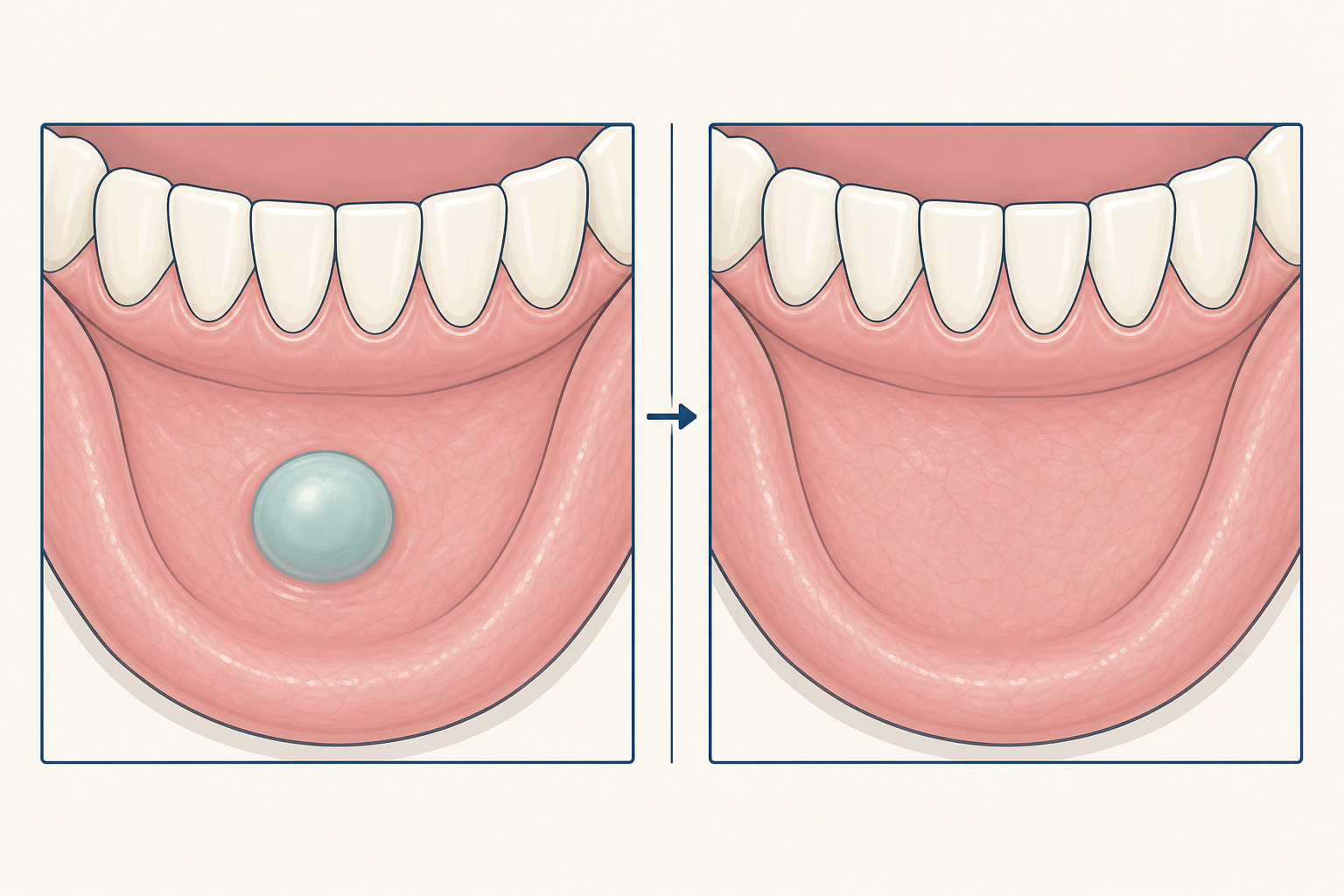
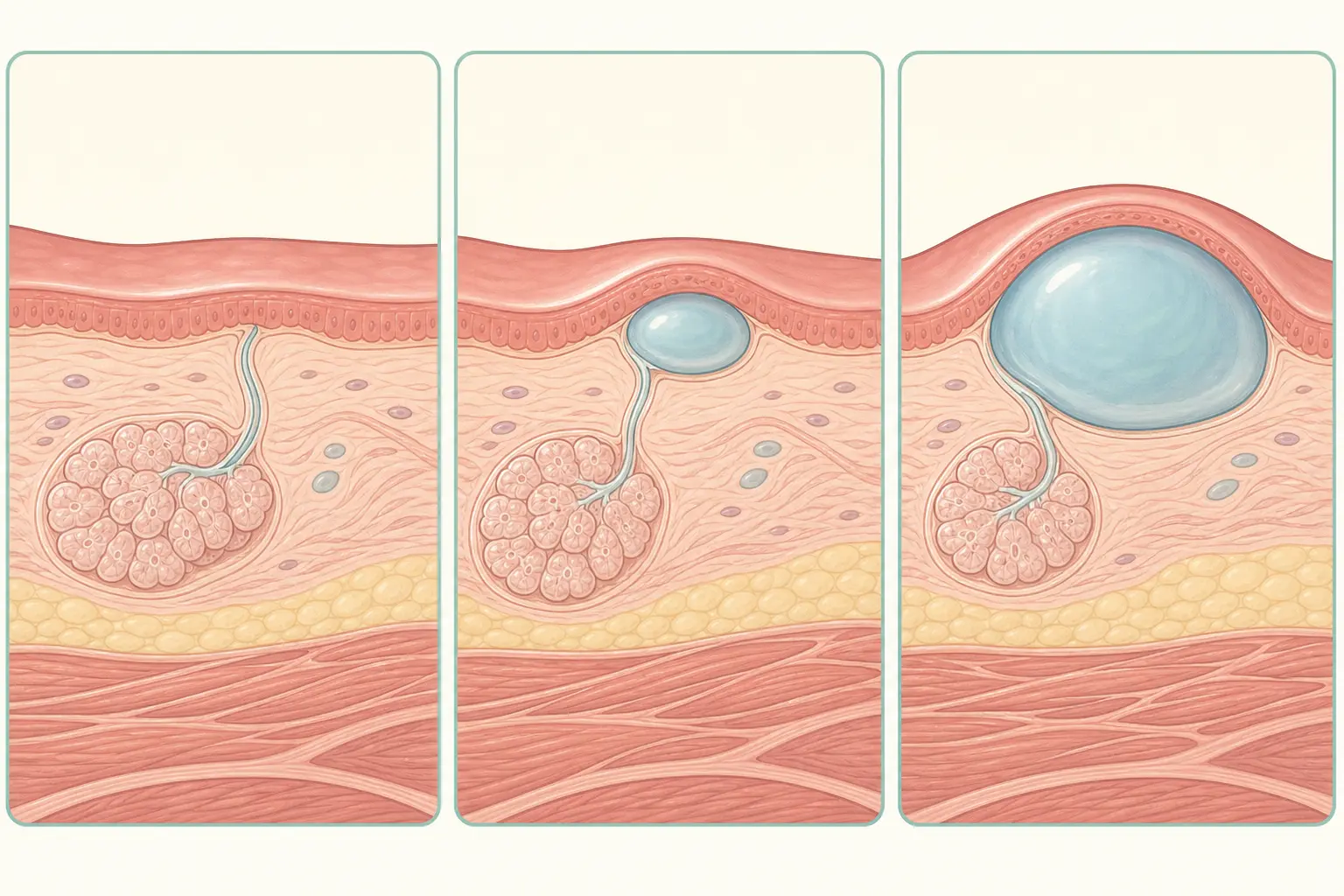
Illustrative diagram: Mucocele
Illustration — a representative diagram, not a patient photo.
The DN First Look799 AED
Book The DN First Look

What does a mucocele feel like?

Mucocele features
FeatureWhat may be noticed
SwellingA smooth, soft, fluid-filled bump may appear in the mouth.[1][2]
EffectRepeated biting or a larger swelling can make eating uncomfortable.[1][2]

[1][2]

What causes a mucocele?

A mucocele can form when a minor salivary gland duct is blocked or damaged. Biting the lip or cheek and other local injury can contribute. The exact cause is not always obvious from the swelling alone, so the history of injury and the location of the lump matter during assessment.

[1][2]

How can a mucocele change?

The swelling may remain, rupture, or recur. A change in size does not by itself prove that the lump is harmless. Repeated recurrence or a lesion that does not settle deserves a clinical examination so the diagnosis can be checked.

[1][2]
Possible course
CourseWhat it means for the patient
New swellingRecord when it appeared and whether biting or injury came first.[1][2]
Persistent or recurring lumpArrange an assessment rather than repeatedly opening it yourself.[1][2]

[1][2]

When should a mouth lump be checked?

Seek an assessment for a lump that persists, returns, grows, bleeds, becomes painful, or interferes with eating. These signs do not diagnose a serious condition, but they make a direct examination more useful. Avoid puncturing the swelling yourself because that can injure tissue and does not establish the cause.

[1][2]

How is a mucocele diagnosed?

Diagnosis is based on the location and appearance of the swelling, the symptoms, and the history of trauma or biting. A clinician may consider other cysts, salivary-gland lesions, and mouth lumps that can look similar. Examination is especially important when the swelling is firm, persistent, or unusual.

[1][2]

What treatment can a mucocele need?

Some mucoceles settle without an invasive procedure, while persistent or troublesome lesions may need treatment. The choice depends on the lesion and its recurrence. A clinician can discuss observation, removal, or another appropriate approach after confirming the diagnosis. Do not rely on repeated self-drainage as a substitute for review.

[1][2]
Treatment discussion
SituationDiscussion point
Small and settlingObservation may be considered after the diagnosis is clear.[1][2]
Persistent or troublesomeA clinician may discuss removal or another treatment.[1][2]

[1][2]

What should I ask about assessment cost in Dubai?

A mucocele may settle without treatment, while a persistent or recurring swelling can require removal of the affected minor salivary gland tissue.

[1][2]

Can a mucocele cause problems?

A mucocele can recur or become troublesome when it is repeatedly bitten or interferes with eating. A persistent or changing lump should be reassessed because symptoms alone cannot confirm the diagnosis. Prompt review is appropriate when pain, bleeding, or rapid change appears.

[1][2]

Can another mucocele be prevented?

Avoiding repeated lip or cheek biting may reduce local injury, although every mucocele cannot be prevented. Do not puncture a swelling yourself. If it returns, note the timing and arrange review so the cause and next treatment can be discussed.

[1][2]

Frequently asked questions

Should I pop a mucocele?

No. Have a persistent or recurring mouth swelling assessed rather than repeatedly puncturing it yourself.

[1][2]