Dental Nation
Condition guide

Medication-Related Osteonecrosis of the Jaw (MRONJ)

Jawbone that stays exposed for eight weeks after certain medicines can be MRONJ, with pain, infection, or altered sensation.

[1][2]

The short answer

MRONJ is jawbone that remains exposed or can be probed through a fistula for eight weeks in a person who has used certain bone-modifying or angiogenic medicines.

[1][2]
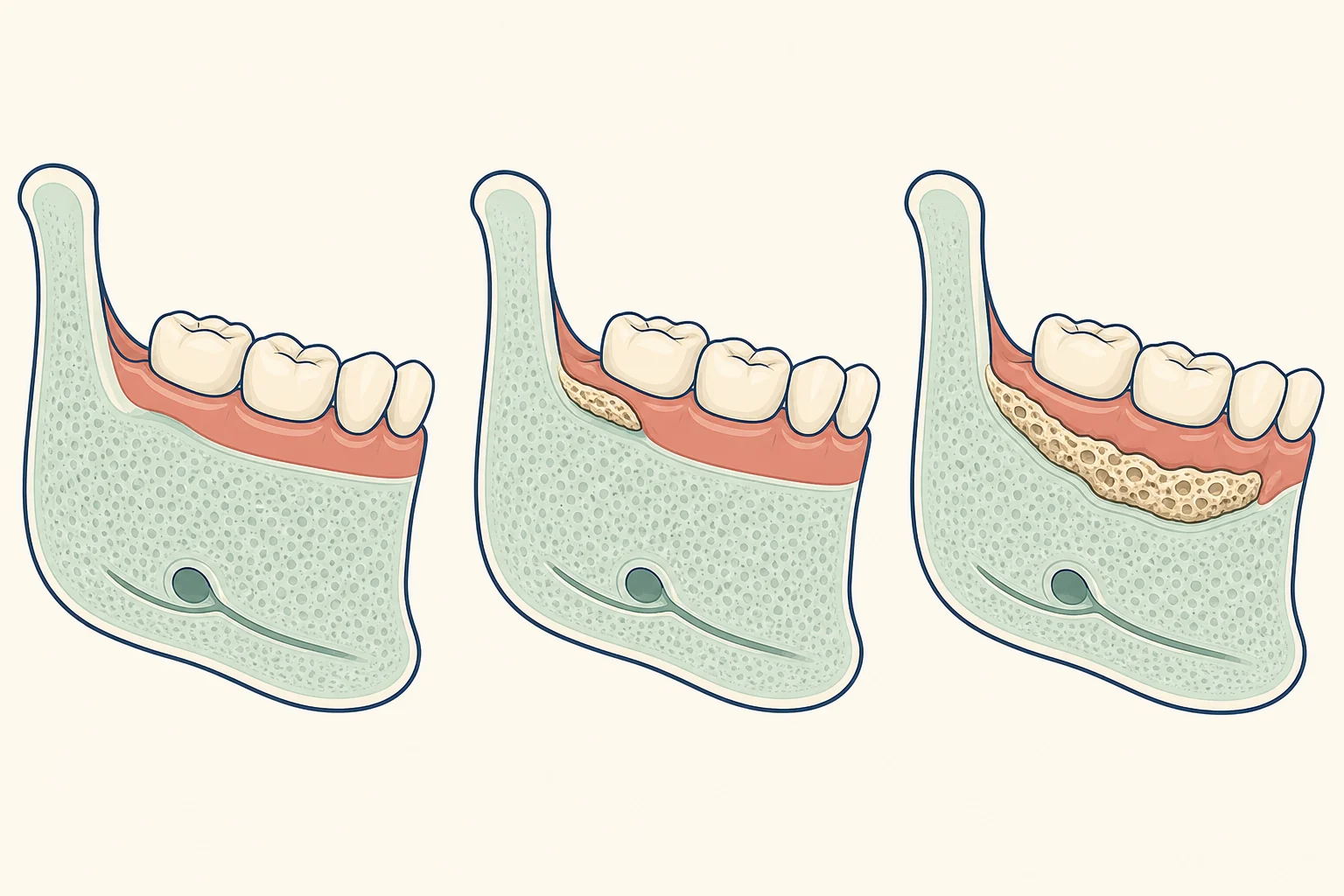
Medication-Related Osteonecrosis of the Jaw (MRONJ) dental educational illustration

What the change looks like

Illustrative diagram: Medication-Related Osteonecrosis of the Jaw
Illustration — a representative diagram, not a patient photo.
The DN First Look799 AED
Book The DN First Look

What symptoms can MRONJ cause?

Possible MRONJ findings
FindingWhat it can indicate
Exposed or probeable jawbone that does not healA diagnostic feature when the medicine and radiation criteria are also met[1][2]
Pain with signs of infectionStage 2 disease includes pain and infection[1][2]

[1][2]

What causes medication-related osteonecrosis of the jaw?

Antiresorptive medication is a risk factor for MRONJ. Risk may relate to cumulative medication exposure, which reflects dose, medicine type, dosing schedule, and duration over time.

[1][2]

How do clinicians stage MRONJ?

Stage 2 MRONJ includes exposed necrotic bone with pain and signs of infection. Stage 0 is used as a marker of increased risk even though visible exposed bone may be absent.

[1][2]
Clinical patterns used in staging
PatternStage meaning
Symptoms without visible exposed boneMay be considered stage 0 and indicate increased risk[1][2]
Exposed necrotic bone with pain and infectionDefines stage 2[1][2]

[1][2]

Who has a higher risk of MRONJ?

People using antiresorptive medicines have an increased risk. Longer treatment duration and systemic corticosteroid use have been associated with higher risk in some studies, while evidence about implants is mixed.

[1][2]

How is MRONJ diagnosed?

Diagnosis requires exposed bone, or bone that can be probed through a mouth or facial fistula, that has not healed within eight weeks. There must be a history of a bone-modifying or angiogenic medicine and no history of head and neck radiation.

[1][2]

How is MRONJ treated at different stages?

Management is matched to disease stage. Nonoperative therapy is documented as an option, and treatment plans take account of symptoms, infection, medicine exposure, and the amount of bone involved.

[1][2]
Features that guide management
FeatureWhy it matters
Pain and infectionThey define stage 2 disease and shape treatment[1][2]
Medicine dose and durationCumulative exposure may affect risk assessment[1][2]

[1][2]

What care may be involved for MRONJ?

MRONJ care can include assessment of medicine exposure, clinical staging, and nonoperative treatment. The treatment approach is selected according to stage, symptoms, infection, and bone involvement.

[1][2]

What can happen as MRONJ progresses?

Inflammation or infection contributes to MRONJ severity and resolution. Bacteria on exposed necrotic bone can add to disease severity, and pain with signs of infection defines stage 2.

[1][2]

How can MRONJ risk be reduced?

MRONJ prevention and management strategies are based on disease stage. Good control of oral inflammation and infection matters because inflammation and bacteria on exposed bone contribute to disease severity.

[1][2]

Frequently asked questions

Does exposed jawbone always mean MRONJ?

MRONJ diagnosis also requires a history of a bone-modifying or angiogenic medicine, persistence for eight weeks, and no history of head and neck radiation.

[1][2]