
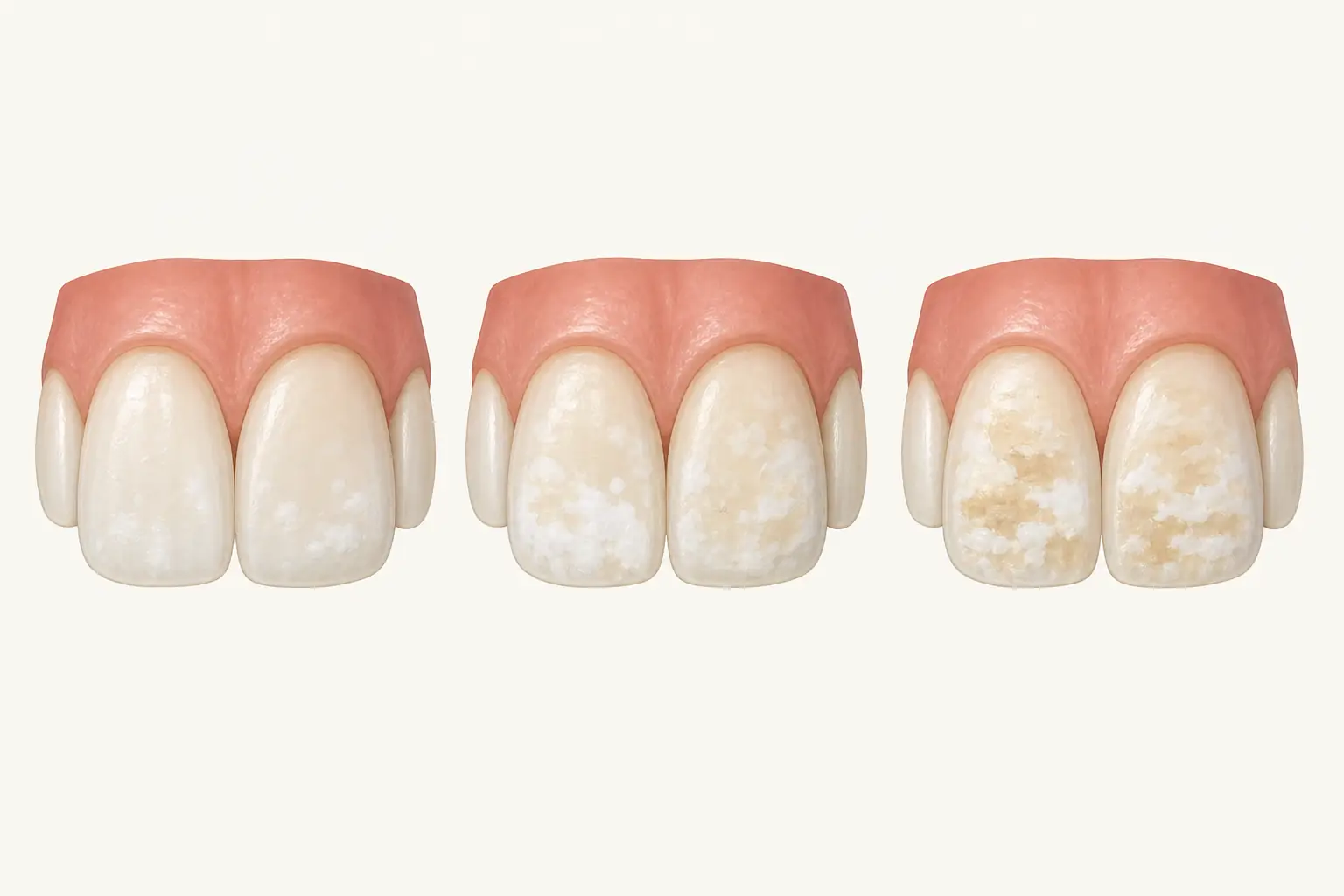
What the change looks like
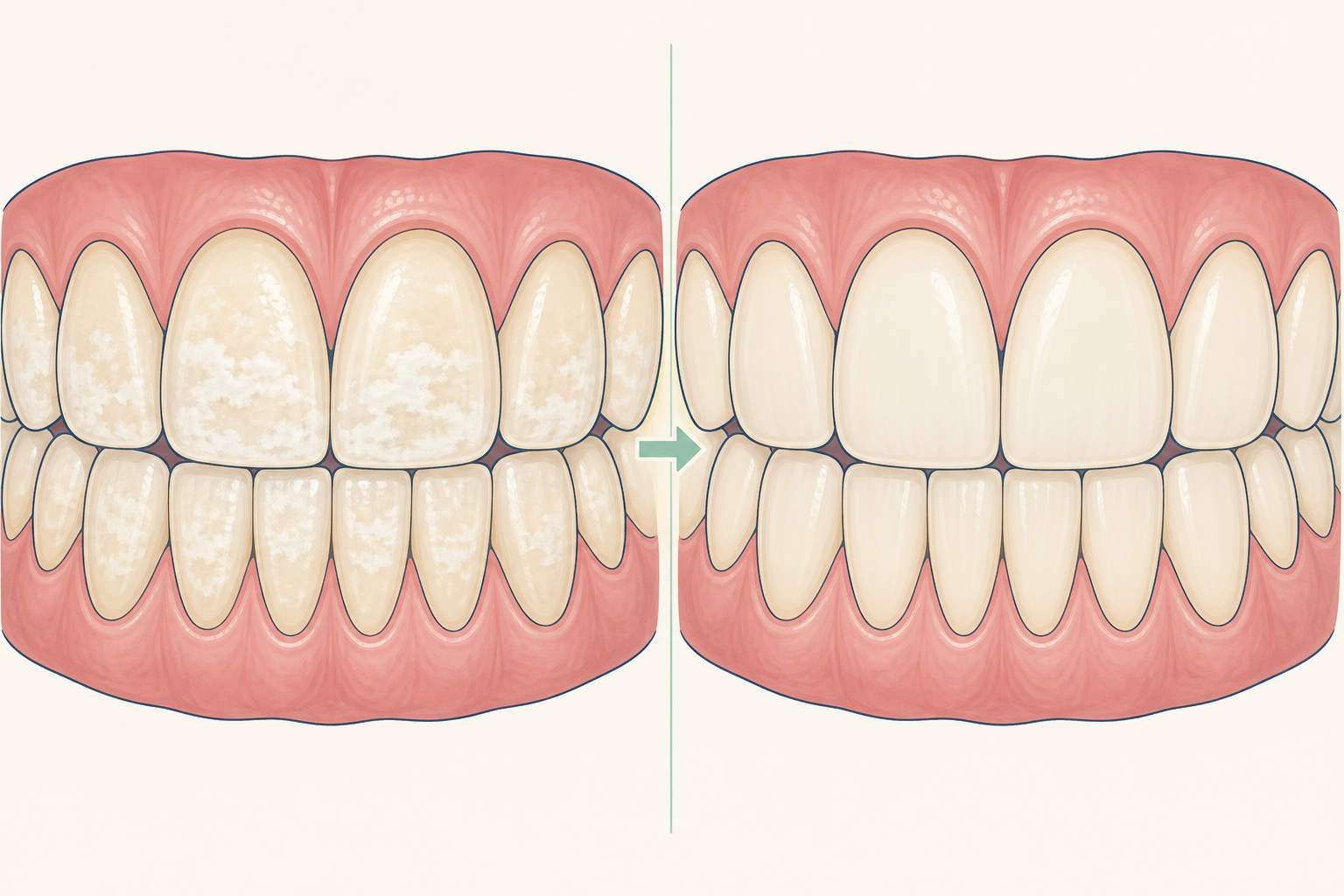
What might you notice?
Mottled teeth may appear as faint white lines, patches, or more marked brown surface changes. The pattern can affect several teeth and may be noticed when the teeth first erupt. Some people mainly want to understand the appearance; others notice an uneven surface or concern about enamel strength. A dental examination helps separate fluorosis from other developmental changes, staining, or a surface defect. The appearance alone does not establish the cause. The timing of the change, which teeth are involved, and the condition of the enamel all matter.
[1][2]What can cause it?
Mottled appearance can follow a change during tooth development. Dental fluorosis is linked with fluoride exposure while enamel is forming, and other developmental disturbances can alter tooth structure or colour. The pattern of affected teeth and the history of fluoride exposure help distinguish these causes.
[2]How does it develop?
Mottled teeth can range from subtle enamel colour changes to broader discolouration and an irregular or weakened surface. Mild fluorosis is commonly cosmetic, while severe fluorosis can involve compromised enamel, sensitivity, wear, or fractures.
[2]What should raise concern?
The relevant risk period is while permanent teeth are developing under the gums. Excess fluoride during enamel formation can affect how teeth look when they erupt; older children, teenagers, and adults cannot newly develop dental fluorosis.
[2]How is it diagnosed?
Diagnosis uses a fluoride history during tooth development and a visual examination with good lighting and a dental mirror. A pitted surface may be checked carefully with a probe; radiographs and sensibility tests have limited use for fluorosis.
[2]What treatment may be discussed?
Mild fluorosis may need no treatment when the appearance is not troubling. Vital dental bleaching can improve mild cases, while minimally invasive restorative treatment may improve more marked changes; severe structural damage may require a conventional crown and lifelong repair or replacement.
[2]What should you ask about the cost?
The Dubai cost depends on whether care is observation, bleaching, minimally invasive restoration, or a crown, because these options involve different clinical work and maintenance.
[2]What can happen if it is left unexplained?
Possible concerns include visible discolouration, altered enamel texture, sensitivity where enamel is affected, and confusion with another developmental disturbance. Pain, progressive wear, or enamel fractures point to a structural problem rather than a purely cosmetic change.
[2]Can it be prevented?
Dental fluorosis develops only while a child's teeth are forming. Keeping fluoride intake appropriate during that period prevents new fluorosis; formed enamel cannot be changed back, although its surface can still be protected.
[2]Frequently asked questions
Who wrote this page
This library is published by Dental Nation, a licensed dental group practising in the United Arab Emirates. Pages are written and overseen by the same clinical team that treats patients in our clinics, and are held to a fixed editorial standard for safety and accuracy.
This page is patient education, not medical advice, and cannot replace an examination. Anything urgent — facial swelling, trauma, uncontrolled bleeding or severe pain — needs a dentist or emergency care now.