
Missing Teeth
Missing teeth may never have developed, failed to erupt, or been lost, and the cause guides replacement planning.
[1][2]The short answer
The visible sign is a gap or an area where a tooth has not appeared. People may also notice chewing changes, tooth movement, speech changes, or concern about appearance. A missing tooth can be developmental or acquired, and the history helps separate these situations.
[1]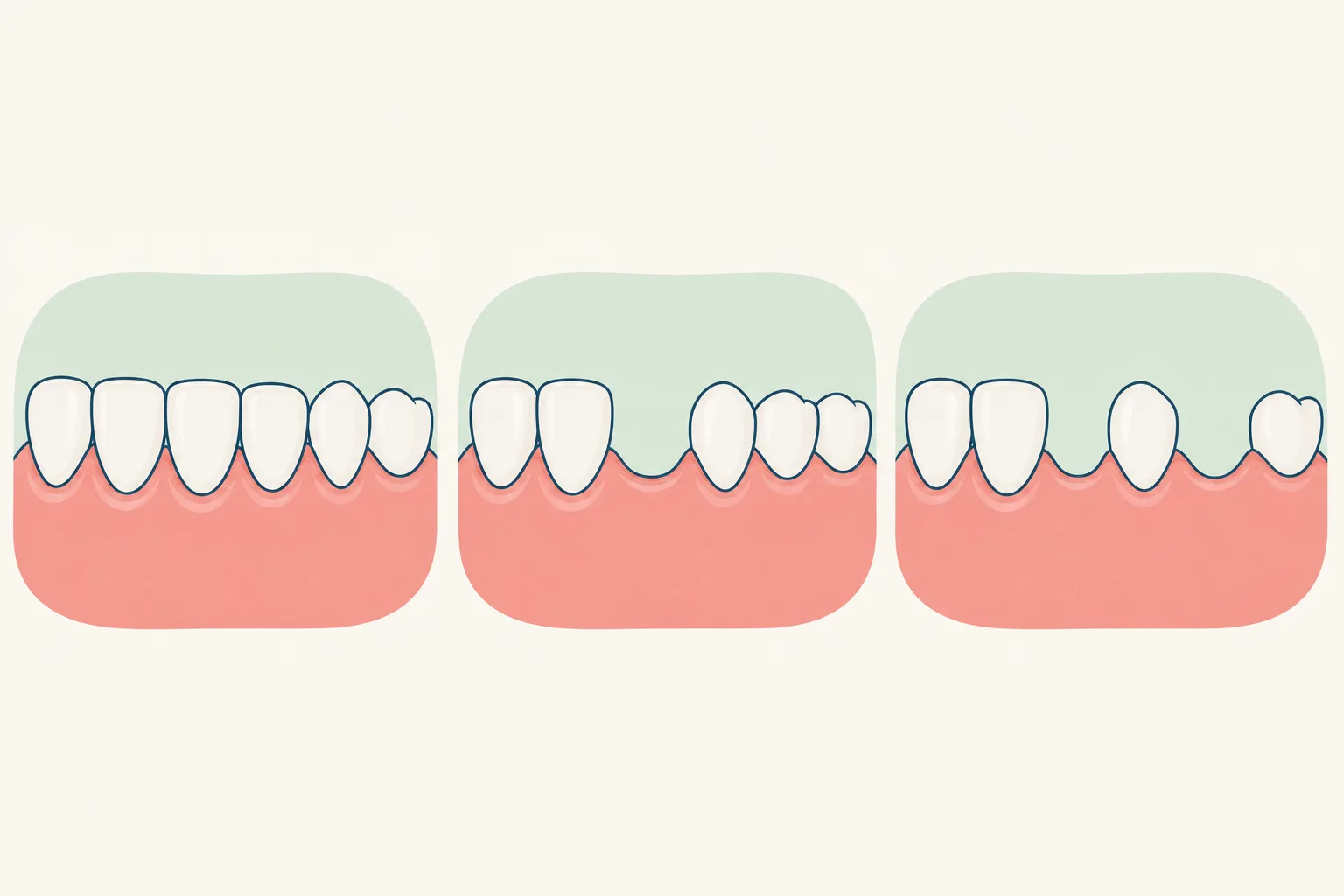
What the change looks like
What symptoms can jaw conditions cause?
| Situation | What the clinician checks | What the finding changes |
|---|---|---|
| A quieter or early presentation | Symptoms, history, and local examination | The need for assessment and monitoring[1] |
| A persistent, larger, or function-affecting presentation | Examination plus imaging or further testing when indicated | The treatment discussion and follow-up plan[1] |
What can cause it?
What are the stages?
The care pathway moves from confirming which tooth is missing, to checking the space and surrounding structures, to deciding whether replacement or observation is appropriate. In a developing mouth, timing and eruption status are especially important.
[1][2]| Situation | What the clinician checks | What the finding changes |
|---|---|---|
| A quieter or early presentation | Symptoms, history, and local examination | The need for assessment and monitoring[1][2] |
| A persistent, larger, or function-affecting presentation | Examination plus imaging or further testing when indicated | The treatment discussion and follow-up plan[1][2] |
Which risks matter?
Missing teeth are absent because they failed to develop or erupt, or because decay, gum disease, injury, or extraction removed them.
[1]How is it diagnosed?
How is treatment chosen by stage?
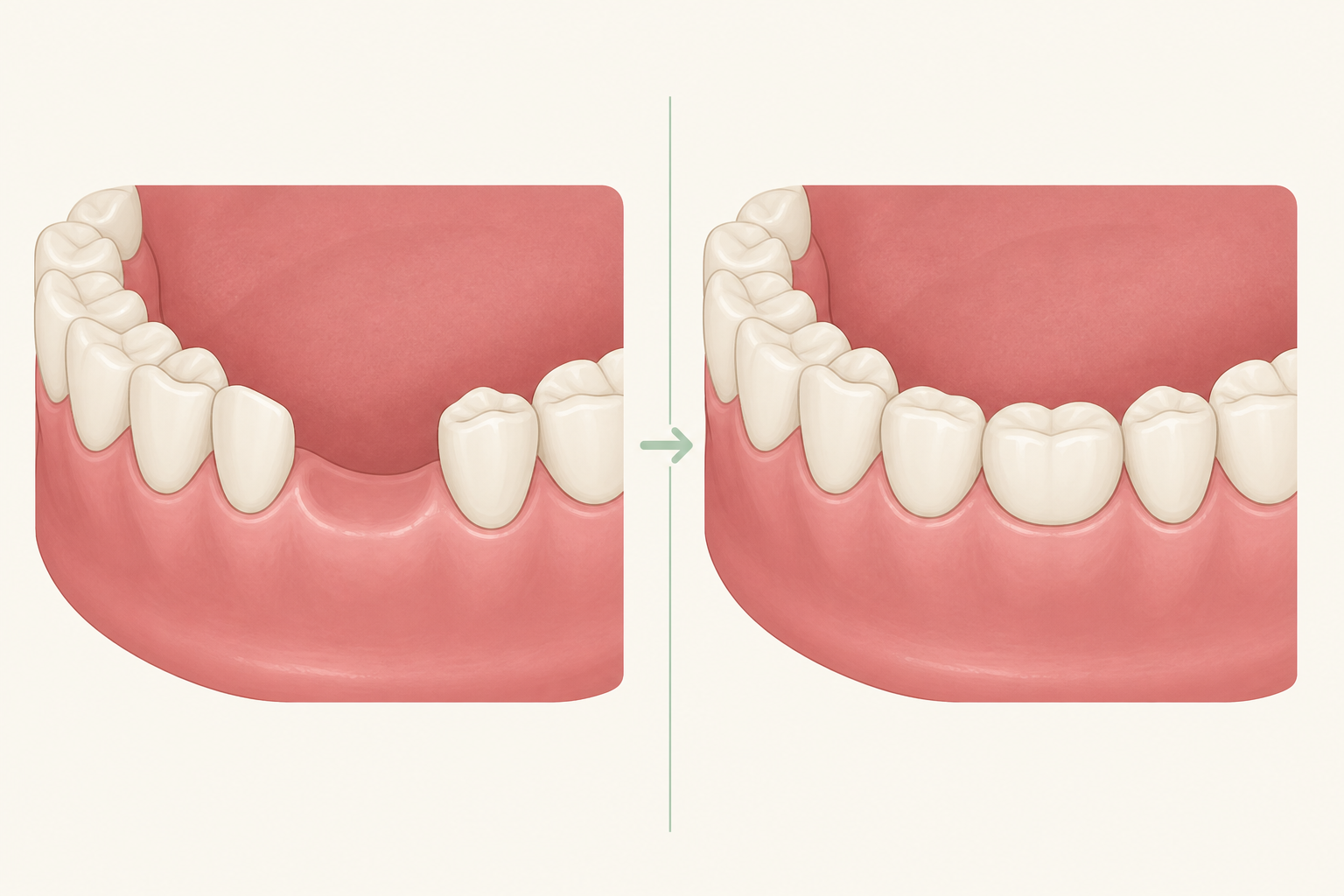
Replacement planning begins by confirming the missing tooth and checking the space, neighbouring roots, eruption status, and available bone before choosing observation, a prosthesis, or an implant.
[1]| Situation | What the clinician checks | What the finding changes |
|---|---|---|
| A quieter or early presentation | Symptoms, history, and local examination | The need for assessment and monitoring[1] |
| A persistent, larger, or function-affecting presentation | Examination plus imaging or further testing when indicated | The treatment discussion and follow-up plan[1] |
What does care cost in Dubai?
Costs depend on whether the tooth is replaced with a removable prosthesis, fixed prosthodontics, or an implant, plus any preparation needed for the space or bone.
[1]What can happen if it is untreated?
The effects of a missing tooth depend on location and time. Neighbouring teeth may move, the bite may change, and the space or bone may become less suitable for a later replacement. Assessment clarifies the local situation.
[1]How can it be prevented?
Some missing teeth cannot be prevented because they relate to development. Protecting natural teeth with dental care, treating decay and gum disease, and managing dental injury can reduce avoidable tooth loss.
[1]