
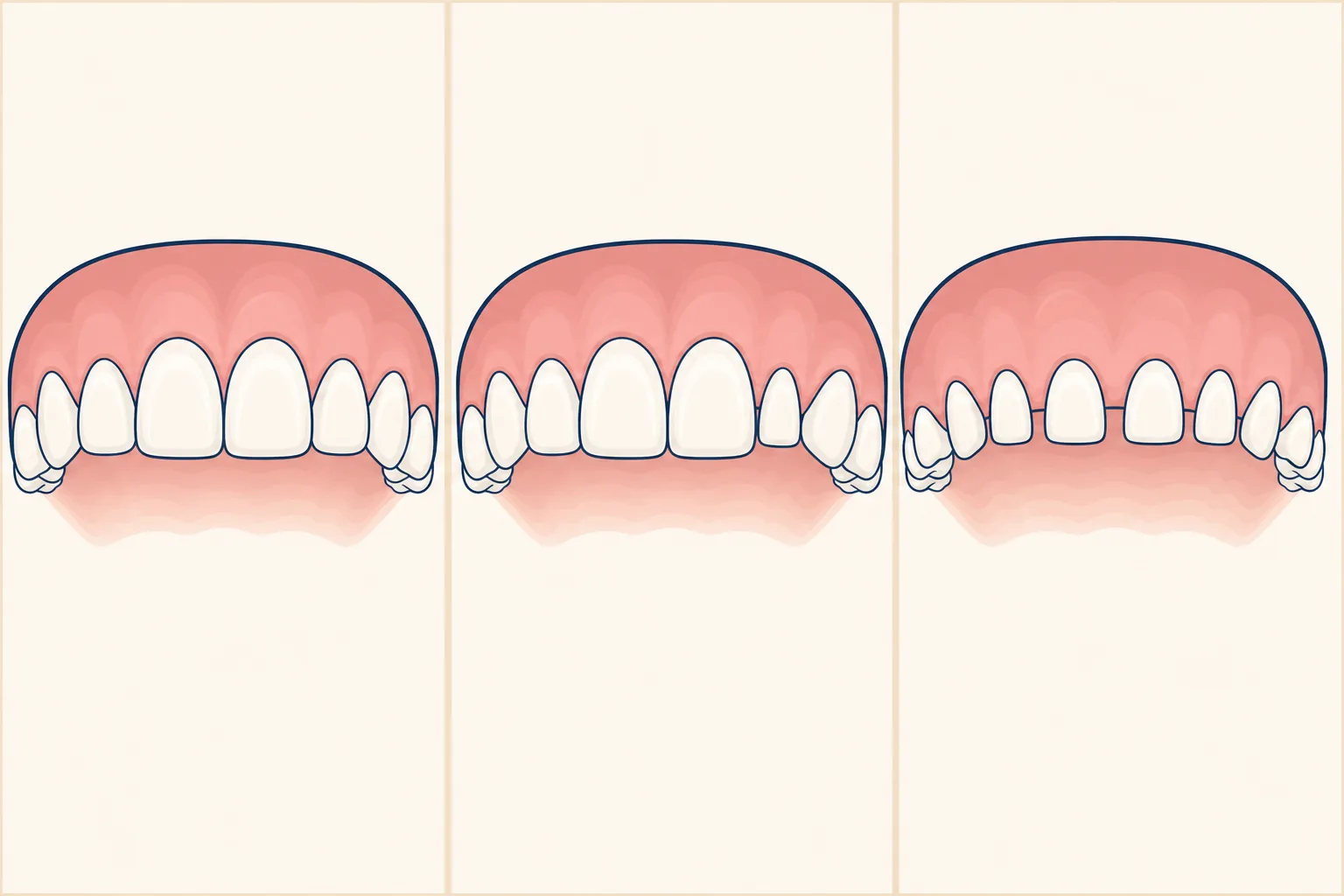
What the change looks like
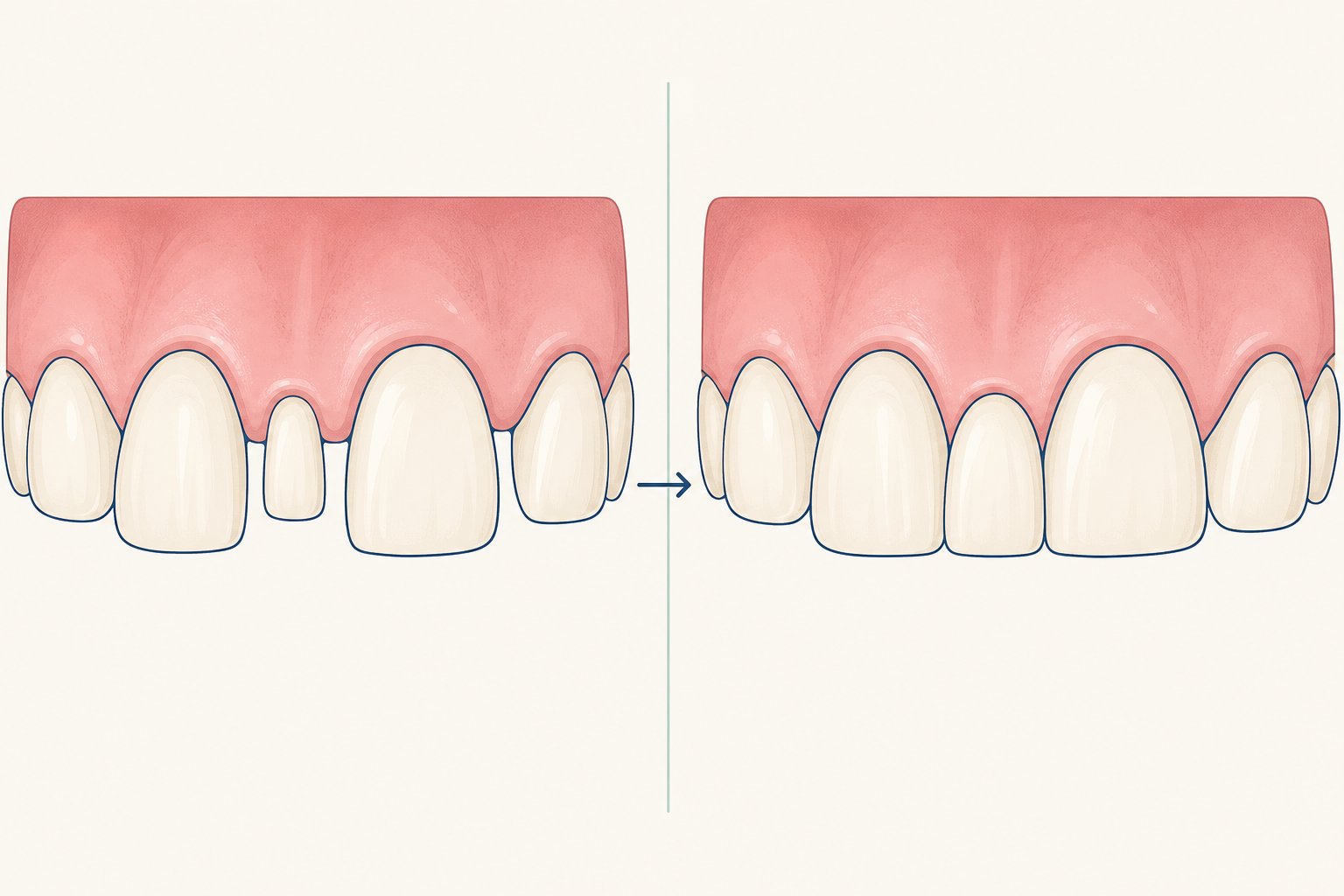
What does microdontia look like?
What causes microdontia?
Does microdontia have stages?
The pattern may involve a single small tooth or the whole dentition. True generalised microdontia means that all teeth are affected and is rare without an underlying genetic or developmental condition.
[1]Who is more likely to have it?
How is microdontia identified?
A diagnosis starts with the tooth's size and form. When every tooth appears small, further assessment can help distinguish true generalised microdontia from conditions involving pituitary or growth-hormone defects. This pattern affects the entire dentition and is uncommon without an underlying condition.
[1]How can small teeth be managed?
Care is aimed at appearance or function. Small teeth with gaps between neighbouring teeth are commonly managed with orthodontic treatment; restorative, surgical, or orthodontic options may also be used when needed.
[1]What shapes the cost of care?
The type of care shapes the cost because management can involve orthodontic treatment, restorative work, surgery, or a combination of these approaches.
[1]Can microdontia cause problems?
Microdontia can create aesthetic or functional concerns, especially when its severity or extent is greater. Its developmental origin does not necessarily affect dental function, and the associated syndrome may create the larger health concern.
[1]Can microdontia be prevented?
Developmental or genetic microdontia cannot be prevented. Careful oral hygiene matters because affected teeth may need restorative, periodontal, or root-canal treatment when they are not well maintained.
[1]Frequently asked questions
Can microdontia leave gaps between teeth?
Abnormally small teeth can be separated by gaps beside adjacent teeth, and orthodontic treatment is commonly used for those gaps.
[1]Who wrote this page
This library is published by Dental Nation, a licensed dental group practising in the United Arab Emirates. Pages are written and overseen by the same clinical team that treats patients in our clinics, and are held to a fixed editorial standard for safety and accuracy.
This page is patient education, not medical advice, and cannot replace an examination. Anything urgent — facial swelling, trauma, uncontrolled bleeding or severe pain — needs a dentist or emergency care now.