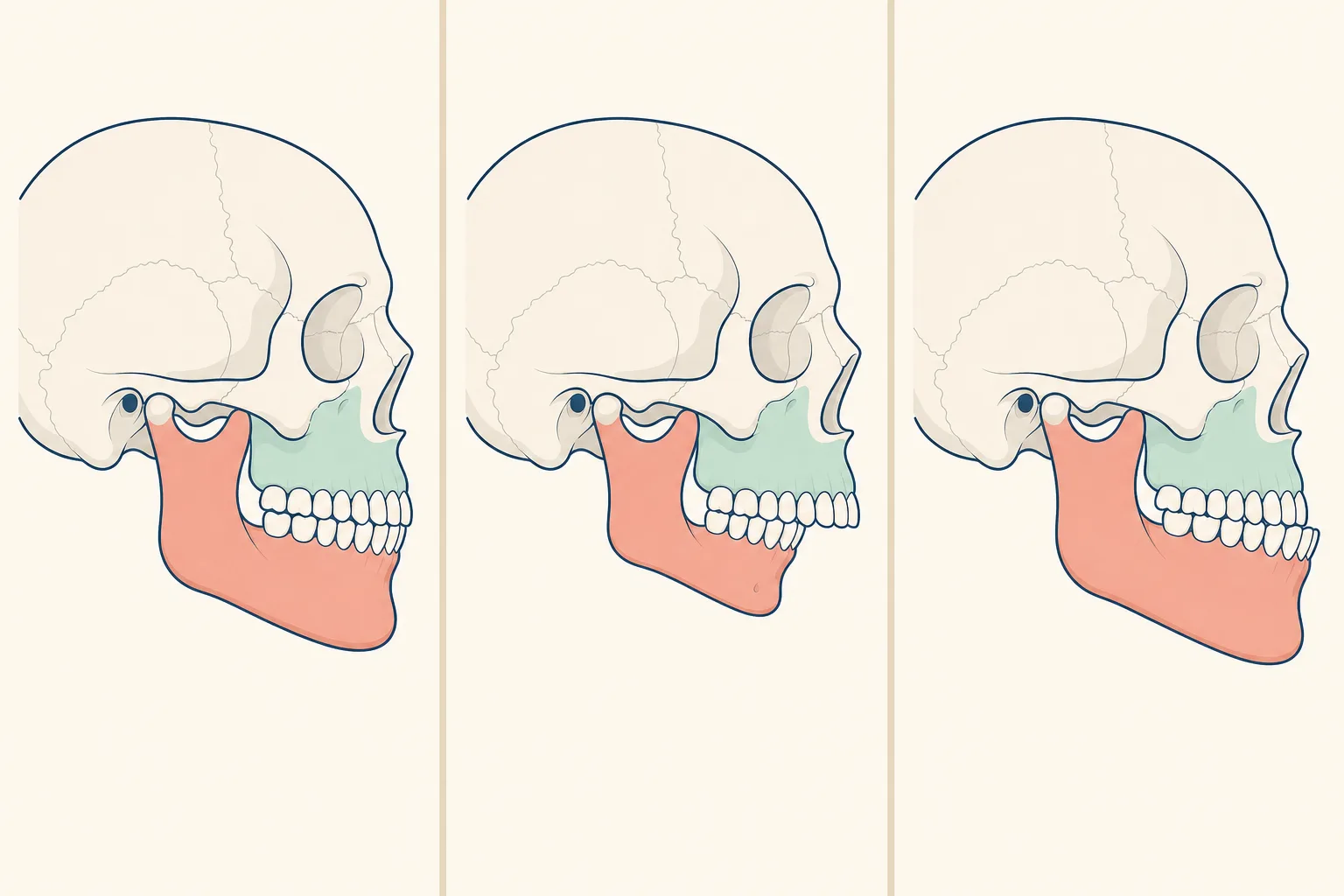
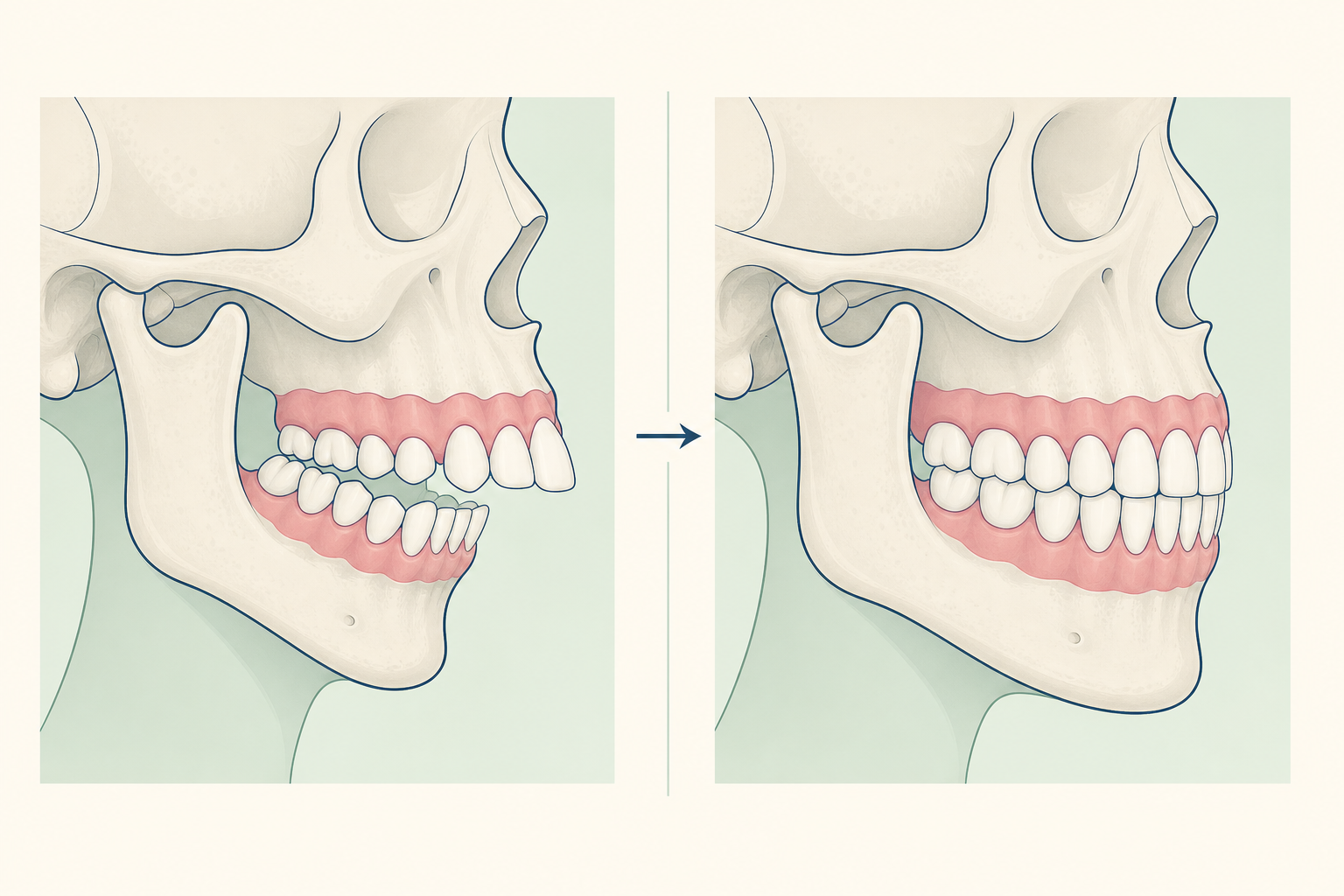
Jaw size and malocclusion can reflect inherited factors, skeletal abnormalities, prolonged thumb sucking or pacifier use, missing teeth, inadequate space or trauma.
The developing dentition is assessed across childhood and adolescence because tooth number, size, jaw growth, habits and eruption change with development.
Assessment may include medical history, physical examination and imaging such as panoramic radiographs. Diagnostic records can also include photographs and dental casts.
Treatment ranges from monitoring developing teeth to orthodontic care; severe skeletal malocclusion may require orthodontic and orthognathic surgical treatment together.
Cost is shaped by the severity of malocclusion, available space, compliance, oral health and whether treatment requires surgery as well as orthodontics.
Routine oral-health monitoring can identify developing anomalies, oral habits, crowding, crossbites and space problems early enough to guide management.
Can a jaw size anomaly affect more than the appearance of the smile?
Yes. Malocclusion linked with jaw and space problems can make cleaning difficult and may contribute to decay, gingivitis, impacted teeth and jaw problems.