
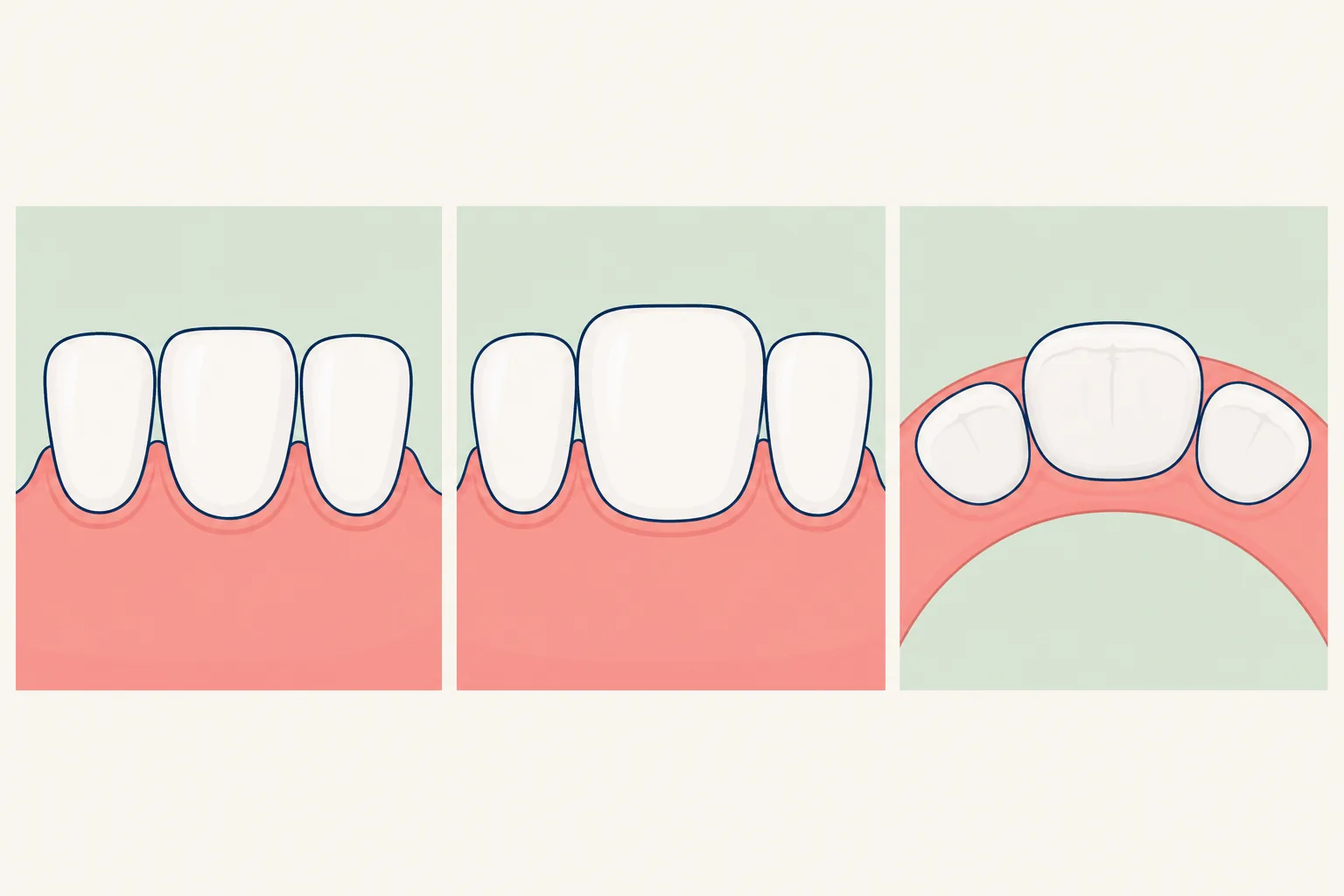
What the change looks like
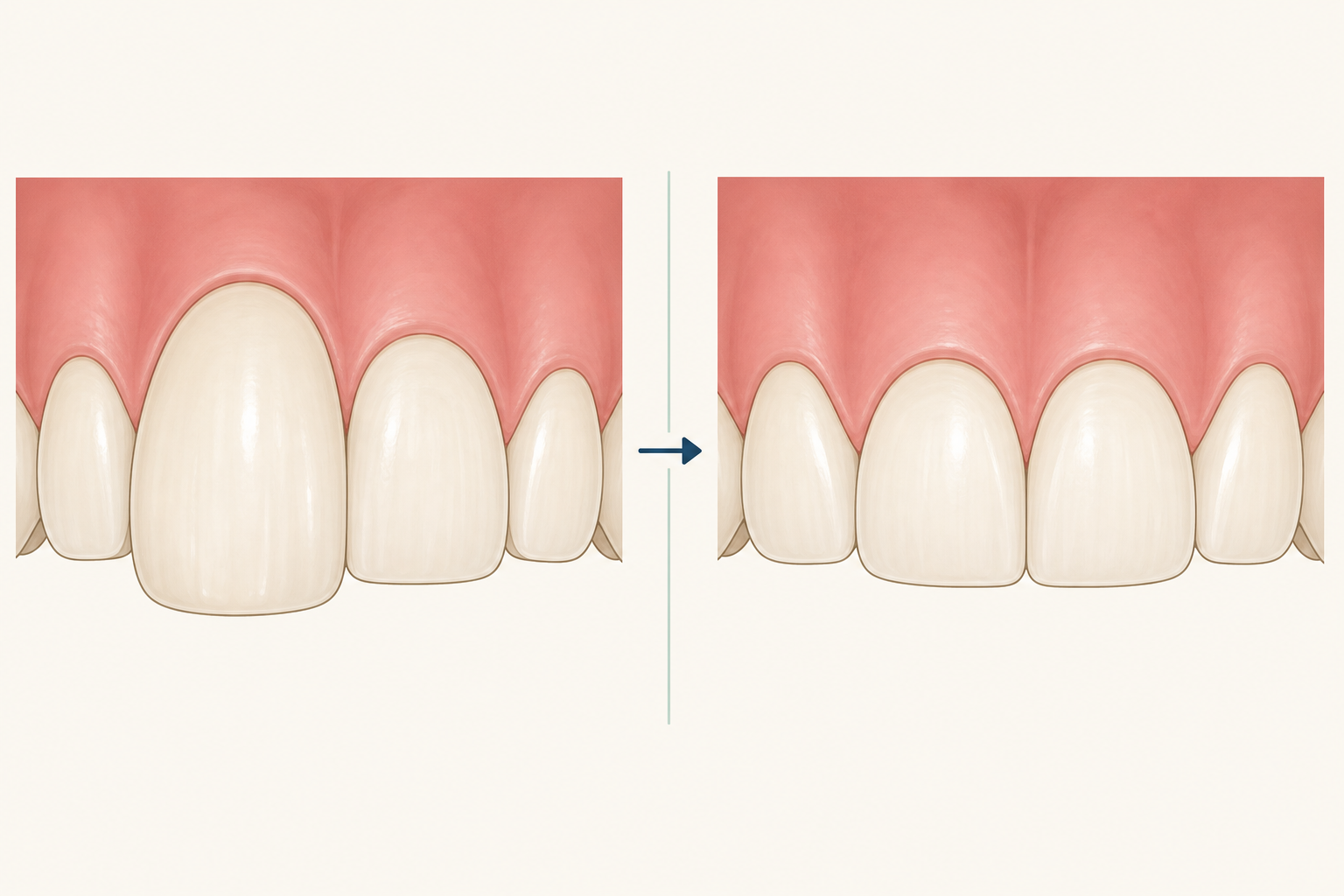
What does macrodontia look like?
Why do teeth become unusually large?
Is there more than one pattern?
Macrodontia may be isolated or generalised. A rare form, called polarisation, affects premolars and makes them resemble molars.
[1]When does a larger tooth need more attention?
A generalised pattern needs assessment for a possible underlying genetic or developmental condition. The size of the tooth and its effect on the surrounding oral anatomy also influence whether it can remain in the arch.
[1]How is macrodontia found?
Macrodontia is often seen on routine dental radiographs between ages 8 and 13, when permanent teeth begin to erupt. Imaging also helps monitor eruption abnormalities caused by enlarged teeth.
[1]What treatment may be used?
An isolated large tooth often needs no treatment. When a macrodont cannot remain comfortably in the arch, extraction followed by orthodontic treatment is the most common management strategy.
[1]What determines the cost of care?
Costs are shaped by whether monitoring is sufficient or whether extraction and orthodontic treatment are needed to manage the tooth's size and position in the arch.
[1]What can happen without management?
A large front tooth may change appearance. In the back of the mouth, a macrodont can crowd other teeth and impede their normal eruption, so radiographic monitoring checks for eruption problems.
[1]Can macrodontia be prevented?
Macrodontia has a developmental or genetic origin and cannot be prevented. Good oral hygiene helps reduce the need for restorative, periodontal, or root-canal care in teeth that need ongoing maintenance.
[1]Frequently asked questions
Does every large tooth need to be removed?
No. Isolated larger-than-normal teeth typically need no intervention; removal is considered when the tooth's size and effect on the arch make retention unsuitable.
[1]Who wrote this page
This library is published by Dental Nation, a licensed dental group practising in the United Arab Emirates. Pages are written and overseen by the same clinical team that treats patients in our clinics, and are held to a fixed editorial standard for safety and accuracy.
This page is patient education, not medical advice, and cannot replace an examination. Anything urgent — facial swelling, trauma, uncontrolled bleeding or severe pain — needs a dentist or emergency care now.