
Diseases of the Lips
Lip disease can cause painful cracks or mucus-filled swellings, with treatment shaped by the lesion and its effect on eating or speech.
[1]The short answer
Lip conditions include inflamed cracks at the mouth corners and mucus-filled swellings caused by salivary gland or duct problems.
[1]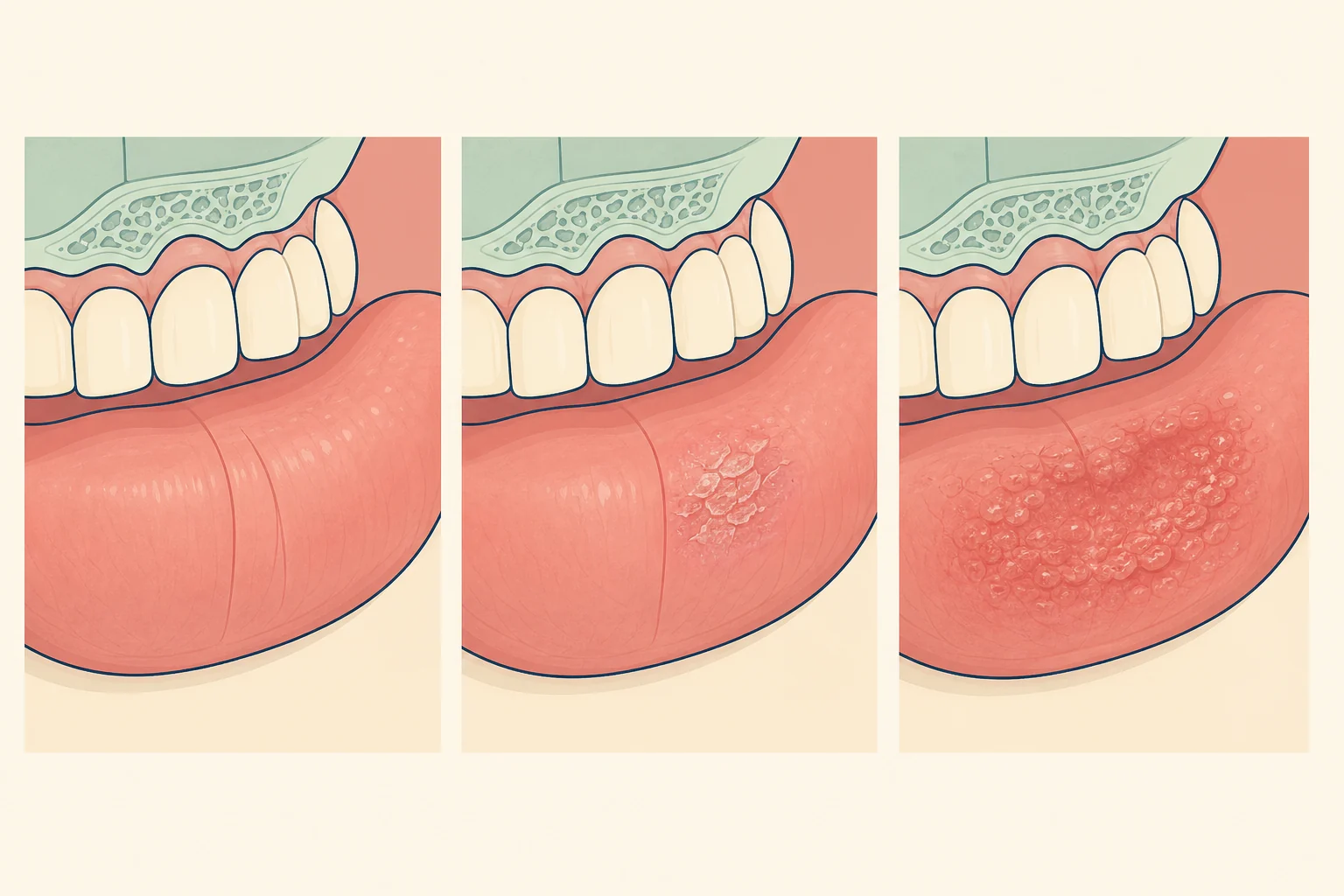
What the change looks like
What do lip diseases look or feel like?
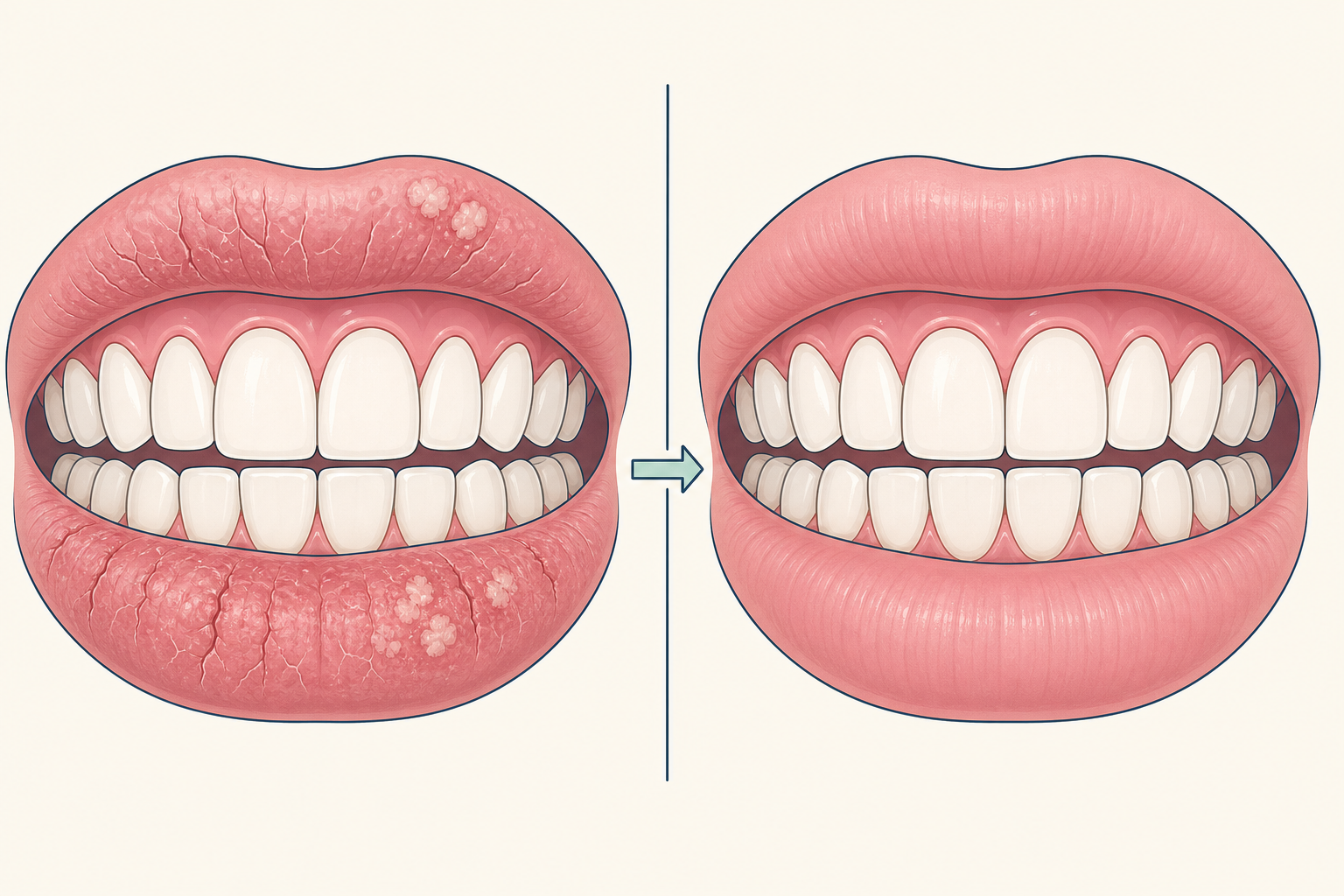
Angular cheilitis produces fissuring and soreness at the mouth corners. Mucoceles and ranulas appear as mucus-filled swellings, with larger lesions causing more functional difficulty.
[1]What causes these conditions?
Angular cheilitis and mucus-filled lesions have different origins. The former affects the mouth corners, while a mucocele or ranula follows salivary gland or duct disturbance.
[1]How can a lip lesion change?
A small mucus lesion may remain limited, whereas a more extensive ranula can involve surrounding tissue and create functional or breathing problems.
[1]When is the problem more concerning?
A lesion becomes more concerning when its size or extension interferes with eating, speech, or the airway, particularly when a ranula is large.
[1]How are lip diseases diagnosed?
Diagnosis begins with the lesion's location, surface, size, and extension. For a large mucocele or ranula, imaging helps define boundaries before excision.
[1]How are they treated?
Treatment is matched to the lesion. More extensive mucoceles may be marsupialised to preserve tissue and reduce complications, while excision is considered with attention to the lesion's boundaries.
[1]What affects the cost?
Cost is shaped by whether the lesion needs imaging, marsupialisation, or surgical excision, especially when a larger lesion requires its boundaries to be defined first.
[1]What complications can occur?
Larger lesions can interfere with eating or speech, and a large ranula can compromise breathing. Surgical planning also considers complications from tissue loss or excision.
[1]How can problems be limited?
Early attention to persistent corner fissures or a growing mucus swelling limits the time a lesion can interfere with eating, speech, appearance, or breathing.
[1]Frequently asked questions
Can a ranula affect breathing?
Yes. A large ranula can become large enough to cause respiratory compromise.
[1]