Dental Nation
Condition guide

Oral Lichen Planus

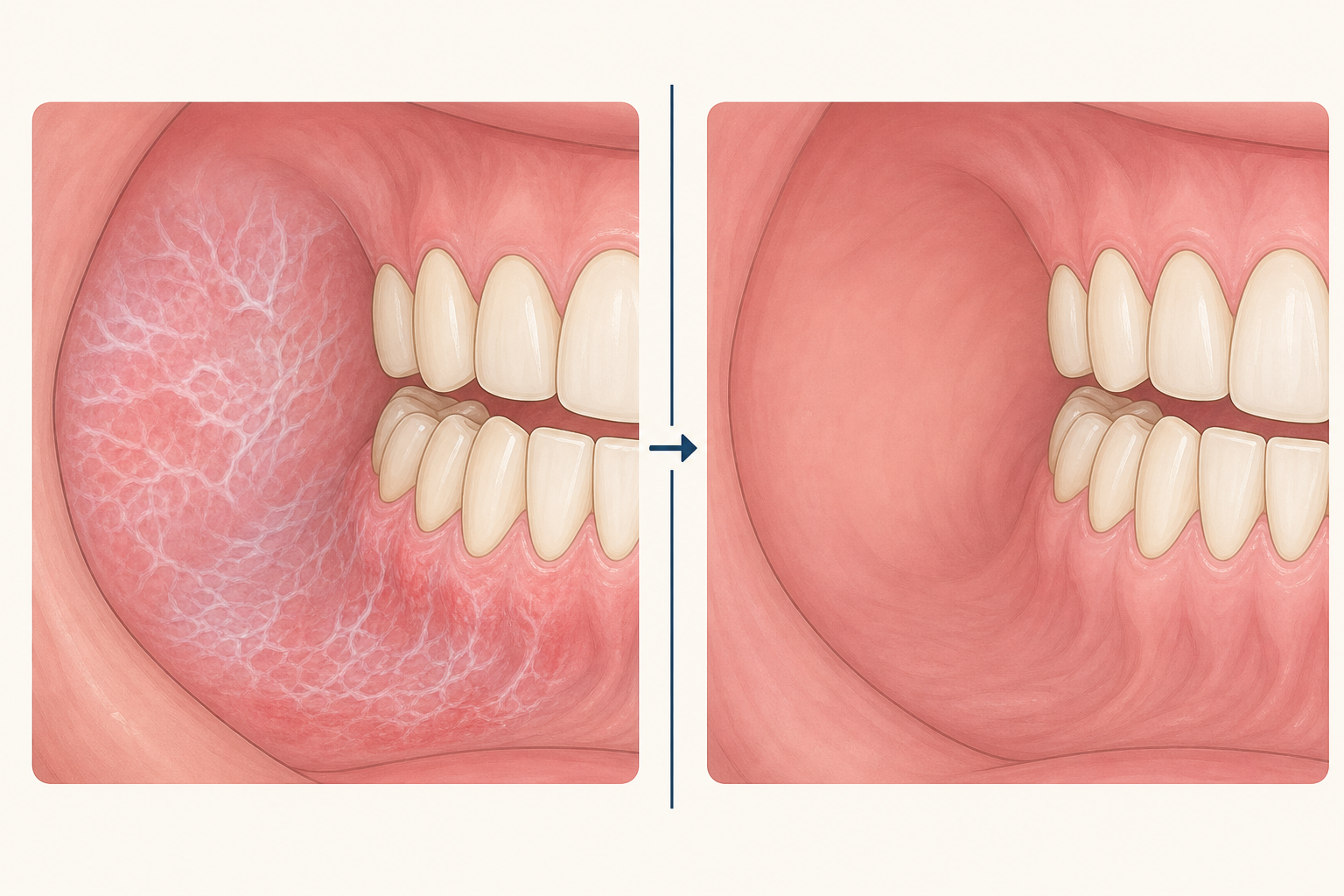
Persistent mouth soreness that flares and settles can occur with oral lichen planus; salty, spicy and acidic foods may aggravate it.

[1][2]

The short answer

Oral lichen planus is a chronic inflammatory mouth condition that can relapse, cause persistent discomfort and need long-term monitoring.

[1][2]
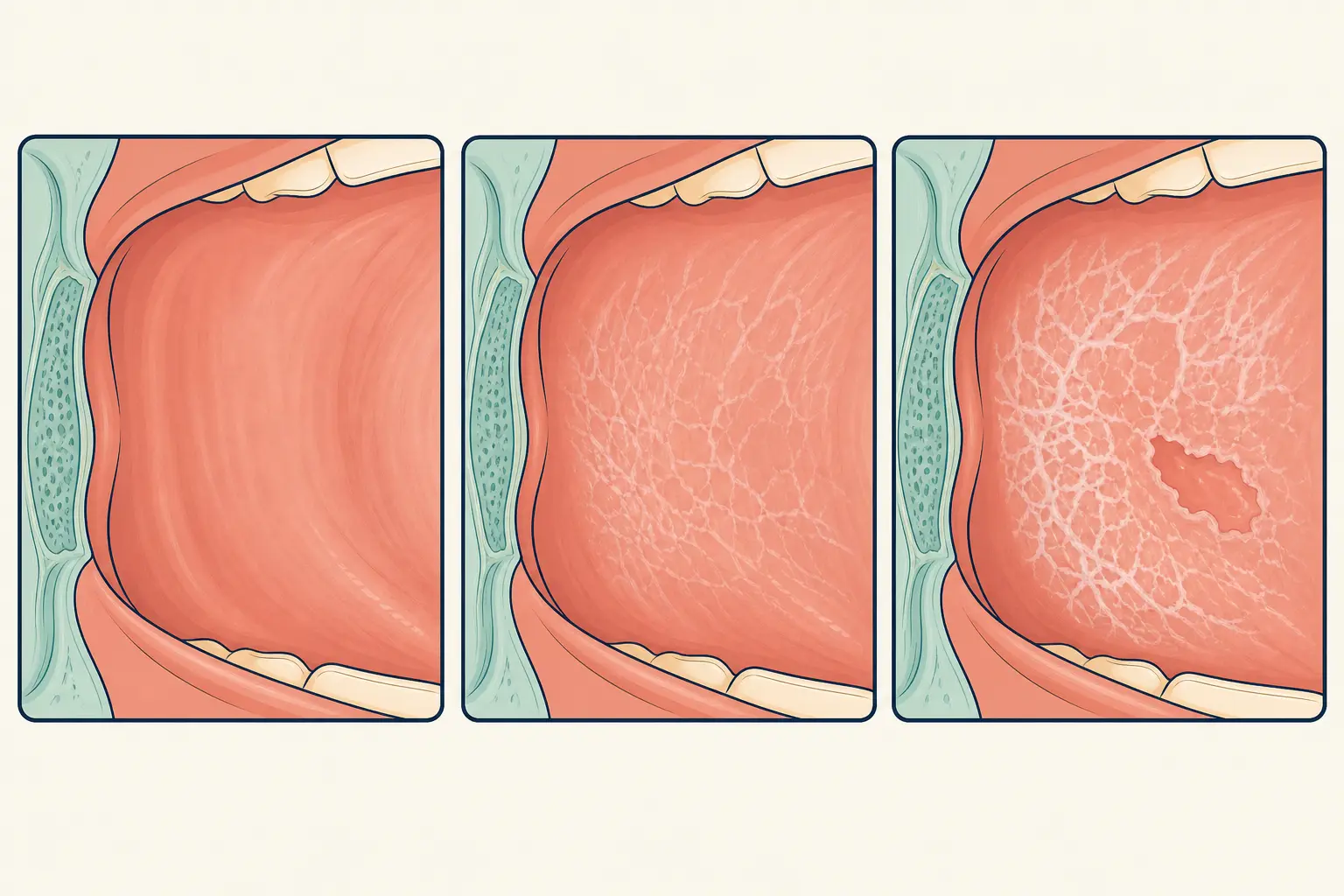
Oral Lichen Planus dental educational illustration

What the change looks like

Illustrative diagram: Oral Lichen Planus
Illustration — a representative diagram, not a patient photo.
The DN First Look799 AED
Book The DN First Look

What can oral lichen planus feel like?

Features that can affect daily comfort
FeatureWhat to expect
Mouth sorenessSalt, spice, acidic foods and alcohol can make a sore mouth worse.[1][2]
Changing courseThe oral condition can go through periods of relapse and remission.[1][2]

[1][2]

What causes oral lichen planus?

Its cause is not fully understood. Immune activity, including T-cell driven injury to basal keratinocytes, has a central role in oral lichen planus.

[1][2]

How can oral lichen planus behave over time?

This is a long-term condition rather than a one-off sore. Its outlook varies with the lesion type, response to treatment and adherence to long-term monitoring.

[1][2]
Factors that shape the course
FactorWhy it matters
Lesion typeThe lesion type affects prognosis.[1][2]
Treatment responseHow lesions respond contributes to the outlook.[1][2]

[1][2]

What else can resemble oral lichen planus?

Several conditions can resemble oral lichen planus, including lichenoid reactions to medicines or contact sensitivity, lupus erythematosus, mucous membrane pemphigoid and oral epithelial dysplasia.

[1][2]

How is oral lichen planus assessed?

Assessment distinguishes oral lichen planus from similar lichenoid and autoimmune conditions through clinical examination, targeted history-taking and, where needed, histopathologic analysis.

[1][2]

What can ease a sore mouth?

For a sore mouth, avoid salty, spicy and acidic foods or alcohol when they trigger discomfort. Careful twice-daily toothbrushing and an alcohol-free mouthwash can also reduce mouth irritation.

[1][2]
Measures for mouth soreness
MeasureUse
Food and drink changesAvoid salt, spice, acid and alcohol when they make the mouth sore.[1][2]
Mouth careBrush carefully twice daily and use alcohol-free mouthwash if alcohol stings.[1][2]

[1][2]

What care does a sore mouth need?

The practical aim is to ease mouth soreness and maintain gum health with gentle brushing and a mouthwash that does not contain alcohol if alcohol causes discomfort.

[1][2]

What complications are linked with oral lichen planus?

Persistent discomfort and secondary infection are recognised complications. There is also a low but notable risk of malignant transformation, which is why long-term monitoring matters.

[1][2]

How can mouth irritation be reduced?

Gentle oral care, avoiding personal triggers and recognising flares early can reduce irritation. Salty, spicy and acidic foods, alcohol and alcohol-containing mouthwash are practical triggers to avoid when they make the mouth sore.

[1][2]

Frequently asked questions

Can food make oral lichen planus hurt more?

Salty, spicy and acidic foods can make a sore mouth worse, as can alcohol.

[1][2]
Why is oral lichen planus monitored over time?

Its course can relapse and remit, and persistent discomfort, secondary infection and a low risk of malignant transformation are recognised concerns.

[1][2]