Dental Nation
Condition guide

Leukoplakia

A white mouth patch that cannot be rubbed away may shrink after irritation is removed, but it can need monitoring or biopsy.

[1][2]

The short answer

Leukoplakia usually appears as an irregular white or grey mouth patch that cannot be rubbed away and may be slightly raised.

[1][2]
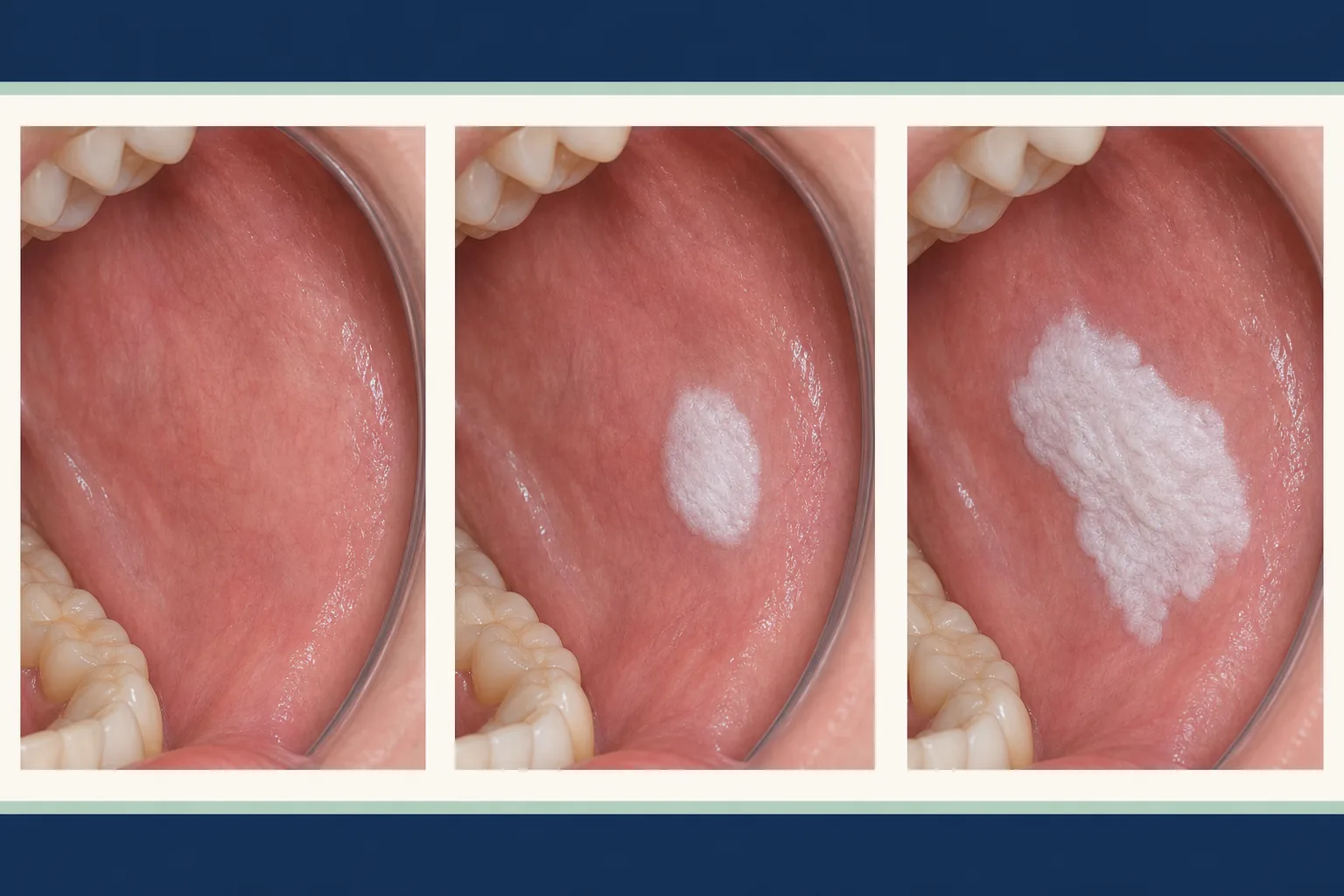
Leukoplakia dental educational illustration

What the change looks like

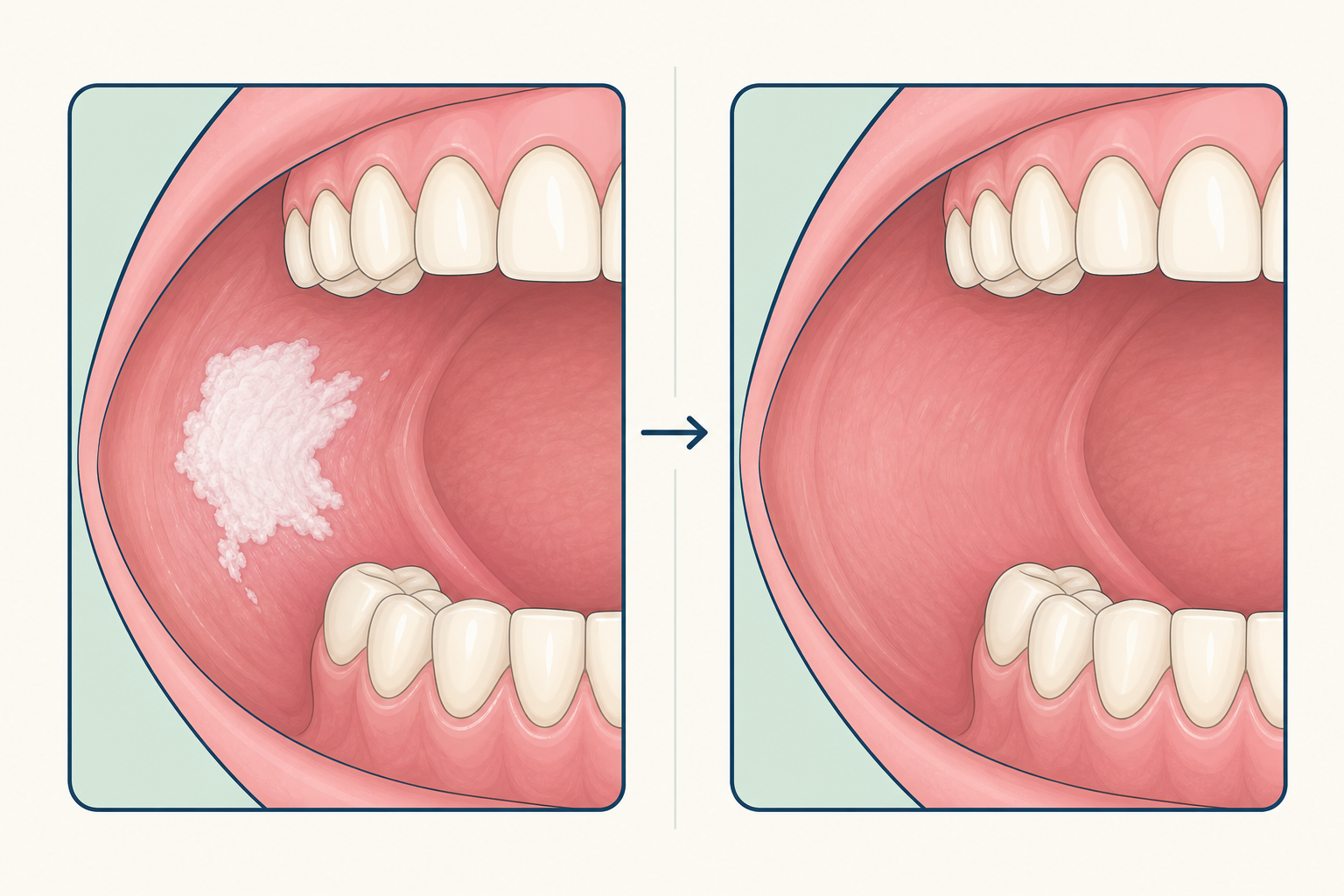
Illustrative diagram: Leukoplakia
Illustration — a representative diagram, not a patient photo.
The DN First Look799 AED
Book The DN First Look

What does leukoplakia look and feel like?

Features of a leukoplakia patch
FeatureDetail
SurfaceIt cannot be scraped away[1][2]
LocationIt may occur on the tongue or inside the cheeks[1][2]

[1][2]

What can cause a white patch?

Irritation from rough teeth, dentures, fillings, crowns, tobacco, or heavy alcohol use may contribute. Hairy leukoplakia is linked with Epstein-Barr virus and may occur with a weakened immune system.

[1][2]

How can the patch change over time?

Many patches clear within weeks or months after the source of irritation is removed. Some patches can be an early sign of mouth cancer, so they are monitored for enlargement or change.

[1][2]
Common paths after a cause is addressed
SituationWhat may happen
Irritation removedThe patch may shrink or disappear[1][2]
Patch changes or cancer riskSurgery may be used to remove it[1][2]

[1][2]

What raises the risk?

Smoking, other tobacco use, chewing tobacco or snuff, heavy alcohol use, rough dental surfaces, and older age are linked with leukoplakia. Hairy leukoplakia is associated with weakened immunity.

[1][2]

How is leukoplakia confirmed?

A biopsy of the patch confirms the diagnosis and can show changes that indicate oral cancer. The patch's colour, shape, surface, and location are also assessed.

[1][2]

What treatment may be used?

Removing the irritation, stopping tobacco, and reducing alcohol can make a patch smaller or make it disappear. Persistent patches may be treated with medicine or removed using a laser or scalpel.

[1][2]
Treatment choices mentioned for leukoplakia
ApproachWhen it is relevant
Remove irritationRough teeth, fillings, or dentures are addressed[1][2]
SurgeryUsed when a patch may become cancerous[1][2]

[1][2]

What care can be involved?

Care may include assessment of the patch, regular checks for enlargement, and biopsy or removal when the patch has concerning changes.

[1][2]

Can leukoplakia become serious?

Leukoplakia is usually harmless, yet some patches are an early sign of mouth cancer. Hairy leukoplakia does not carry a risk of mouth cancer.

[1][2]

What can reduce future risk?

Stopping smoking, avoiding chewing tobacco, and reducing alcohol can make leukoplakia patches smaller or help them go away.

[1][2]

Frequently asked questions

Will a leukoplakia patch go away after I stop smoking?

A patch may get smaller or go away when smoking stops and the source of irritation is removed.

[1][2]