
Jawbone Loss
Jawbone loss can loosen teeth and complicate replacement, with gum measurements and imaging showing the remaining support.
[1]The short answer
Early supporting-bone loss may have few obvious symptoms. A person may notice bleeding gums, gum recession, bad breath, tooth mobility, changes in tooth position, or difficulty chewing as gum disease progresses. A quiet mouth does not show how much bone remains.
[1]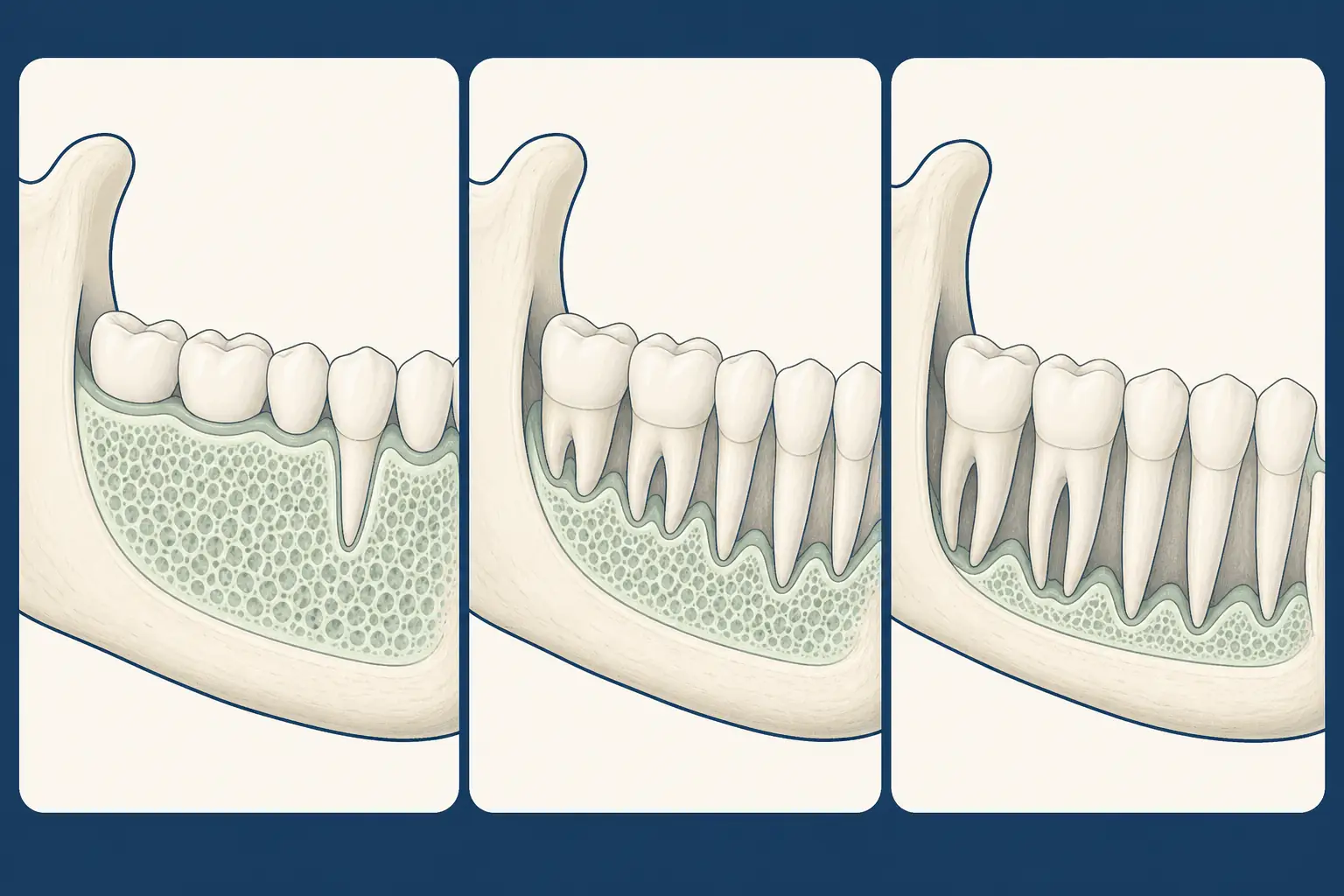
What the change looks like
What symptoms can jaw conditions cause?
| Situation | What the clinician checks | What the finding changes |
|---|---|---|
| A quieter or early presentation | Symptoms, history, and local examination | The need for assessment and monitoring[1] |
| A persistent, larger, or function-affecting presentation | Examination plus imaging or further testing when indicated | The treatment discussion and follow-up plan[1] |
What can cause it?
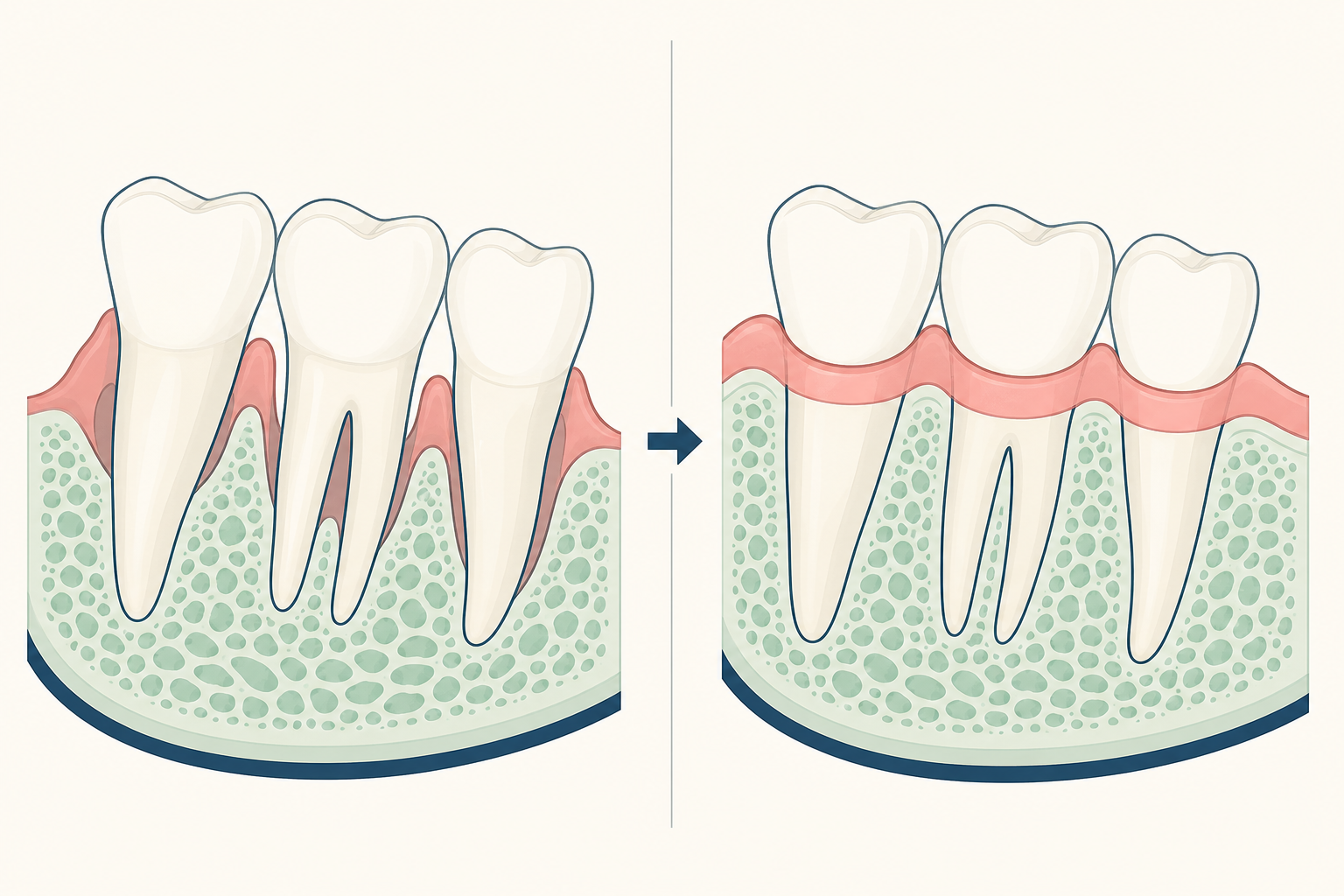
Gum disease can damage the tissues and bone supporting teeth. The cause is assessed through gum findings, tooth condition, oral hygiene history, and images when indicated. A missing tooth can also leave a local area without the same tooth-supporting function.
[1]What are the stages?
A practical assessment describes the amount and distribution of supporting-bone loss, whether teeth are affected, and whether the area is being prepared for replacement. The stage is determined from clinical measurements and imaging, not from the appearance of one tooth.
[1]| Situation | What the clinician checks | What the finding changes |
|---|---|---|
| A quieter or early presentation | Symptoms, history, and local examination | The need for assessment and monitoring[1] |
| A persistent, larger, or function-affecting presentation | Examination plus imaging or further testing when indicated | The treatment discussion and follow-up plan[1] |
Which risks matter?
Jawbone loss is a reduction in the bone supporting teeth. Gum disease can damage that support, while losing a tooth can alter the bone around the empty space.
[1]How is it diagnosed?
A dentist or periodontist examines the gums, measures the tissues around teeth, checks mobility, and uses dental images when needed. Imaging can help show bone levels and the anatomy relevant to treatment planning.
[1]How is treatment chosen by stage?
Treatment follows the cause and remaining support: gum disease control comes first, while replacement planning may require attention to the available bone around a missing tooth.
[1][2]| Situation | What the clinician checks | What the finding changes |
|---|---|---|
| A quieter or early presentation | Symptoms, history, and local examination | The need for assessment and monitoring[1][2] |
| A persistent, larger, or function-affecting presentation | Examination plus imaging or further testing when indicated | The treatment discussion and follow-up plan[1][2] |
What does care cost in Dubai?
What can happen if it is untreated?
Progressive loss of supporting bone can make teeth less stable and can complicate replacement planning. The risk is tied to the condition of the gums, the remaining bone, and whether the underlying disease is controlled.
[1]How can it be prevented?
Daily plaque control, professional gum care, and follow-up are central to limiting gum-related damage. A dentist can also check bleeding, pocket measurements, mobility, and bone levels when symptoms or examination findings warrant it.
[1]Frequently asked questions
Can this be diagnosed from symptoms alone?
Bleeding and mobility can signal supporting-tissue disease, but gum measurements and images are needed to show how much bone remains.
[1]