
Jaw Cysts
Jaw cysts may be silent or cause swelling and tooth changes; imaging and tissue examination identify the type and guide treatment.
[2]The short answer
Jaw cysts are fluid-filled or tissue-lined cavities that develop in the jaw, sometimes from tooth-forming tissues or inflammation around a tooth.
[2]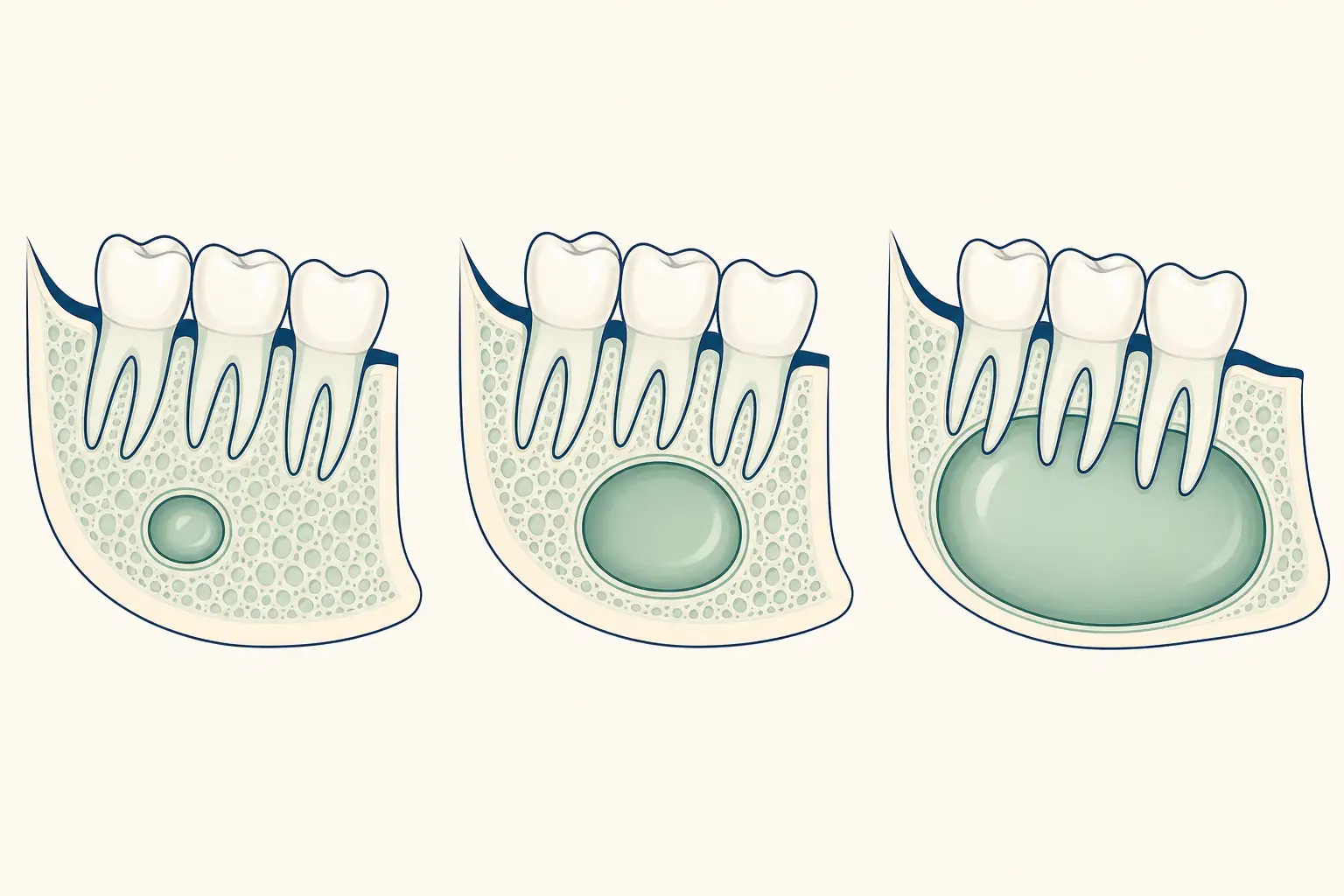
What the change looks like
What symptoms can jaw conditions cause?
| Situation | What the clinician checks | What the finding changes |
|---|---|---|
| A quieter or early presentation | Symptoms, history, and local examination | The need for assessment and monitoring[2] |
| A persistent, larger, or function-affecting presentation | Examination plus imaging or further testing when indicated | The treatment discussion and follow-up plan[2] |
What can cause it?
What are the stages?
The useful clinical stages are discovery, assessment of size and relationships, and treatment or observation after the type is understood. A larger lesion or one near important structures needs careful planning, but size alone does not provide a diagnosis.
[2]| Situation | What the clinician checks | What the finding changes |
|---|---|---|
| A quieter or early presentation | Symptoms, history, and local examination | The need for assessment and monitoring[2] |
| A persistent, larger, or function-affecting presentation | Examination plus imaging or further testing when indicated | The treatment discussion and follow-up plan[2] |
Which risks matter?
How is it diagnosed?
Assessment usually combines examination with dental imaging. The image shows location and relationships, while the suspected type may require tissue examination. A clinician uses these findings together rather than diagnosing from a swelling alone.
[2]How is treatment chosen by stage?
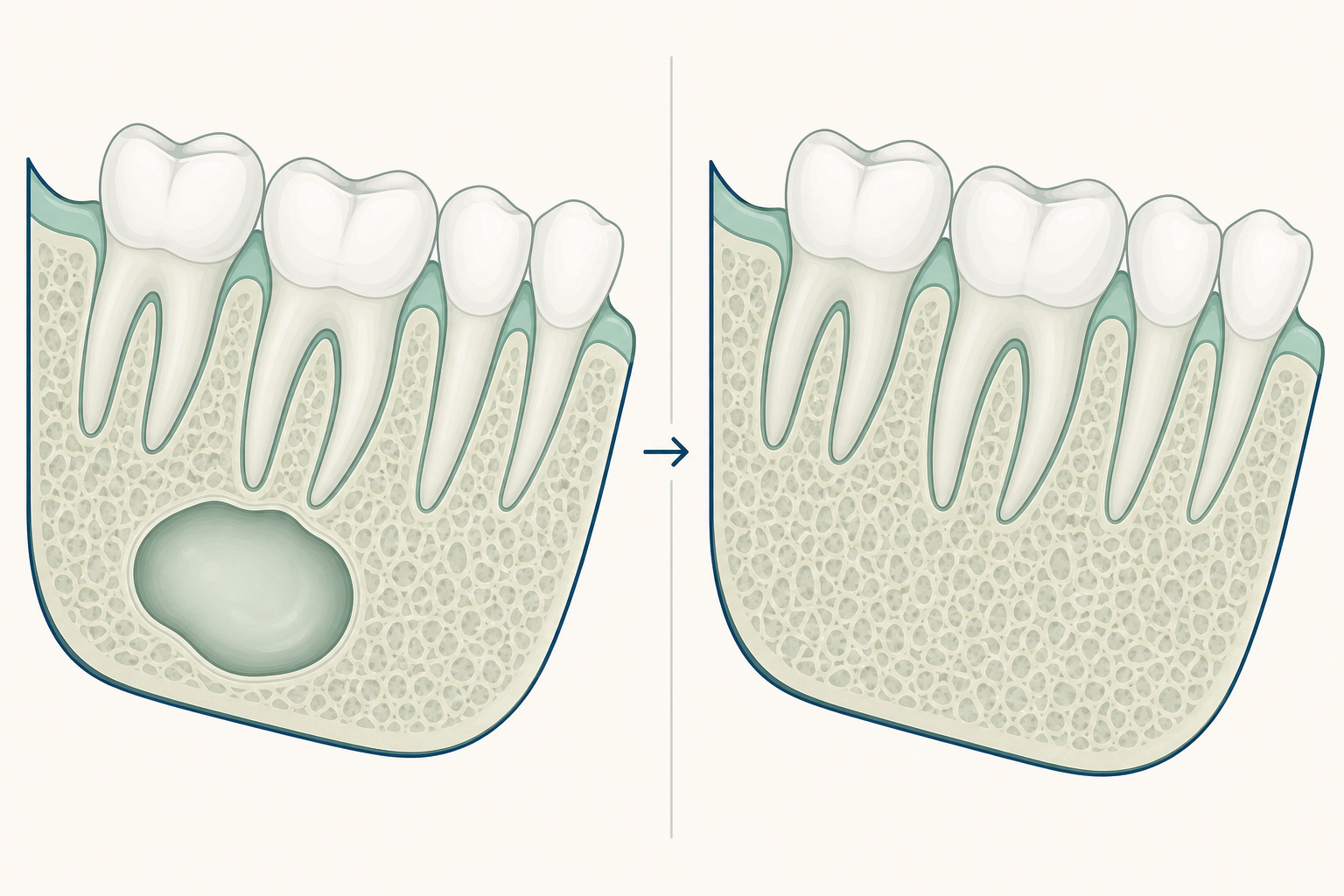
Treatment ranges from observation for selected lesions to surgical removal or decompression when a cyst is larger, symptomatic, or affecting nearby teeth and bone.
[2]| Situation | What the clinician checks | What the finding changes |
|---|---|---|
| A quieter or early presentation | Symptoms, history, and local examination | The need for assessment and monitoring[2] |
| A persistent, larger, or function-affecting presentation | Examination plus imaging or further testing when indicated | The treatment discussion and follow-up plan[2] |
What does care cost in Dubai?
The cost of jaw-cyst care is shaped by imaging, tissue examination, the lesion's size and position, and whether surgery or follow-up is needed.
[2]What can happen if it is untreated?
How can it be prevented?
Frequently asked questions
Can this be diagnosed from symptoms alone?
A cyst may be symptom-free, so dental imaging can find one incidentally; the suspected type may still require examination of tissue for confirmation.
[2]