Dental Nation
Condition guide

Jaw-Cranial Base Anomaly

An unusual jaw-to-cranial-base relationship can put the jaws and teeth out of alignment and change the bite.

[1][2]

The short answer

A jaw-cranial base anomaly can place the upper and lower jaws in an unusual relationship, changing the bite and facial balance.

[1][2]
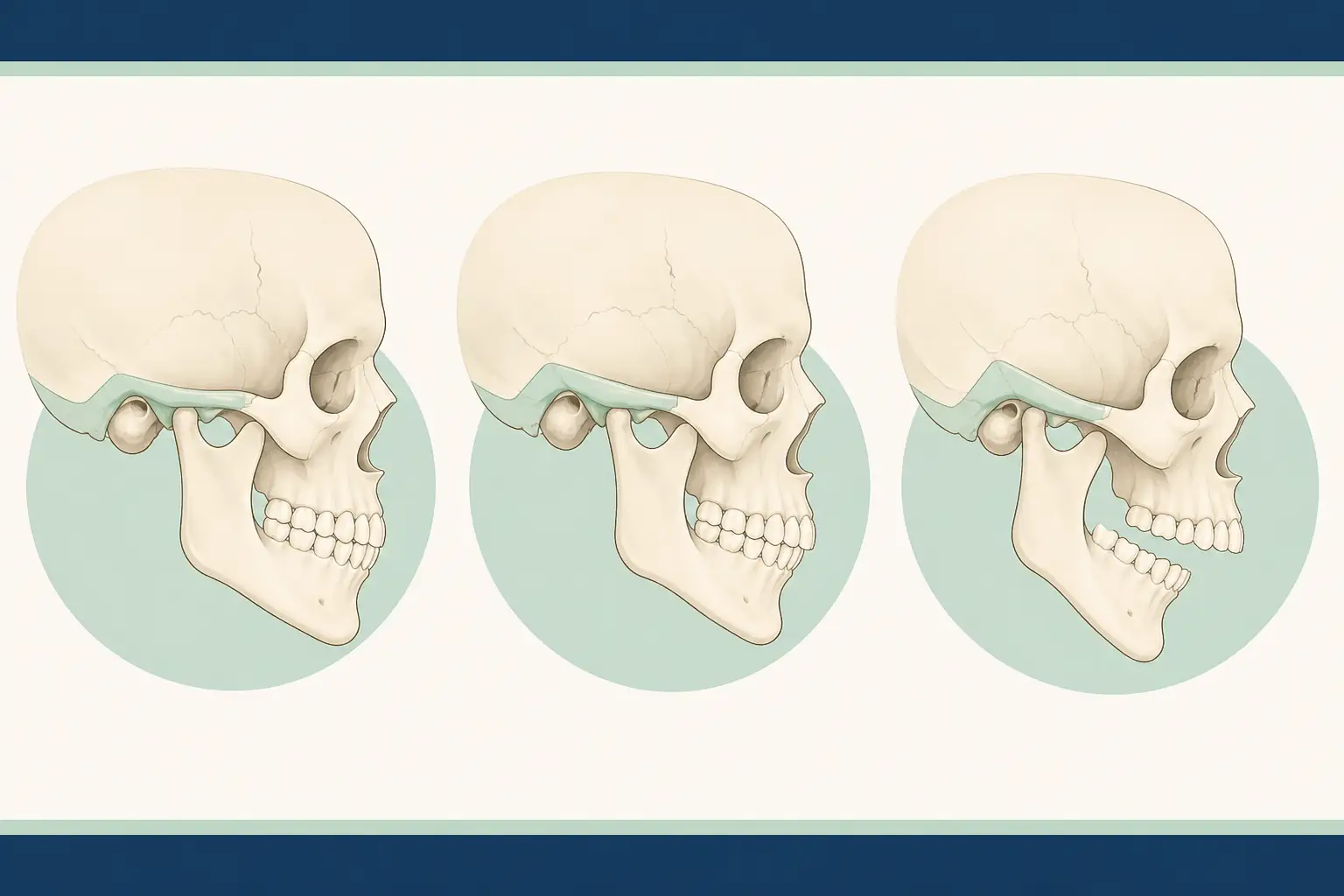
Jaw-Cranial Base Anomaly dental educational illustration

What the change looks like

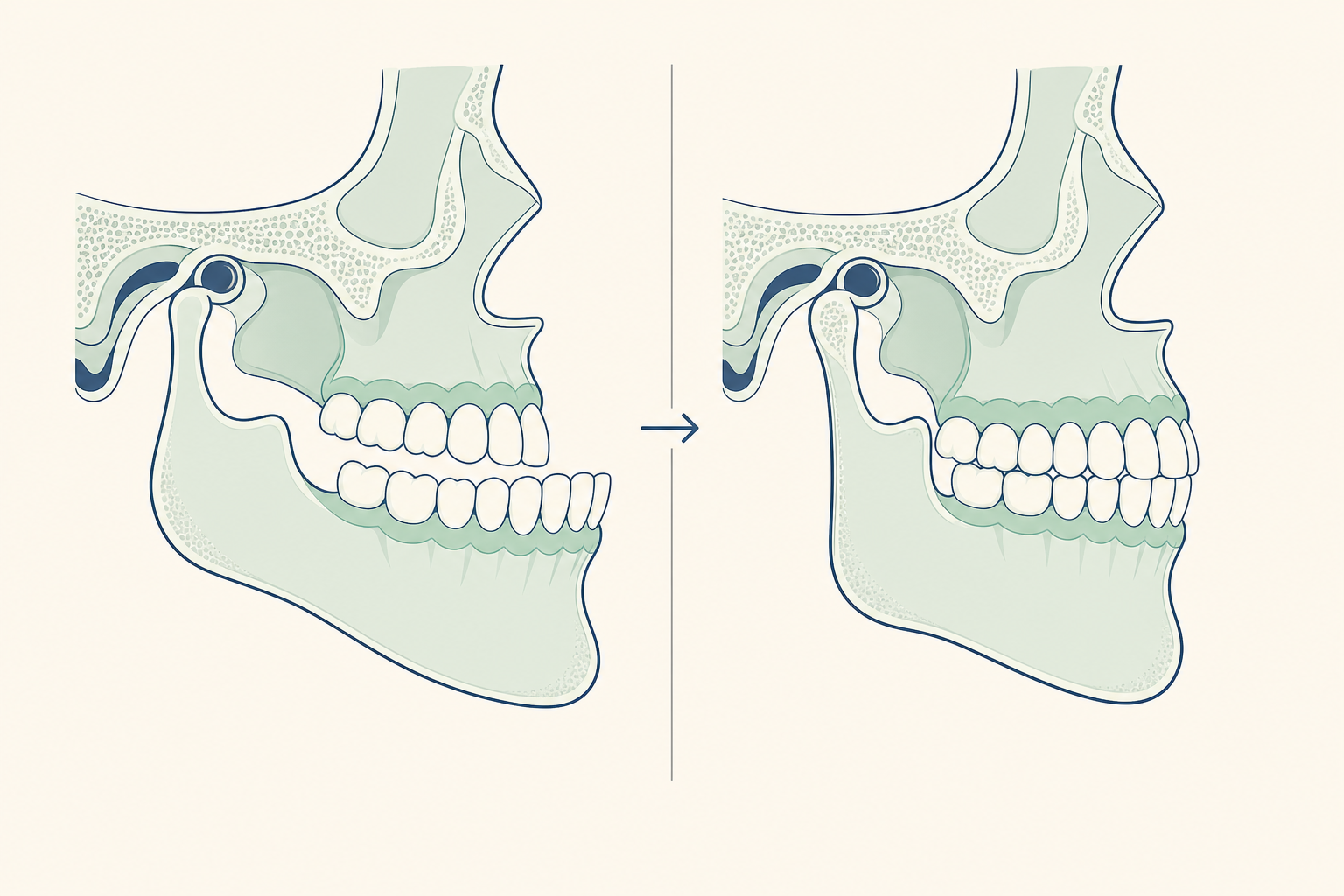
Illustrative diagram: Jaw-Cranial Base Anomaly
Illustration — a representative diagram, not a patient photo.
The DN First Look799 AED
Book The DN First Look

What symptoms can appear?

The bite may show upper teeth far ahead of lower teeth, lower teeth ahead of upper teeth, or a marked jaw discrepancy. Facial asymmetry, cleft lip and palate, and craniofacial abnormalities can occur with skeletal bite problems.

[1][2]
Signs and clinical focus
Patient questionClinical focus
What may be noticed?Upper and lower teeth may meet in an unusual front-to-back relationship.[1][2]
What should be checked?Jaw position, facial symmetry, eruption, and the bite need to be examined together.[1][2]

[1][2]

What can cause it?

Inherited jaw or facial shape can contribute to this pattern. Thumb sucking, prolonged pacifier use, missing teeth, too little space, and trauma can also alter how the teeth and jaws relate.

[1][2]

What stages might a dentist describe?

This is not staged like an infection. The finding is described by the direction and size of the jaw discrepancy, such as an upper jaw positioned ahead of or behind the lower jaw, and by whether growth is still taking place.

[1][2]
How findings may be framed
FindingDiscussion
Growing jawsGrowth direction and the changing relationship of the jaws are recorded.[1][2]
Mature jawsThe established bite, facial relationship, and tooth positions are assessed.[1][2]

[1][2]

What can increase the chance of it?

Family inheritance, habits that persist during development, missing teeth, limited arch space, and injury can increase the chance of an altered jaw relationship. A forward lower jaw pattern may continue growing for longer and less predictably.

[1][2]

How is it diagnosed?

Diagnosis combines a medical history and examination with images such as panoramic radiographs. Clinical records can include photographs, dental casts, and side or front cephalograms to measure the dental and skeletal parts of the discrepancy.

[1][2]

How is treatment chosen by stage?

Treatment can be timed around growth and the amount of jaw discrepancy. Interceptive orthodontic treatment may reduce a developing malocclusion; when a Class III pattern has continued to grow, orthodontics combined with jaw surgery may be the better option for some people.

[1][2]
Treatment discussions
FindingPossible discussion
During growthInterceptive orthodontic treatment can reduce a developing malocclusion.[1][2]
Persistent Class III discrepancyOrthodontics combined with surgery may be used when the jaw relationship requires it.[1][2]

[1][2]

What should I know about costs in Dubai?

The work-up can include examination, photographs, dental casts, panoramic imaging, and cephalograms. Treatment may involve orthodontic care alone or orthodontics combined with jaw surgery, so the clinical components differ substantially.

[1][2]

What can happen if it is left untreated?

Crowding can trap food between teeth and make cleaning harder. Untreated malocclusion can be linked with tooth decay, gum inflammation, impacted teeth, jaw problems, damage to neighbouring or opposing teeth, and tooth loss.

[1][2]

Can it be prevented or reduced?

Reducing long-lasting thumb sucking or pacifier use can remove two contributors to malocclusion. Early recognition of jaw, tooth, eruption, and space problems allows them to be recorded while the dentition is developing.

[1][2]

Frequently asked questions

Can a lower jaw that sits forward need surgery?

A persistent Class III pattern can sometimes be treated with orthodontics and jaw surgery together, particularly when the jaw relationship requires correction beyond tooth movement.

[1][2]