
Dental Implant Failure
A failing dental implant may become loose, painful, swollen, or unable to support the restoration securely.
[1]The short answer
A failing implant may be loose, painful, swollen, or associated with bleeding around the gum, while loss of support can sometimes occur without dramatic pain.
[1]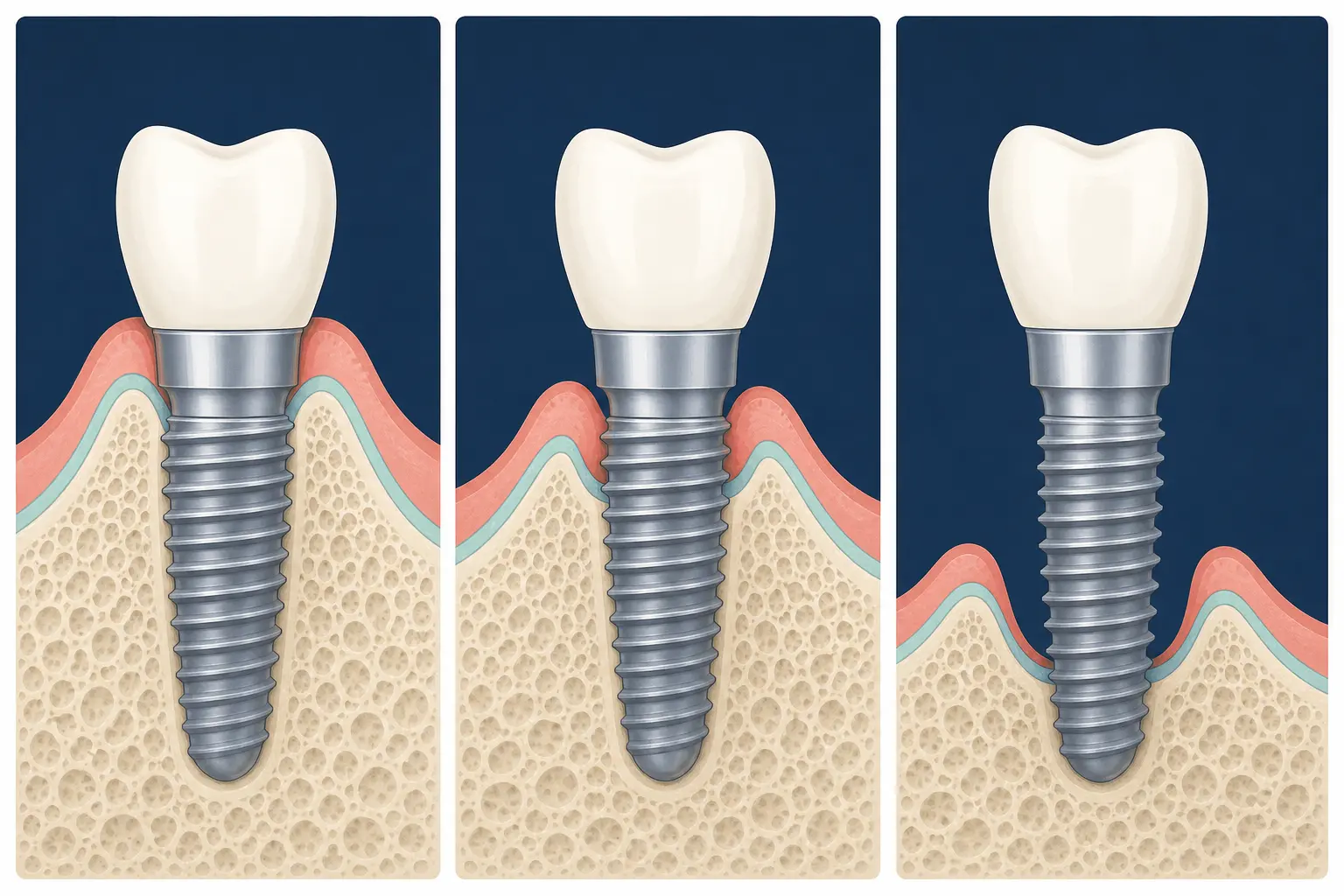
What the change looks like
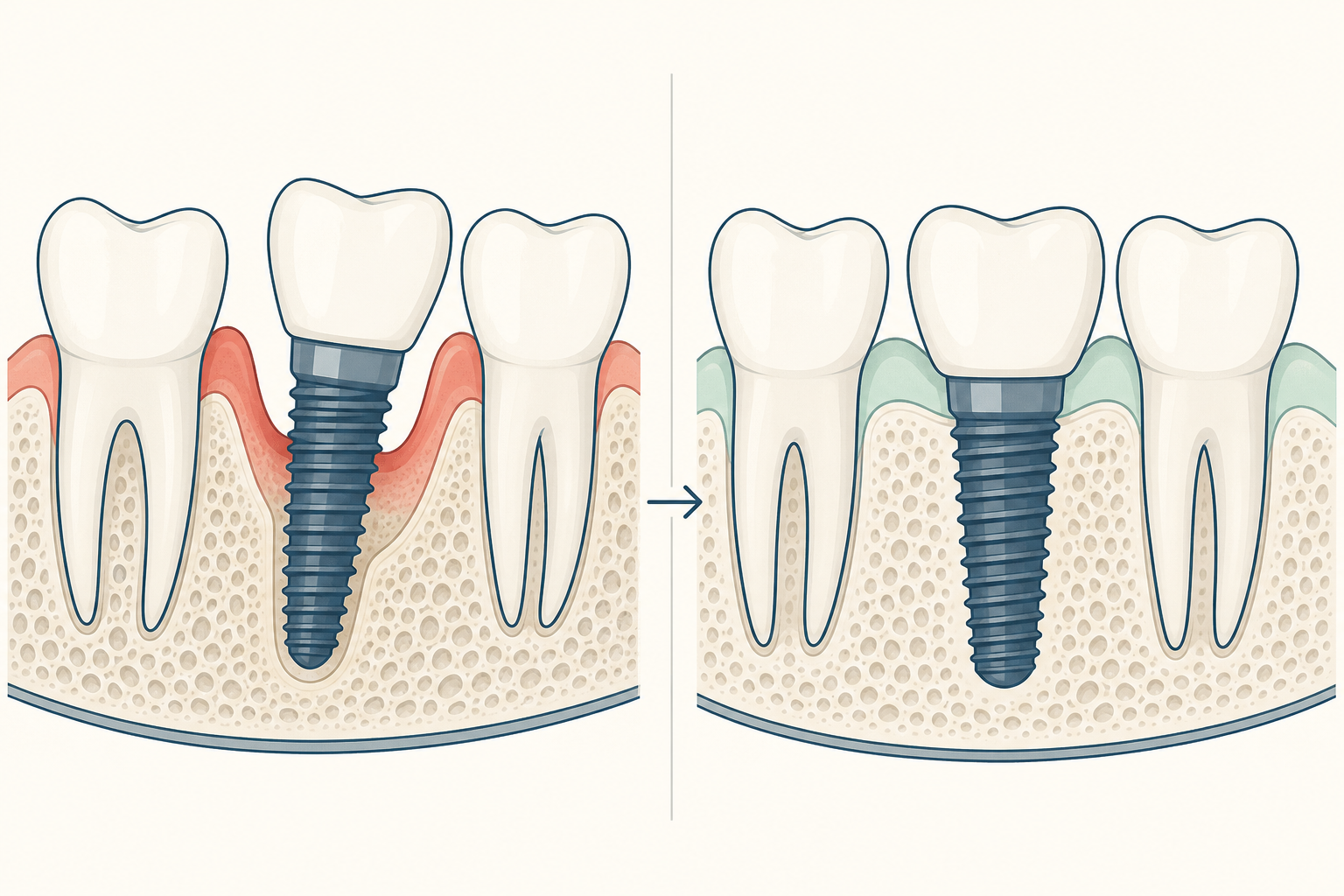
What symptoms can appear?
| Clinical question | What the assessment considers | Patient-facing next step |
|---|---|---|
| A change noticed by the patient | The timing, trigger, location, and effect on function | Record what changed and arrange a dental assessment[1] |
| A finding after treatment or injury | The tooth, implant, sinus, nerve, or developing teeth may need separate checks | Take the treatment or injury history to the appointment[1] |
What can cause it?
Implant failure can involve problems during healing, infection or inflammation around the implant, excessive forces, poor bone support, or a complication affecting the implant or its restoration. The review literature separates early and late failure because timing changes the likely explanation. Smoking, systemic health, oral hygiene, and maintenance can influence risk, but a clinician must connect those factors with examination findings.
[2]How is it classified over time?
The useful distinction is timing and tissue status. An early problem occurs before stable integration has been achieved. A later problem may involve loss of supporting bone, inflammation around an integrated implant, mechanical loosening, or a damaged restoration. These labels describe what needs checking; they do not identify the cause from symptoms alone.
[1]| Clinical question | What the assessment considers | Patient-facing next step |
|---|---|---|
| Earlier or developing finding | The history and examination may show a problem at a different point in its course | Ask what finding supports the classification[1] |
| Established or persistent finding | The next step depends on tissue status, function, and the suspected source | Ask what needs monitoring or treatment[1] |
What raises concern?
Risk assessment considers the condition of the bone and gum, healing after placement, oral hygiene, inflammation, biting forces, smoking, and the design or condition of the restoration. A risk factor is not a diagnosis. It tells the dental team what to examine and what maintenance may need attention.
[2]How is it diagnosed?
Diagnosis combines the history of placement and symptoms with inspection, stability testing, gum assessment, and dental imaging when indicated. The clinician distinguishes an implant problem from a loose crown, an infection in a neighbouring tooth, or another source of pain. The examination also checks whether supporting bone has changed.
[1]How is treatment planned?
Treatment depends on whether the issue affects the restoration, the soft tissues, the supporting bone, or implant stability. A loose crown may need a different repair from a mobile implant. Inflammation may require cleaning and treatment of its cause. If integration or support has failed, removal and later replacement may be considered after the site has been assessed.
[1]| Clinical question | What the assessment considers | Patient-facing next step |
|---|---|---|
| A local, repairable finding | Care may focus on the affected tooth, tissue, restoration, or source | Ask which part of the problem the proposed treatment addresses[1] |
| A finding needing coordinated care | More than one assessment or a staged plan may be needed | Request the sequence, follow-up, and decision points in writing[1] |
What should I ask about cost in Dubai?
A Dubai treatment plan may separate assessment, imaging, removal, site treatment, replacement, and restoration costs. The written sequence should show which services are included.
[1]What can happen if it continues?
Untreated implant problems can progress from local inflammation or mechanical discomfort to loss of supporting tissue, failure of the restoration, or loss of the implant. Pain and swelling can also have another dental source. Faster assessment is sensible when an implant is mobile, swelling is increasing, or fever or difficulty swallowing is present.
[2]How can future problems be reduced?
Prevention focuses on careful planning, control of oral inflammation, daily cleaning, regular maintenance, and attention to changes in the restoration or bite. Smoking cessation may be discussed when relevant. The goal is early detection of inflammation or mechanical trouble, before a small repair becomes loss of support.
[2]Frequently asked questions
Can dental implant failure be diagnosed from symptoms alone?
No. Diagnosis combines the history of placement and symptoms with inspection, stability testing, gum assessment, and dental imaging when indicated. The clinical history and examination determine the next step.
[1]