
Hereditary Tooth Structure Disorder
A hereditary tooth structure disorder is an inherited developmental problem that changes how tooth tissues form or mature.
[1]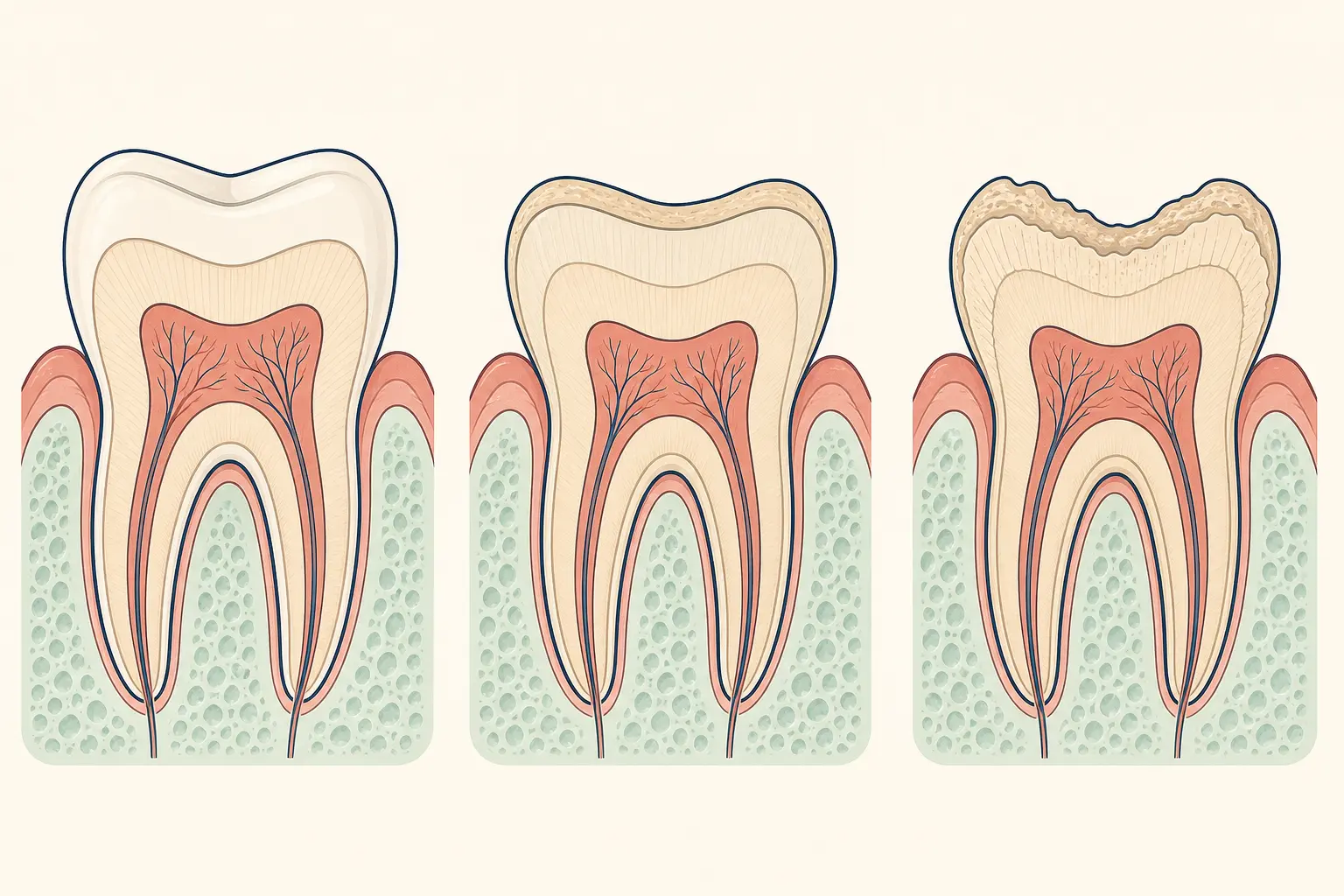
What the change looks like
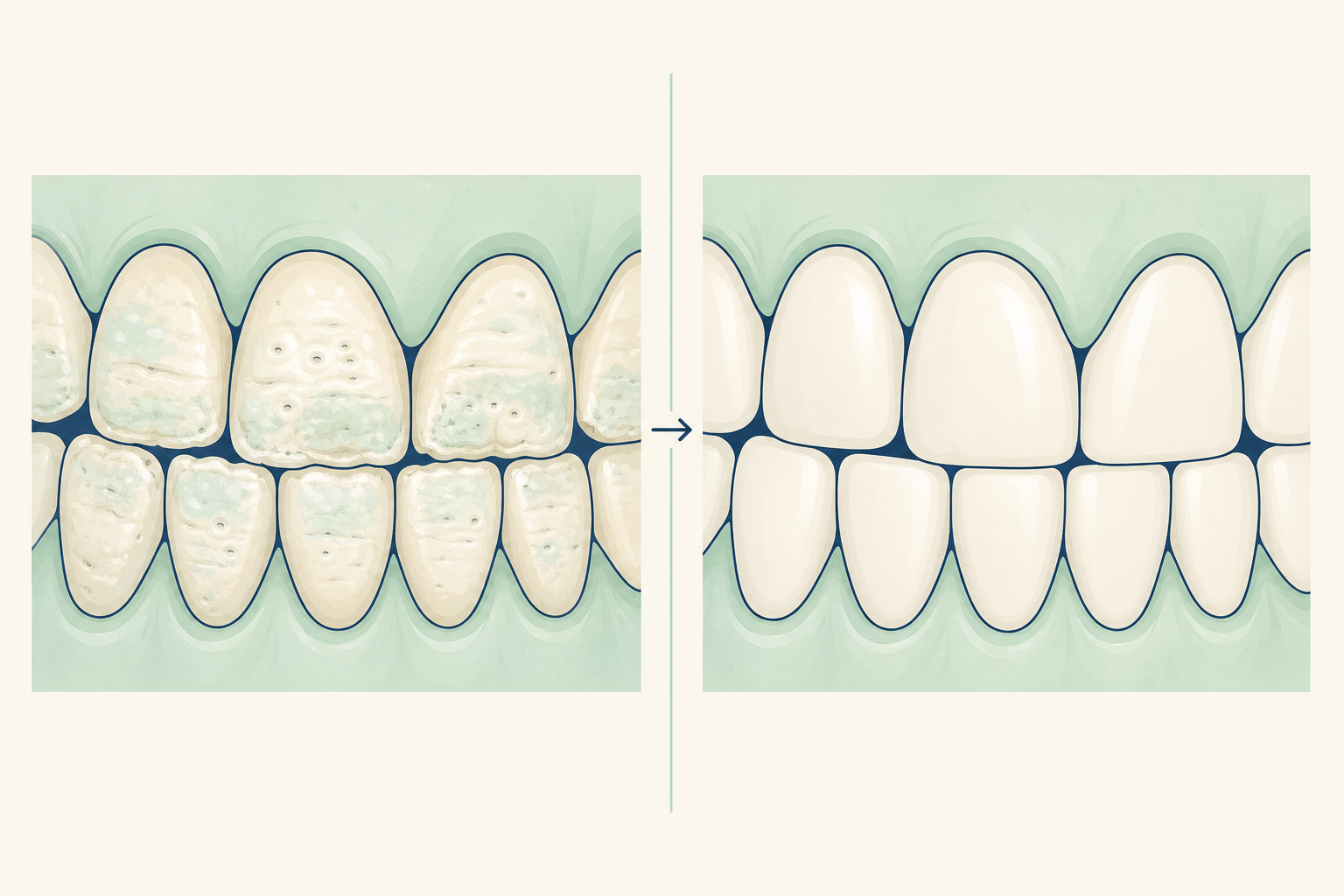
What might you notice?
A hereditary tooth structure disorder is an inherited developmental problem that changes how tooth tissues form or mature.
[1]Inherited tooth structure disorders can affect the colour, shape, thickness, hardness, or surface of teeth. The pattern may involve many teeth rather than one isolated tooth, and it can be noticed as teeth erupt or as surfaces wear. Sensitivity, chipping, rapid wear, or difficulty maintaining the surface may bring a family to dental care. The appearance can overlap with other developmental disturbances. A careful history of affected relatives and an examination of the teeth help place the finding in context.
[1]What can cause it?
Inherited tooth structure disorders can affect several teeth in a consistent pattern. A similar change in relatives may support a hereditary explanation, while the shape, colour, hardness, and distribution of the affected teeth help define the disorder.
[1]How does it develop?
The extent of an inherited structural disorder may become clearer as more teeth erupt and as the surfaces experience daily use. Early findings can be mainly visual. Later concerns may involve wear, sensitivity, fractures, or restoration needs. This is a description of progression in what may be noticed, not a fixed stage system for every disorder.
[1]What should raise concern?
The main risk question is how the altered structure responds to function and cleaning. Teeth with weaker or unusual surfaces may need closer protection and monitoring. A family pattern also matters because it can help a dentist decide which other teeth should be examined.
[1]How is it diagnosed?
Diagnosis starts with the pattern across the teeth, the family history, and examination of enamel and dentine. The distribution and structural appearance help distinguish an inherited disorder from an isolated developmental defect.
[1]What treatment may be discussed?
Care follows the tooth tissues involved and the amount of usable structure. Monitoring may suit a stable, comfortable finding, while protective or restorative treatment addresses wear, sensitivity, breakdown, or loss of function.
[1]What should you ask about the cost?
Dubai costs depend on how many teeth are affected and whether care involves protection, restoration, repair, or replacement of damaged tooth structure.
[1]What can happen if it is left unexplained?
Possible complications include sensitivity, chipping, wear, difficulty cleaning, and repeated restorative needs. The exact concern depends on the disorder and the teeth affected. New pain or visible breakdown warrants an assessment because it may indicate a change in the tooth surface.
[1]Can it be prevented?
Inherited structure cannot be changed after a tooth has formed. Prevention focuses on protecting the teeth, recognizing the family pattern early, and arranging examinations for other potentially affected teeth. Good preventive care does not replace diagnosis, but it can reduce avoidable surface damage.
[1]Frequently asked questions
Is hereditary tooth structure disorder always painful?
Pain is not required for every developmental or eruption finding. New, persistent, or severe pain should be assessed.
[1]