Dental Nation
Condition guide

Chronic Halitosis (Medical)

Persistent bad breath may be linked to gum or tooth problems, dry mouth, smoking, reflux, fasting, or strongly scented foods.

[1][2]

The short answer

Chronic halitosis is persistent unpleasant breath odour, often linked to mouth conditions but sometimes to dry mouth, smoking, reflux, fasting, or diet.

[1][2]

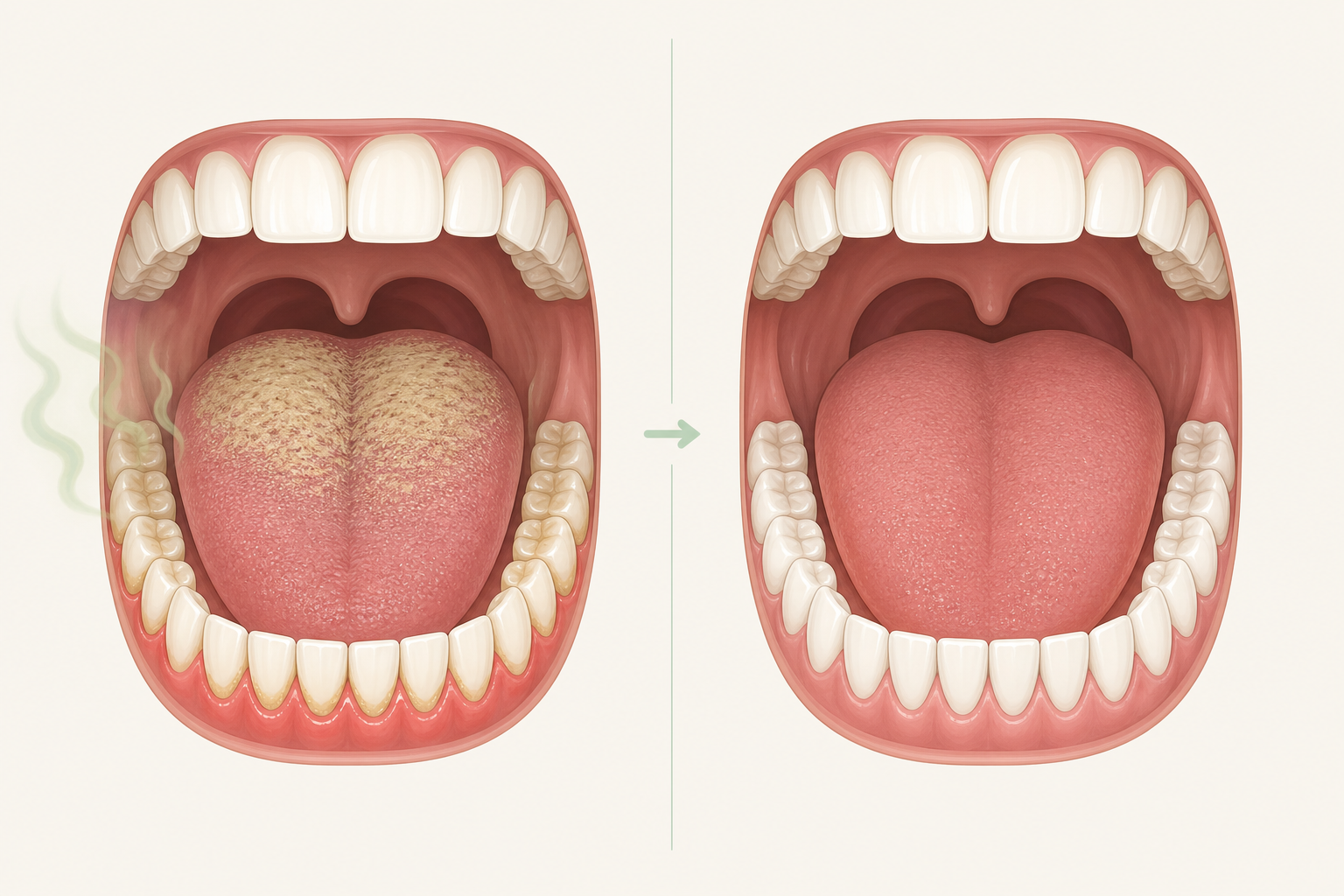
Chronic Halitosis (Medical) dental educational illustration

What the change looks like

Illustrative diagram: Chronic Halitosis
Illustration — a representative diagram, not a patient photo.
The DN First Look799 AED
Book The DN First Look

What can persistent bad breath feel or smell like?

Signs that can accompany persistent bad breath
What you noticePossible relevance
Bad breath that continues for weeksA persistent pattern rather than a short-lived food odour[1][2]
Bleeding or swollen gums, toothache, or loose adult teethA tooth or gum problem may be contributing[1][2]

[1][2]

What can keep bad breath going?

Gum disease, tooth decay or infection can cause bad breath. Strong-smelling foods and drinks, smoking, fasting or crash dieting, dry mouth, tonsillitis, and acid reflux can also be involved.

[1][2]

Does chronic halitosis have stages?

Halitosis is assessed by its cause and by whether an odour can be measured, rather than by numbered stages. Assessment can distinguish true halitosis from a fear of bad breath when no odour is detected.

[1][2]
Patterns used during assessment
PatternWhat is checked
Mouth-related patternTeeth, gums and periodontal health[1][2]
Possible non-mouth patternRespiratory symptoms, heartburn, medicines, diet and smoking[1][2]

[1][2]

Who is more likely to have persistent bad breath?

Smoking, dry mouth, fasting, crash dieting, gum disease, tooth decay, infection, tonsillitis, and acid reflux are all associated with bad breath. A medication history can matter because medicines may contribute to dry mouth.

[1][2]

How is chronic halitosis checked?

Assessment includes a history of diet, smoking, tobacco, medicines, illness, respiratory symptoms and heartburn, followed by periodontal screening. Odour can be assessed directly, and tests may measure sulphides or other markers when needed.

[1][2]

What treatment fits the cause?

Treatment targets the source. Tooth or gum disease needs dental care; respiratory infection, acid reflux, enlarged infected adenoids, or another non-mouth cause is treated according to that condition.

[1][2]
Cause-led care
Cause areaTreatment direction
Teeth or gumsAddress gum disease, decay, infection, and daily mouth care[1][2]
Respiratory or reflux symptomsTreat the underlying infection or reflux condition[1][2]

[1][2]

What care may be involved for persistent bad breath?

Care may include a dental and periodontal assessment, then further investigation if the mouth does not explain the odour. The steps needed depend on whether teeth, gums, dry mouth, reflux, or another condition is found.

[1][2]

When can persistent bad breath point to another problem?

Persistent bad breath can occur with painful, bleeding or swollen gums, toothache, loose adult teeth, or denture problems. These signs can indicate a mouth condition that needs treatment rather than breath freshening alone.

[1][2]

How can you reduce recurring bad breath?

Good dental hygiene, adequate fluids, and reducing smoking address several common contributors. Treating gum disease, tooth decay, infection, dry mouth, reflux, or tonsillitis helps prevent breath odour from returning when those are the cause.

[1][2]

Frequently asked questions

Can acid reflux cause persistent bad breath?

Acid reflux is one of the medical conditions associated with bad breath, alongside dry mouth and tonsillitis.

[1][2]