
Chronic Halitosis (Medical)
Persistent bad breath may be linked to gum or tooth problems, dry mouth, smoking, reflux, fasting, or strongly scented foods.
[1][2]The short answer
Chronic halitosis is persistent unpleasant breath odour, often linked to mouth conditions but sometimes to dry mouth, smoking, reflux, fasting, or diet.
[1][2]
What the change looks like
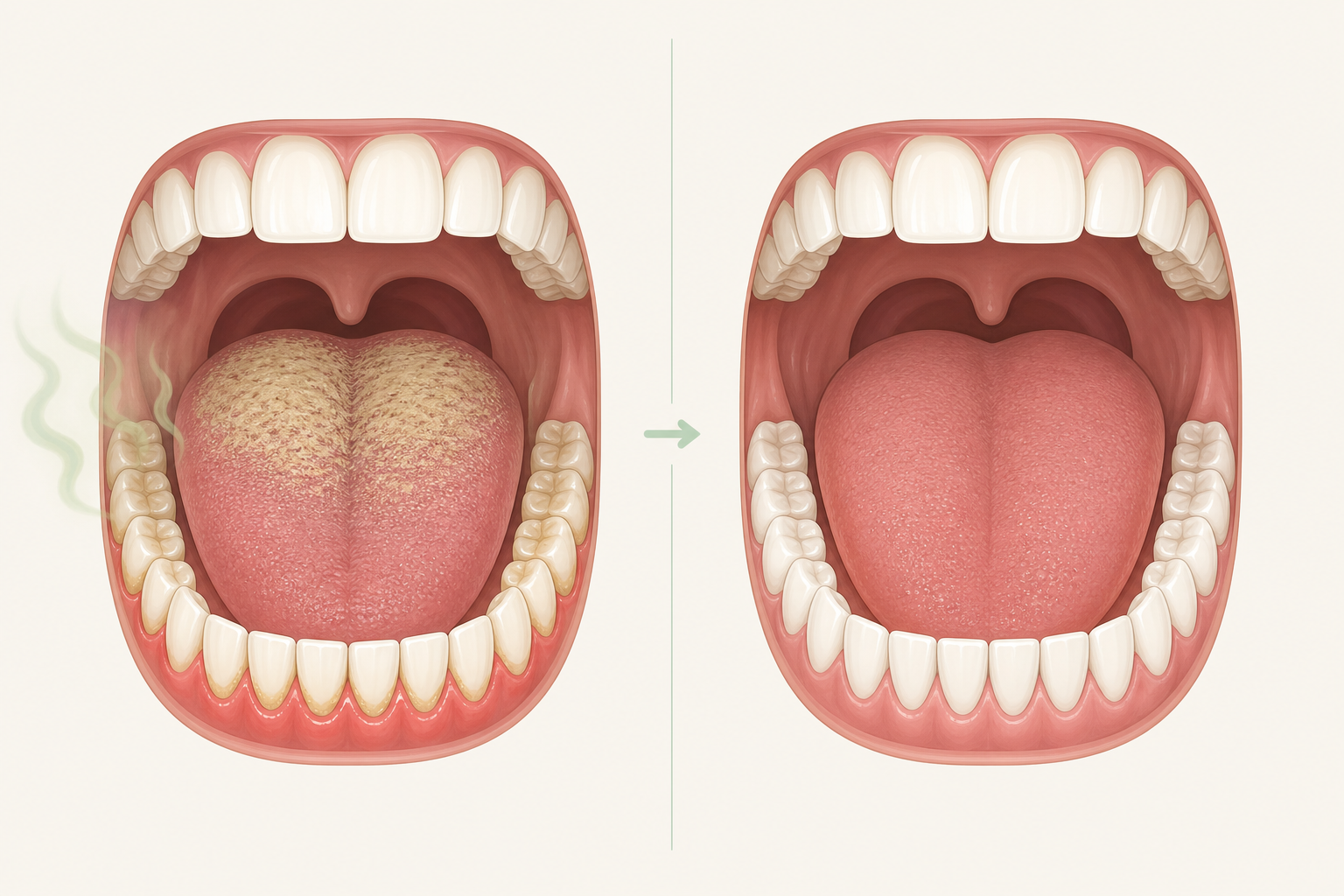
What can persistent bad breath feel or smell like?
What can keep bad breath going?
Does chronic halitosis have stages?
Who is more likely to have persistent bad breath?
How is chronic halitosis checked?
What treatment fits the cause?
What care may be involved for persistent bad breath?
When can persistent bad breath point to another problem?
How can you reduce recurring bad breath?
Frequently asked questions
Who wrote this page
This library is published by Dental Nation, a licensed dental group practising in the United Arab Emirates. Pages are written and overseen by the same clinical team that treats patients in our clinics, and are held to a fixed editorial standard for safety and accuracy.
This page is patient education, not medical advice, and cannot replace an examination. Anything urgent — facial swelling, trauma, uncontrolled bleeding or severe pain — needs a dentist or emergency care now.