
Hairy Leukoplakia
A painless white plaque on the tongue that cannot be scraped away may be hairy leukoplakia, often linked to EBV and immune suppression.
[1]The short answer
Hairy leukoplakia usually appears as a painless white plaque on the side of the tongue that does not scrape away.
[1]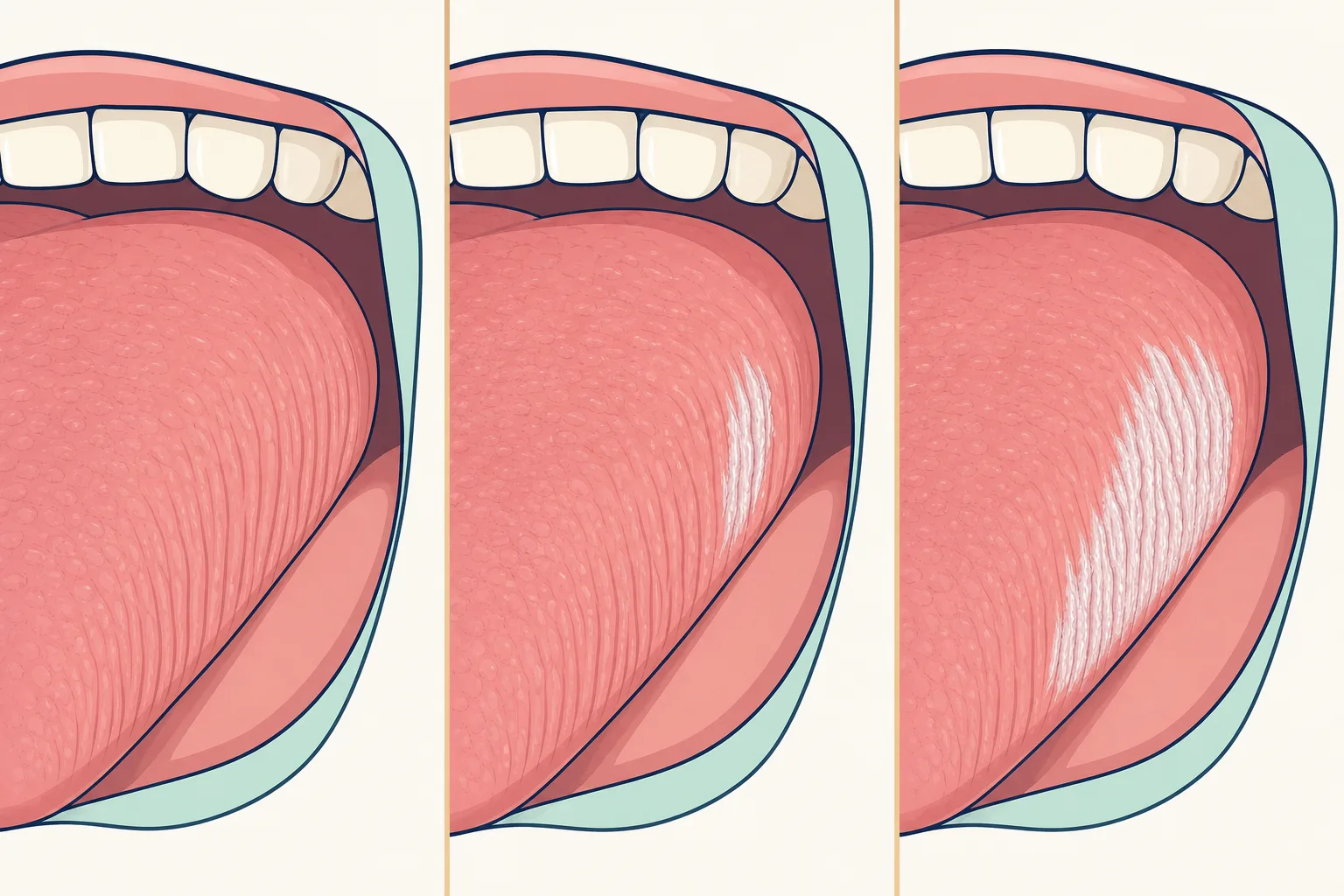
What the change looks like
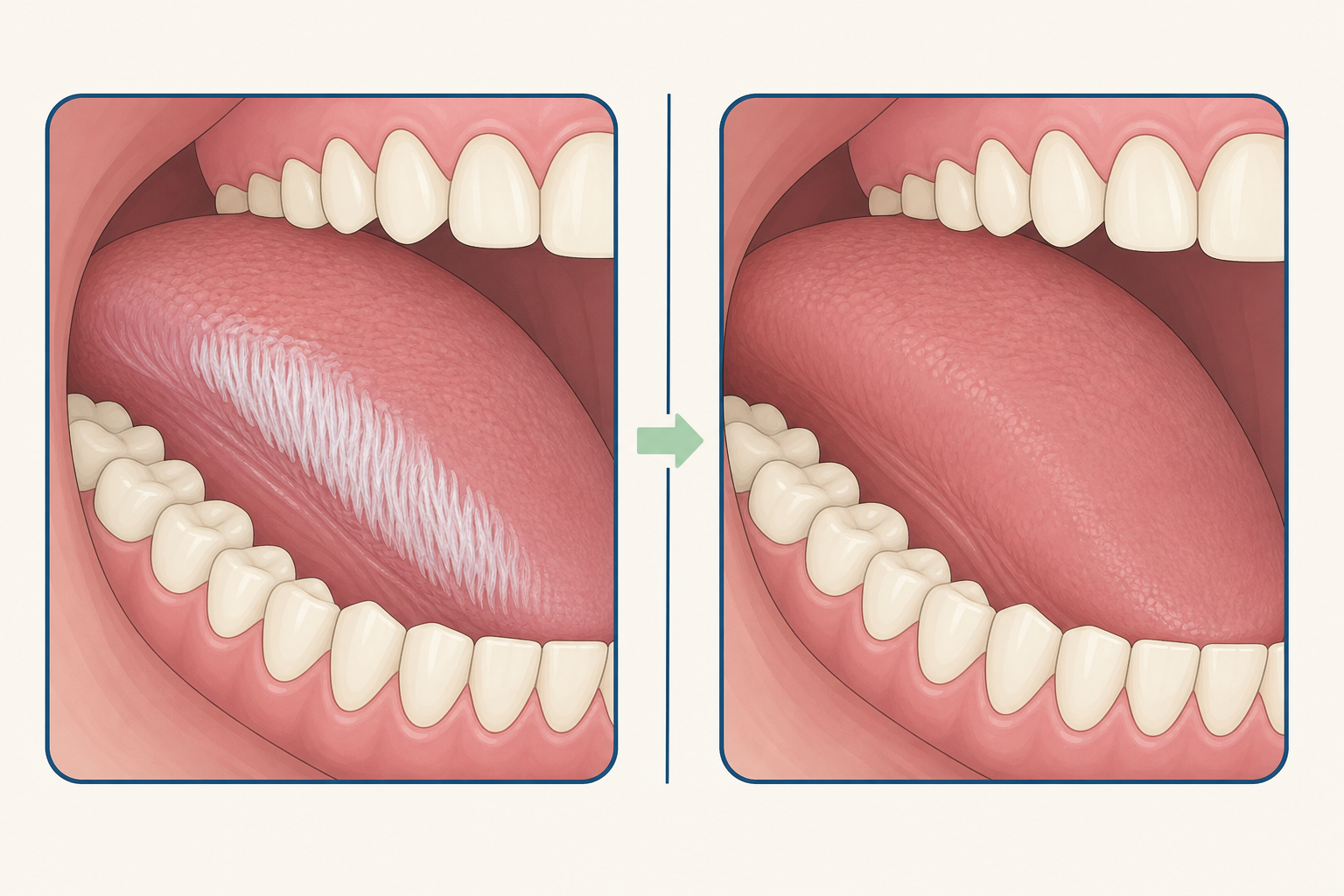
What does hairy leukoplakia look like?
It may appear and disappear on its own. Some people notice mild pain, altered sensitivity to food temperature, or a changed taste. The lesion can also occur on the cheek lining or gums.
[1]What causes hairy leukoplakia?
Hairy leukoplakia is associated with Epstein-Barr virus and immune suppression. It is most often seen with HIV, but it can also occur with other severe immune deficiencies or, rarely, in people without immune suppression.
[1]How can it change over time?
The plaque can appear and disappear spontaneously. Treatment may reduce it, yet recurrence can follow when antiviral or antiretroviral treatment stops or its dose is reduced.
[1]Who is more likely to develop it?
Risk is associated with HIV and other severe immune deficiencies, including those related to chemotherapy, transplantation, or leukaemia. Long-term corticosteroid use and smoking can also be associated with the condition.
[1]How is hairy leukoplakia diagnosed?
Clinical appearance can suggest the diagnosis, but definitive diagnosis requires histology together with demonstration of Epstein-Barr virus material in epithelial cells. In situ hybridisation is considered the gold-standard detection method.
[1]How is it treated?
Every case does not need specific treatment because the condition is benign, has low morbidity, and may resolve spontaneously. Antiretroviral treatment can reduce it, while systemic antivirals can resolve it within 7 to 14 days.
[1]What affects the cost?
The work may include clinical assessment, histology, and testing for Epstein-Barr virus, while treatment may involve antiviral or antiretroviral medication.
[1]What complications can occur?
A candidal superinfection can cause a burning tongue. Altered taste is another, rarer complication, and topical retinoids used for a prolonged period can cause burning.
[1]How can recurrence risk be addressed?
Following the prescribed HIV treatment plan, maintaining dental hygiene, avoiding smoking, and supporting a healthy immune system are part of reducing the condition's impact.
[1]Frequently asked questions
Does hairy leukoplakia wipe off?
No. The plaque is adherent to the surface and cannot be removed by scraping.
[1]