Dental Nation
Condition guide

Gum Disease

Bleeding, swollen gums and persistent bad breath can indicate gum disease, which worsens as supporting tissues are damaged.

[1][2]

The short answer

Gum disease is infection and inflammation of the tissues that support the teeth, beginning with the gums and potentially damaging bone.

[1][2]
Gum Disease dental educational illustration

What the change looks like

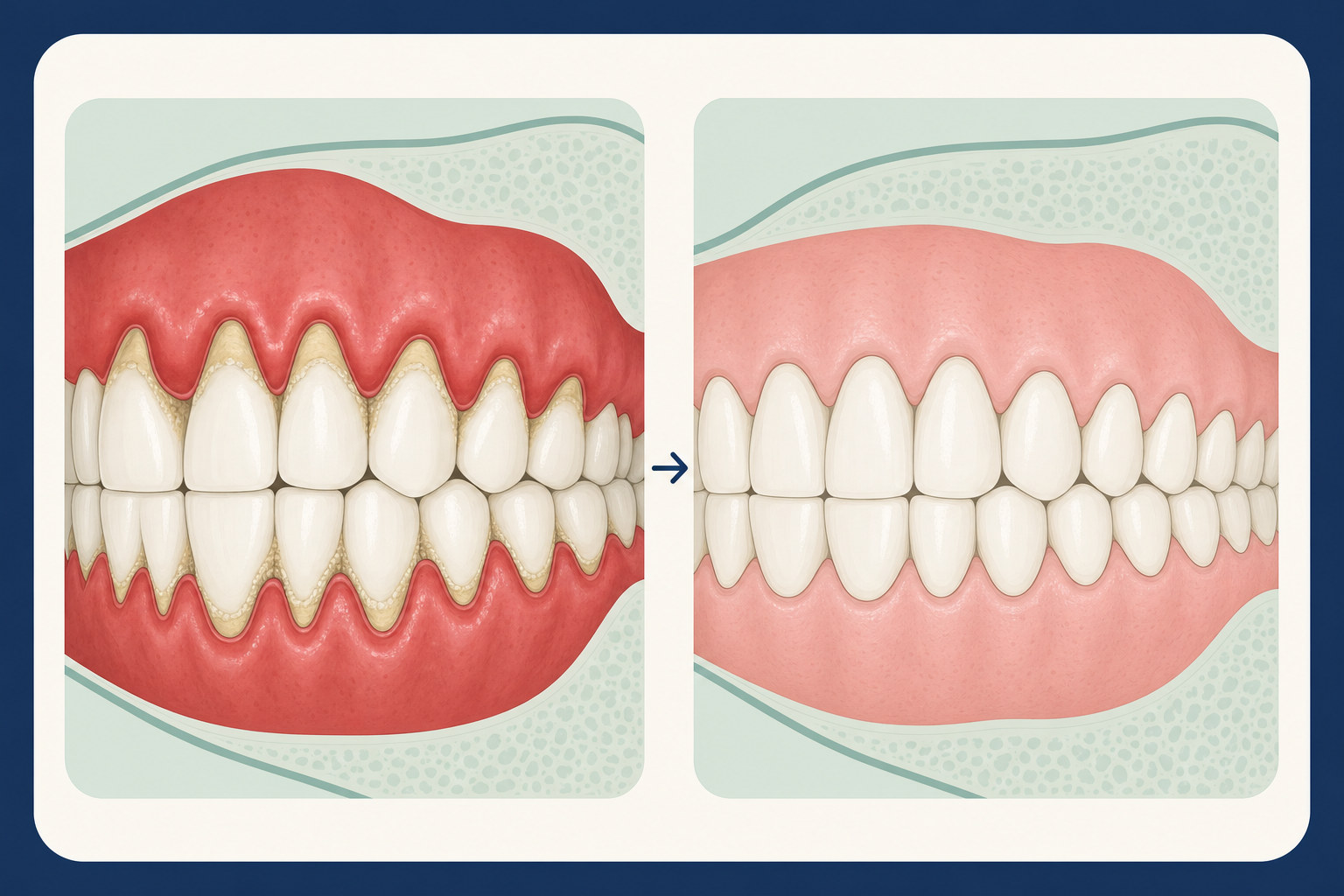
Illustration comparing inflamed gums with healthy gums after treatment
Illustration — a representative diagram, not a patient photo.
The DN First Look799 AED
Book The DN First Look

What are the signs of gum disease?

Bleeding during brushing, red or swollen gums, persistent bad breath, tender gums, and teeth that feel loose can all occur. Gums may pull away from teeth, creating pockets where infection can continue.

[1][2]
Signs linked with gum disease
SignWhat may be happening
Bleeding gumsInflamed gum tissue reacts during brushing[2][1]
Loose teethSupporting tissues may have been damaged[2][1]

[2][1]

What causes gum disease?

Plaque bacteria trigger inflammation at the gum margin. If plaque remains, it hardens into tartar that brushing cannot remove, and the inflammation can extend below the gum line.

[1][2]

What are the stages of gum disease?

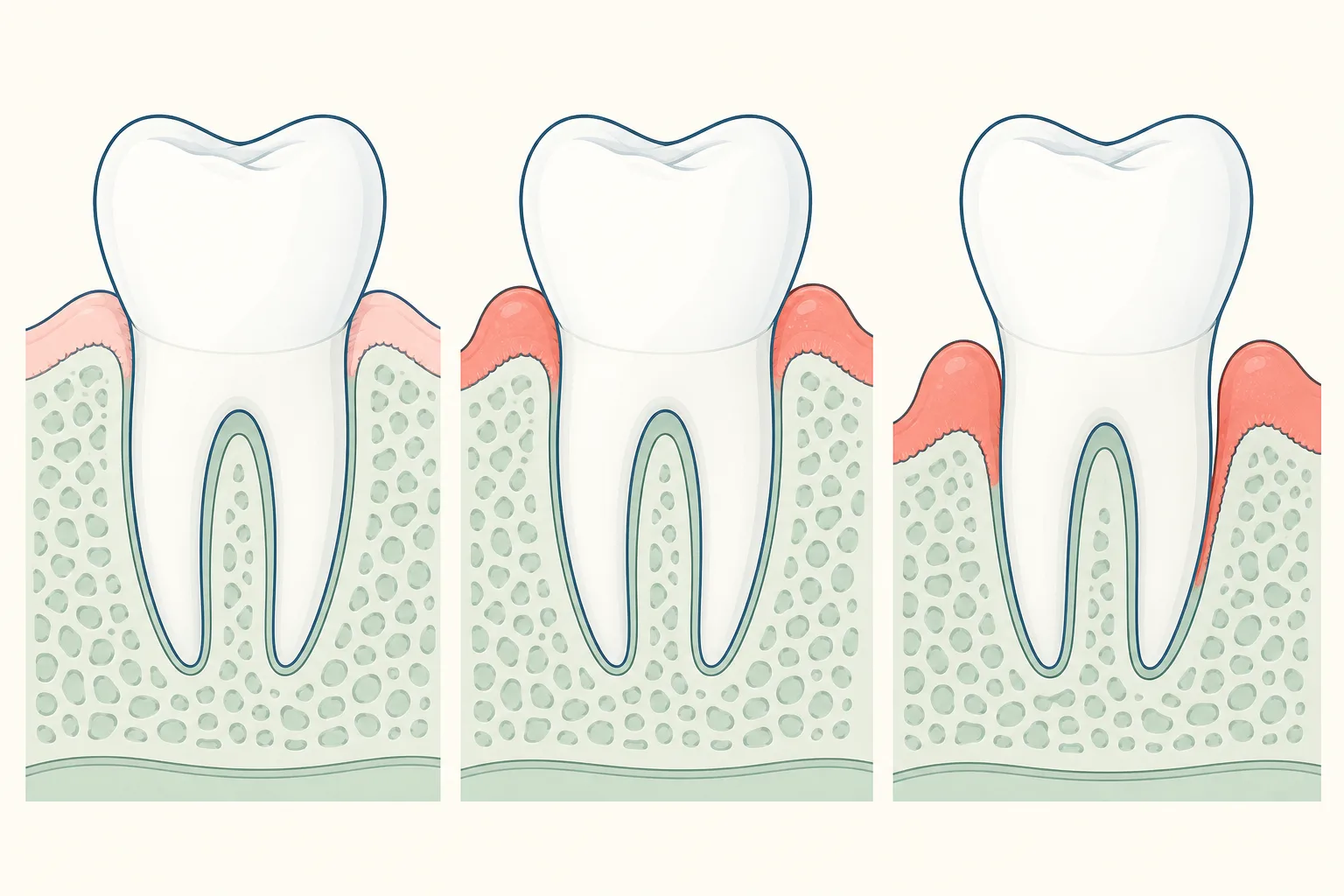
Gingivitis is the early stage, with inflamed gums that can bleed. Periodontitis is more advanced: pockets deepen, the attachment around teeth is damaged, and bone can be lost.

[1][2]
Gum disease stages
StageTypical tissue change
GingivitisInflamed, bleeding gums[2][1]
PeriodontitisPocketing, attachment damage, and possible bone loss[2][1]

[2][1]

What increases the risk?

Risk rises when plaque and tartar remain at the gum line. Smoking and other factors can affect gum health and the response to treatment, while poor daily cleaning allows inflammation to persist.

[1][2]

How is gum disease diagnosed?

Diagnosis checks the gums for redness, swelling, bleeding, recession, and pockets around the teeth. The teeth and supporting bone are assessed to determine whether disease is limited to the gums or has progressed to periodontitis.

[2]

How is gum disease treated?

Early gingivitis is treated by removing plaque and tartar and improving daily cleaning. Periodontitis may need deeper professional cleaning below the gum line, with treatment directed at pockets and damaged supporting tissues.

[1][2]
Treatment by stage
StageTreatment focus
GingivitisProfessional cleaning and daily plaque control[2][1]
PeriodontitisCleaning below the gum line and management of periodontal pockets[2][1]

[2][1]

What affects gum treatment cost in Dubai?

Treatment complexity follows the stage of disease. Care limited to inflamed gums requires less extensive work than treatment for deep pockets, attachment loss, or bone damage.

[1][2]

What can happen if gum disease is untreated?

Periodontitis can destroy the tissues and bone that hold teeth in place, leading to tooth mobility and tooth loss. Persistent pockets allow infection to remain below the gum line.

[1][2]

How can gum disease be prevented?

Brush twice daily, clean between the teeth, and have plaque and tartar removed professionally. These steps reduce the bacterial buildup that drives gum inflammation and help protect the supporting tissues.

[1][2]

Frequently asked questions

Can gum disease affect a tooth even if it does not hurt?

Yes. Gum disease can progress with bleeding, pocketing, attachment damage, or bone loss while pain is limited or absent.

[1][2]