
Gum Abscess (Periodontal Abscess)
A swollen gum bump can signal a pocket of pus, with toothache, bad taste, fever, chewing pain, or tooth looseness.
[1][3]The short answer
A periodontal abscess is a localized collection of pus in the tissues around a tooth and can rapidly damage those tissues.
[1][3]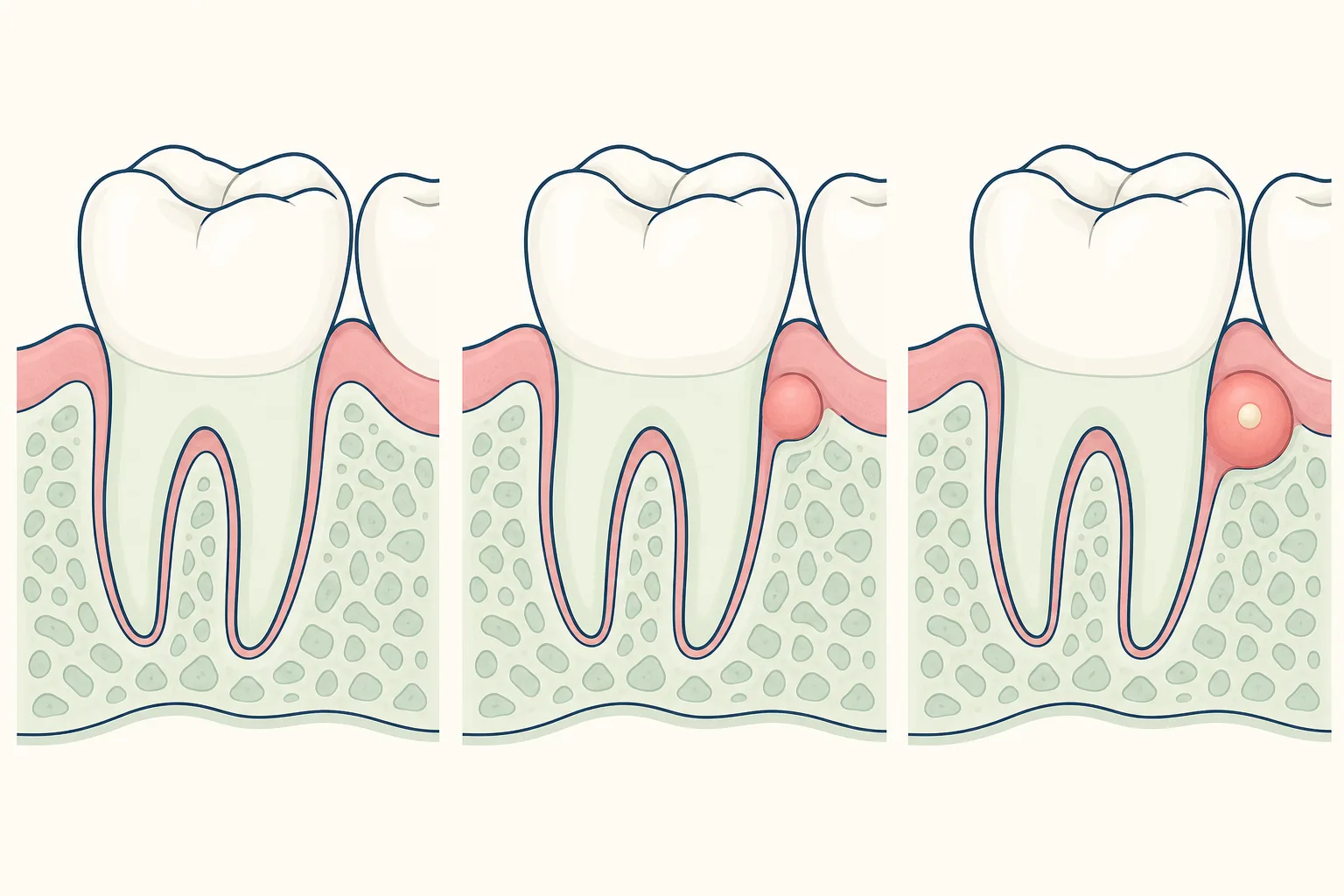
What the change looks like
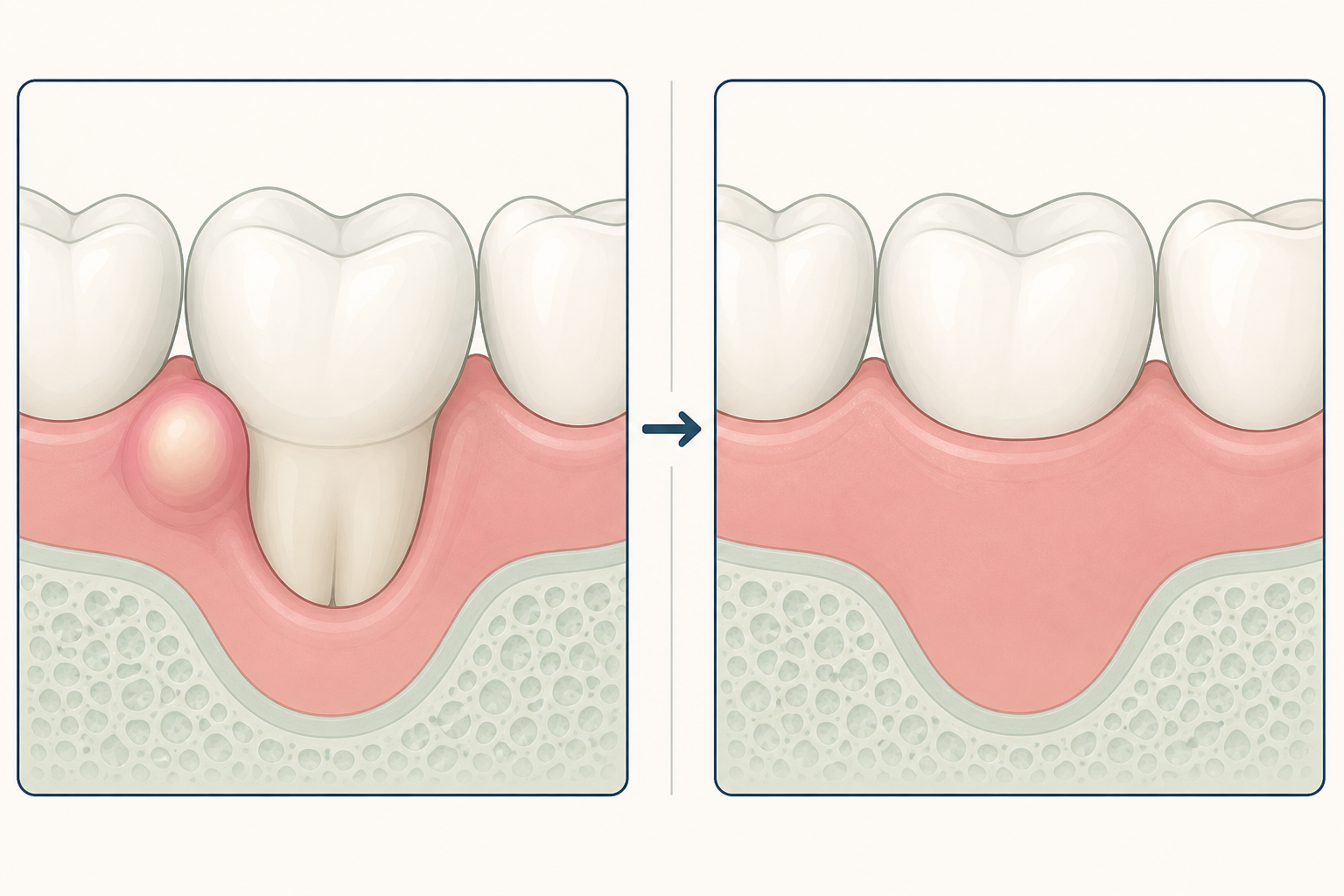
What symptoms can a gum abscess cause?
What causes a periodontal abscess?
Bacteria can enter the space between a tooth and gum. Gum disease is the most common reason; untreated periodontitis, trapped foreign material, and root abnormalities are named causes.
[3]How does a dentist describe the findings?
This is an acute periodontal infection rather than a condition described in numbered stages. It may be related to a periodontal pocket or to another cause such as trapped material or a root abnormality.
[3]Why is a gum abscess worth prompt attention?
Untreated periodontal disease and poor oral hygiene raise the likelihood of this problem. Grinding or clenching, tooth injury, and broken fillings, crowns, or bridges are also listed risk factors.
[3]How is a gum abscess diagnosed?
Diagnosis identifies the periodontal tissues involved and investigates the cause. A periodontal abscess begins in the gums, whereas a periapical abscess begins in the tooth pulp.
[3]How is treatment chosen?
Treatment addresses the infection and its cause. A periodontal abscess can rapidly destroy periodontal tissues and infection can spread, so it needs prompt treatment; systemic antibiotics have a controversial role.
[3]What should you ask about treatment costs in Dubai?
Care can involve treating the acute infection and addressing the underlying periodontal problem or another identified cause. The treatment needed changes with whether it is periodontitis-related or not.
[3]What are the concerns if it is left untreated?
A periodontal abscess can damage supporting tissues, affect the outlook for the tooth, lead to tooth loss, and allow infection to spread to other body sites. Rarely, it can lead to sepsis.
[3]How can you protect your gums after treatment?
Frequently asked questions
Does a gum abscess need dental assessment?
A periodontal abscess affects periodontal tissues, and a clinical examination guides treatment based on the findings.
[3]