
Dental Nation
Condition guide

Glossitis

Glossitis causes an inflamed tongue that may become smooth, swollen, sore, or discoloured, with care directed at its cause.

[1][2]

The short answer

Glossitis is inflammation of the tongue that can cause swelling, soreness, colour change, and a smoother surface.

[1][2]
Glossitis dental educational illustration

What the change looks like
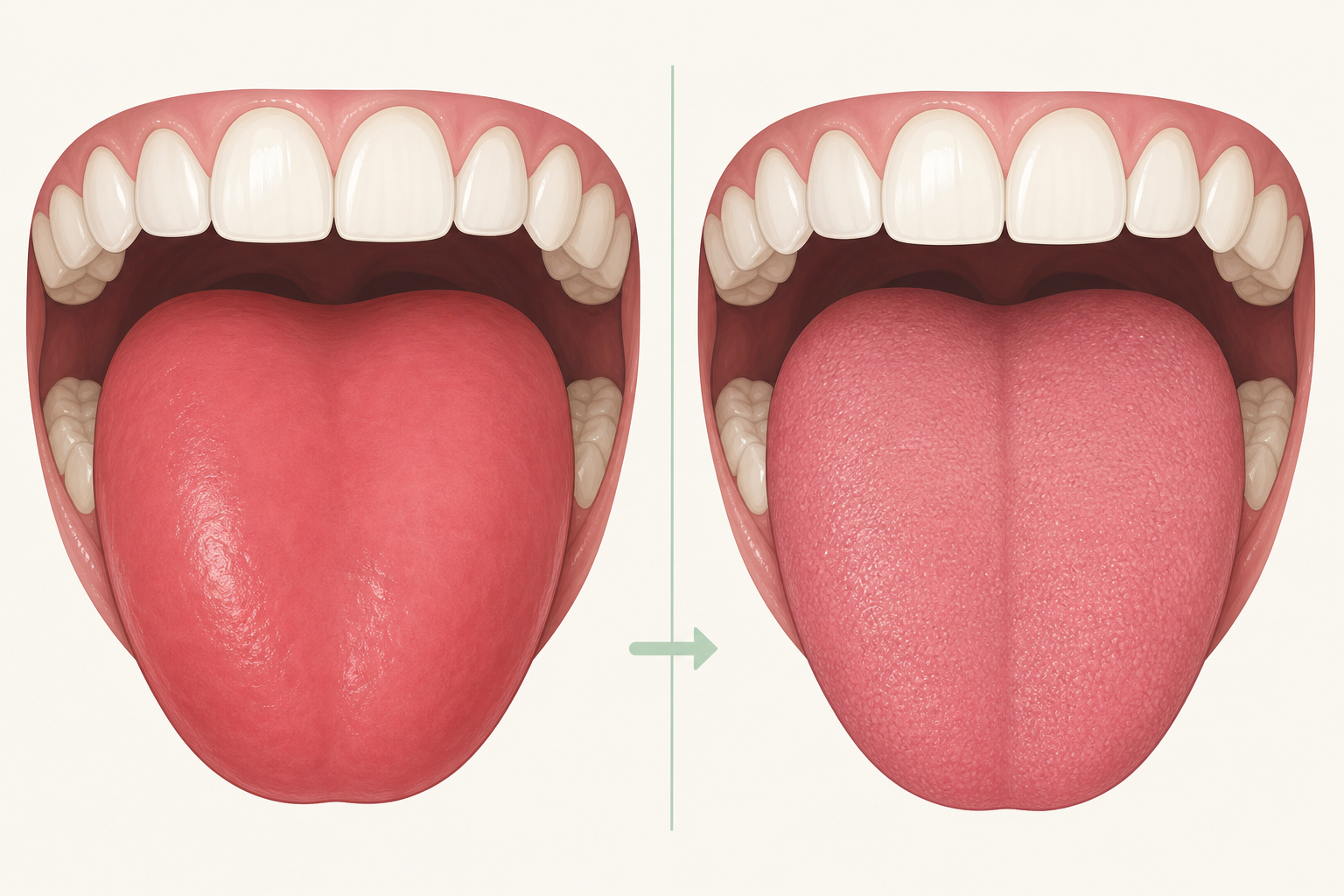
Illustrative diagram: Glossitis
Illustration — a representative diagram, not a patient photo.
The DN First Look799 AED
Book The DN First Look

What changes can glossitis cause?

Tongue changes to describe
ChangeEffect on daily life
Redness, swelling, or a smoother surfaceThese changes can make the tongue feel tender.[1][2]
Soreness with eating or speakingComfort and normal tongue function can be affected.[1][2]

[1][2]

Why can a tongue become inflamed?

Glossitis has several possible causes, including irritation, infection, nutritional problems, medicines, and other health conditions. The cause needs assessment because treatment depends on that finding.

[1][2]

How should a tongue change be tracked?

The helpful distinction is whether the change is new, persistent, recurrent, or linked with other mouth symptoms. These sources describe glossitis by findings and causes rather than a patient staging chart.

[1][2]
Details that help an examination
DetailReason
When the change beganDuration helps place the tongue finding in context.[1][2]
Associated mouth symptoms or irritationThey can help identify a possible cause.[1][2]

[1][2]

When should tongue soreness be checked?

Arrange assessment if tongue swelling or soreness persists, returns, affects eating, or comes with another unexplained mouth change. A tongue condition should be identified from the full clinical finding.

[1][2]

How is glossitis diagnosed?

The clinician examines the tongue and asks about symptoms, duration, diet, medicines, irritation, and related illness. Several tongue conditions can resemble each other, so one visual feature does not settle the diagnosis.

[1][2]

What treatment may be needed?

Treatment addresses the cause found during assessment and the discomfort from inflammation. It may involve removing an irritant, correcting an identified problem, or treating an associated condition.

[1][2]
How the cause shapes care
FindingCare discussion
An identified irritantThe plan can address the source of irritation.[1][2]
An associated conditionTreatment can be directed to that cause.[1][2]

[1][2]

What should the appointment plan explain?

The plan should explain the examination, any investigation needed to identify a cause, treatment advice, and follow-up. A red or sore tongue does not point to one treatment without assessment.

[1][2]

Why should persistent tongue inflammation be assessed?

Ongoing inflammation can make eating, speaking, and mouth care uncomfortable. Leaving the cause unidentified can delay appropriate treatment for the tongue finding or a related condition.

[1][2]

Can glossitis be prevented?

Prevention depends on the cause. Avoiding an identified irritant and following the agreed care plan may help, while recurring or unexplained tongue inflammation still needs review.

[1]

Frequently asked questions

Is every red tongue glossitis?

Several tongue conditions can resemble one another, so diagnosis follows the complete examination and history rather than colour alone.

[1][2]