
Dental Nation
Condition guide

Gingivitis

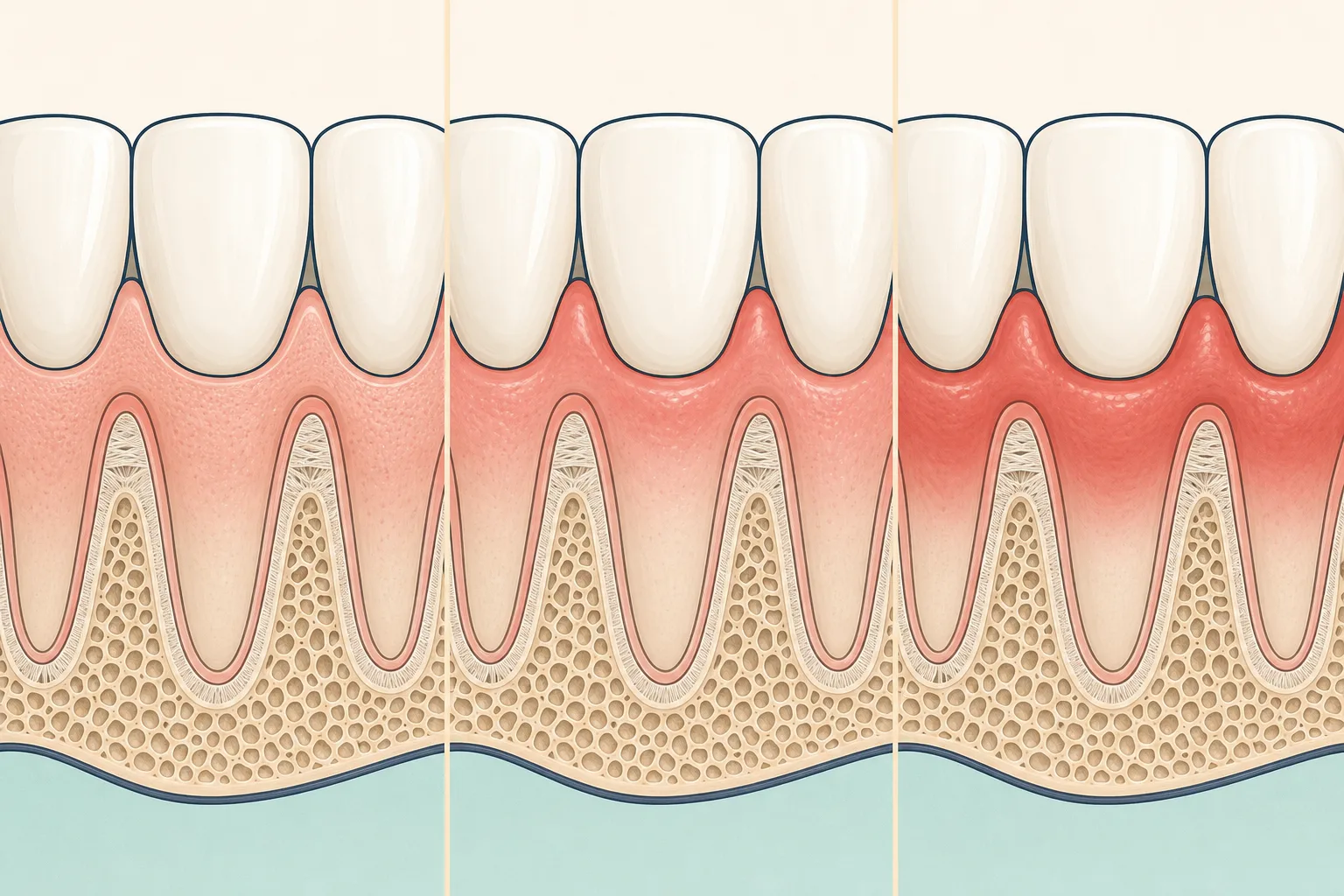
Bleeding, red, or swollen gums are common signs of gingivitis, an early gum inflammation that can improve with plaque control.

[1][2]

The short answer

Gingivitis is inflammation of the gums, usually caused by plaque collecting around the teeth.

[1]
Gingivitis dental educational illustration

What the change looks like
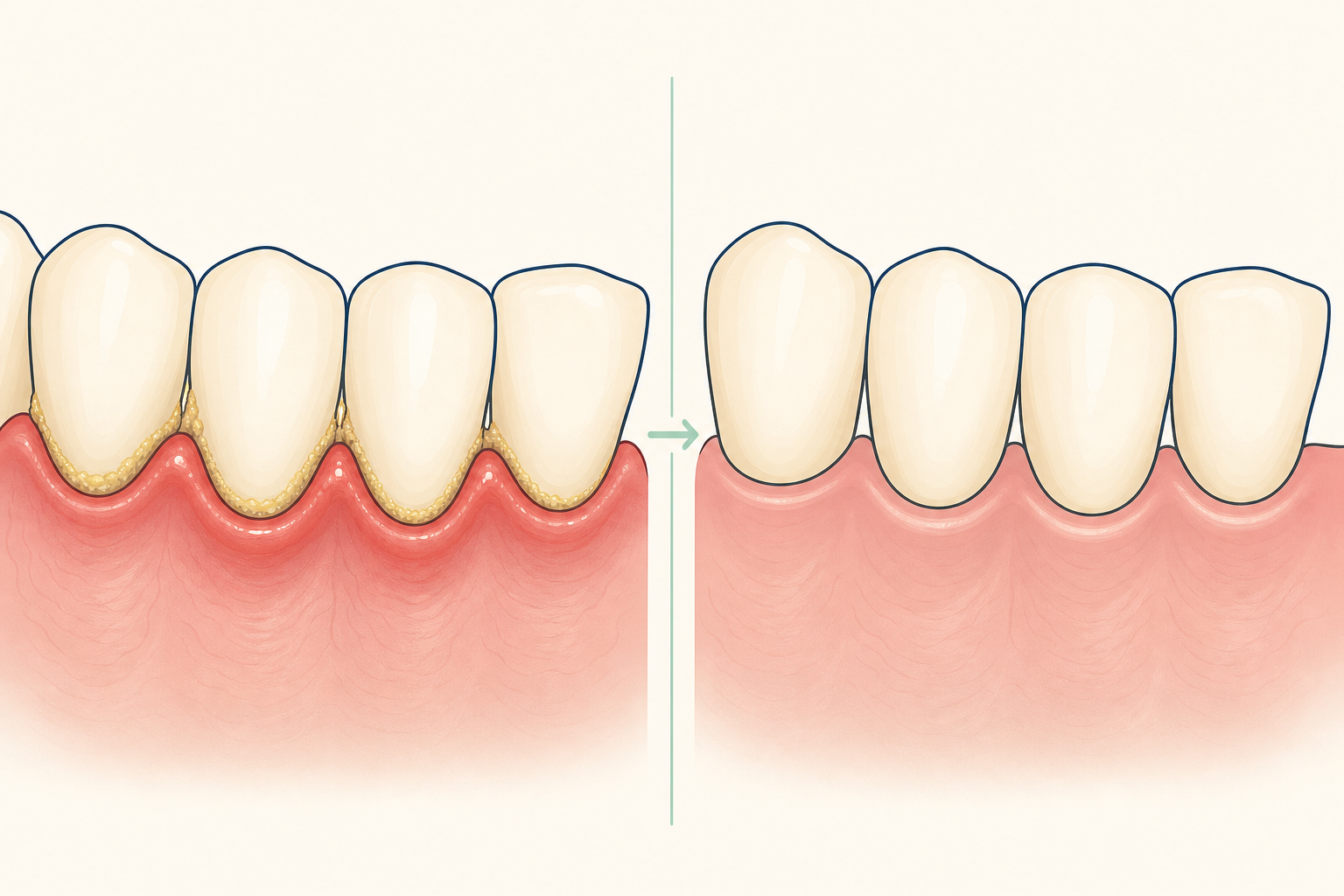
Illustrative diagram: Gingivitis
Illustration — a representative diagram, not a patient photo.
The DN First Look799 AED
Book The DN First Look

What does gingivitis look and feel like?

The gums may look red, swollen, or shiny and can bleed during brushing or flossing. Bad breath, tenderness, and a change in gum contour may also occur. Gingivitis commonly causes little pain, so bleeding can be the first noticeable sign.

[1][2]
Common gingivitis signs
SignHow it appears
BleedingBlood appears during brushing or cleaning between teeth[1][2]
Swelling and rednessGum margins look enlarged or darker than healthy tissue[1][2]

[1][2]

What causes gingivitis?

Plaque is a bacterial film that builds up around teeth. When it remains at the gum margin, the body’s inflammatory response makes the gum tissue swollen and prone to bleeding; hardened tartar makes the buildup harder to remove.

[1][2]

Can gingivitis turn into periodontitis?

Gingivitis affects the gums and is the early form of gum disease. If inflammation persists, disease can progress to periodontitis, where pockets form and the tissues and bone supporting the teeth can be damaged.

[1]
Gingivitis compared with periodontitis
ConditionMain change
GingivitisInflamed gums that may bleed[1]
PeriodontitisSupporting tissue and bone may be damaged[1]

[1]

What makes gingivitis more likely?

Infrequent brushing or interdental cleaning leaves more plaque at the gum line. Smoking and other factors that affect gum health can make inflammation harder to control.

[1][2]

How is gingivitis diagnosed?

A gum examination looks for redness, swelling, bleeding, and changes in the gum margin. Checking the depth around teeth helps distinguish inflammation limited to the gums from deeper periodontal disease.

[1]

How is gingivitis treated?

Treatment removes plaque and tartar and restores effective daily cleaning. Professional cleaning reaches deposits that brushing cannot remove, while brushing and cleaning between the teeth address the film that reforms each day.

[1][2]
What treatment targets
TargetAction
Plaque filmBrush and clean between teeth daily[1][2]
Hardened tartarProfessional cleaning removes the deposit[1][2]

[1][2]

What affects gingivitis treatment cost in Dubai?

Gingivitis usually needs care focused on plaque and tartar removal. The work becomes more extensive when examination finds deeper pockets or supporting-tissue damage consistent with periodontitis.

[1][2]

What happens when gingivitis continues?

Persistent gum inflammation can progress beyond gingivitis to periodontitis. At that stage, pockets, attachment damage, bone loss, loose teeth, and eventual tooth loss can develop.

[1]

How can gingivitis be prevented?

Brush twice a day, clean between the teeth, and arrange professional removal of tartar. These habits reduce the plaque that starts gum inflammation and help stop it returning.

[1][2]

Frequently asked questions

Can gingivitis improve?

Gingivitis is the early gum inflammation stage, and controlling plaque plus removing tartar addresses the factors that keep it active.

[1][2]