
Gum Overgrowth (Gingival Hyperplasia)
Some anticonvulsants, immunosuppressants and calcium channel blockers can enlarge gums and make cleaning or chewing difficult.
[1]The short answer
Some medicines can enlarge gum tissue, making oral hygiene harder and sometimes causing painful chewing or eating.
[1]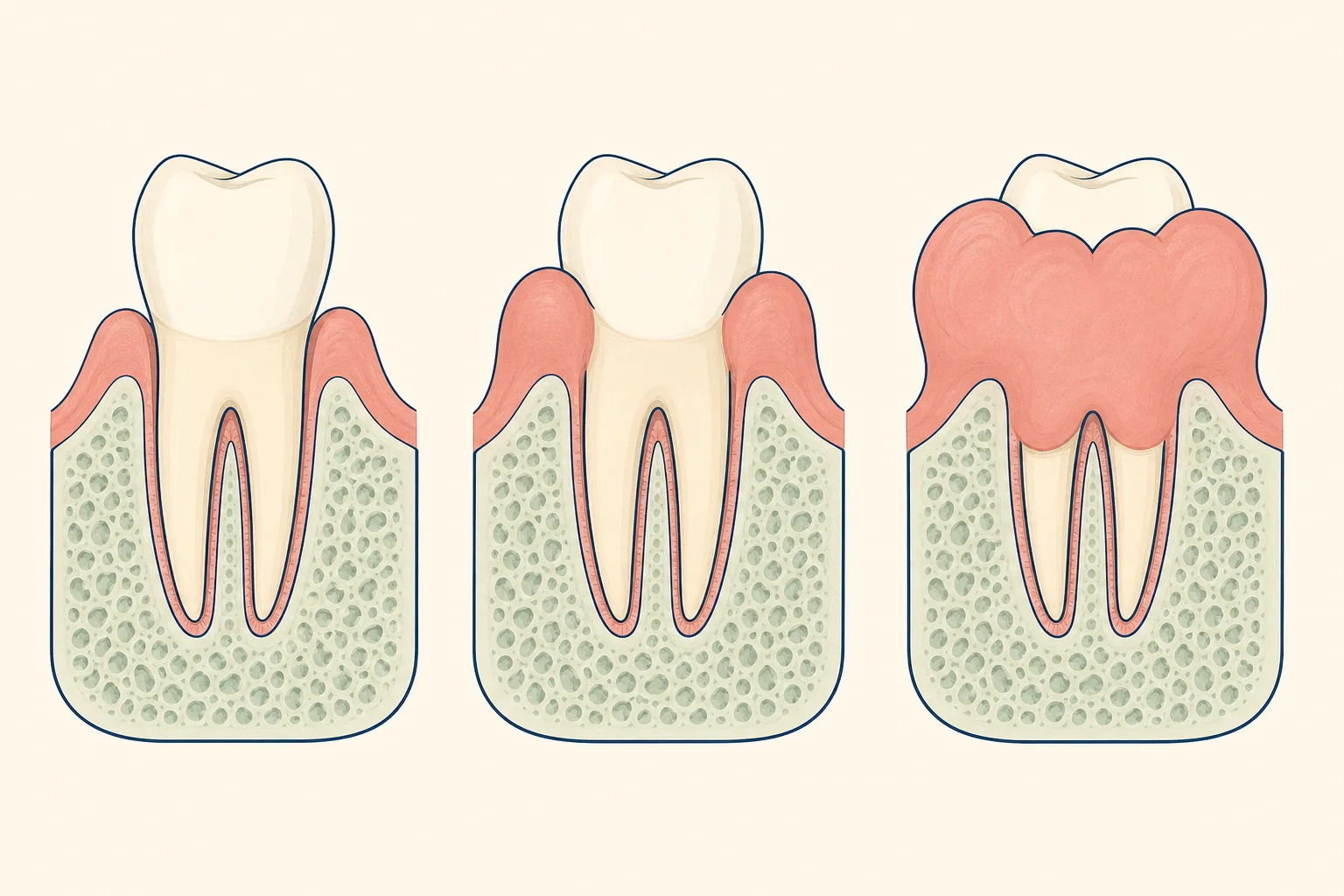
What the change looks like
What symptoms can it cause?
| Situation | What it means for the patient | Question to ask |
|---|---|---|
| What you notice | Possible significance | Useful detail to record[1] |
| Appearance or sensation | Shows where the finding is affecting daily life | When it began and what changes it[1] |
| Change in cleaning or eating | May indicate a functional effect | Whether it is getting easier or harder[1] |
What causes it?
Drug-induced gum overgrowth is a side effect of medicines whose intended target is elsewhere in the body. Anticonvulsants, immunosuppressants and calcium channel blockers are the key drug classes linked with it.
[1]How does it change over time?
Gingival enlargement may appear one to three months after starting a related medicine. Plaque can accumulate more easily as enlarged gum tissue makes cleaning harder, which can lead to secondary inflammation.
[1]| Situation | What it means for the patient | Question to ask |
|---|---|---|
| Earlier change | The finding is limited or subtle | Assessment can establish a baseline[1] |
| More established change | The pattern is easier to see or feel | The cause and extent guide the plan[1] |
| More extensive change | Function, comfort, or cleaning may be affected | Prompt review helps define options[1] |
Who is more likely to notice it?
People taking anticonvulsants, immunosuppressants or calcium channel blockers are the group to watch for early gum enlargement. Hypertension, angina, epilepsy and a recent organ transplant may appear in the medical history.
[1]How is it diagnosed?
Diagnosis uses a clinical examination and medical history, with a periodontal examination to check for periodontal disease. Unusual presentations may need tissue biopsy, and profuse bleeding may prompt a blood count.
[1]How is it treated at each stage?
The first approach is non-surgical: plaque control and, where possible, discontinuing or changing the medicine associated with overgrowth. Treatment also addresses periodontal disease when present.
[1]| Situation | What it means for the patient | Question to ask |
|---|---|---|
| Finding confirmed | The plan follows the examination and cause | Ask what each line of care addresses[1] |
| Cause addressed | The contributing exposure or process is managed | Ask how progress will be checked[1] |
| Ongoing review | The result is checked against symptoms and function | Keep the follow-up instructions[1] |
What should you ask about the cost in Dubai?
Assessment can include a periodontal examination and dental radiographs to rule out periodontal disease. An unusual pattern may require a tissue biopsy.
[1]What can happen if it is left alone?
Enlarged gums can impede oral hygiene, increase plaque accumulation and contribute to secondary inflammation. They can also interfere with chewing and eating.
[1]How can you reduce further damage?
Frequently asked questions
What should I do about Gum Overgrowth (Gingival Hyperplasia)?
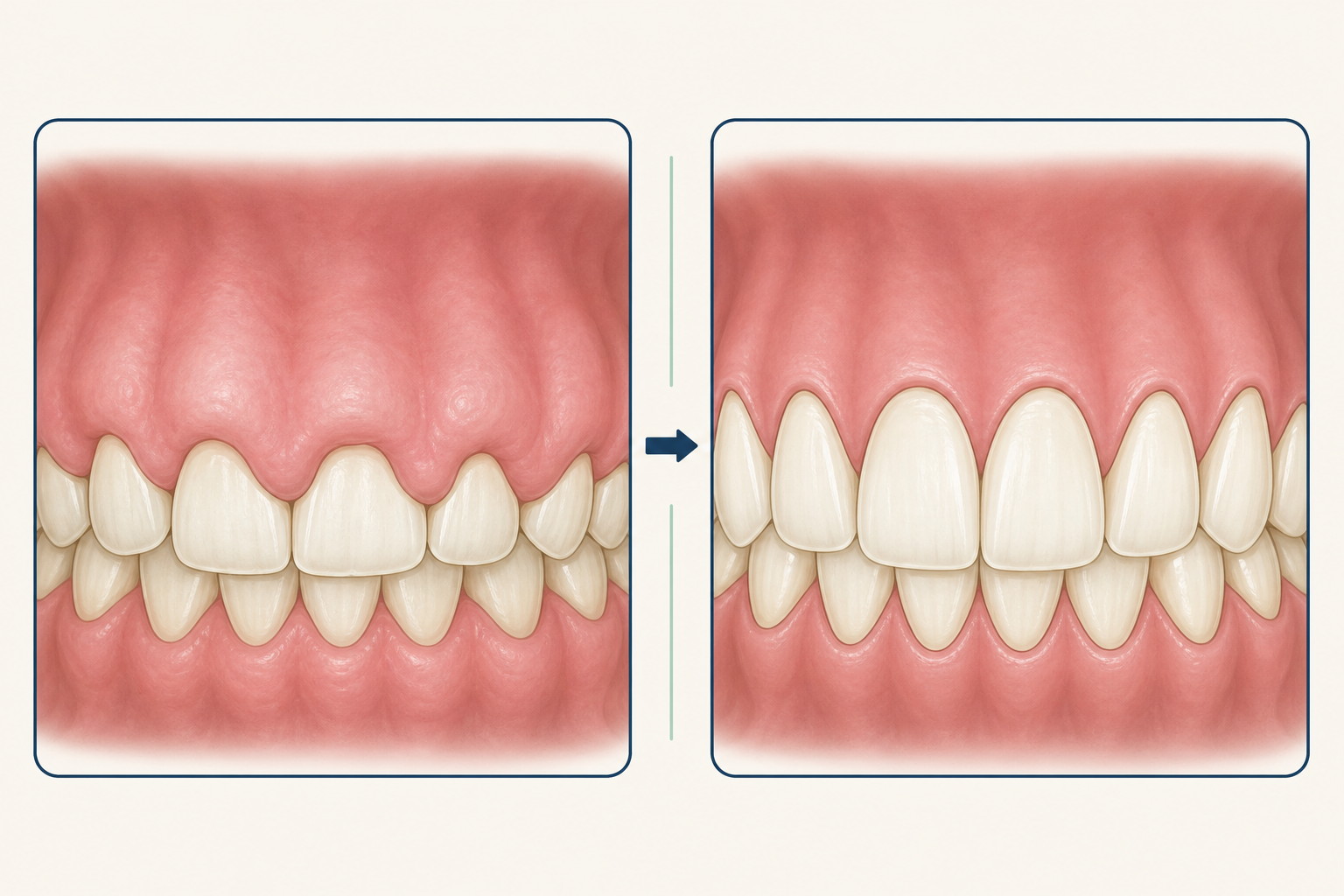
People may notice gum tissue becomes larger or fuller than usual. It may cover more of the tooth surface, make cleaning between teeth harder, or bleed when inflamed tissue is brushed. The visible change can be mild at first, while discomfort, bleeding, sensitivity, or a change in function may make it more obvious. Symptoms alone do not identify the cause, so the dentist will relate what you noticed to the location, pattern, and history. A short note about when it began and what makes it worse can make the appointment more useful.
[1]